
Details of Drug-Drug Interaction
| Drug General Information (ID: DDIZI9NWQM) | |||||||||
|---|---|---|---|---|---|---|---|---|---|
| Drug Name | Methohexital | Drug Info | Sodium oxybate | Drug Info | |||||
| Drug Type | Small molecule | Small molecule | |||||||
| Therapeutic Class | Anesthetics | Anxiolytics/Sedatives/Hypnotics | |||||||
| Structure | |||||||||
| Mechanism of Methohexital-Sodium oxybate Interaction (Severity Level: Major) | |||||||||
|---|---|---|---|---|---|---|---|---|---|
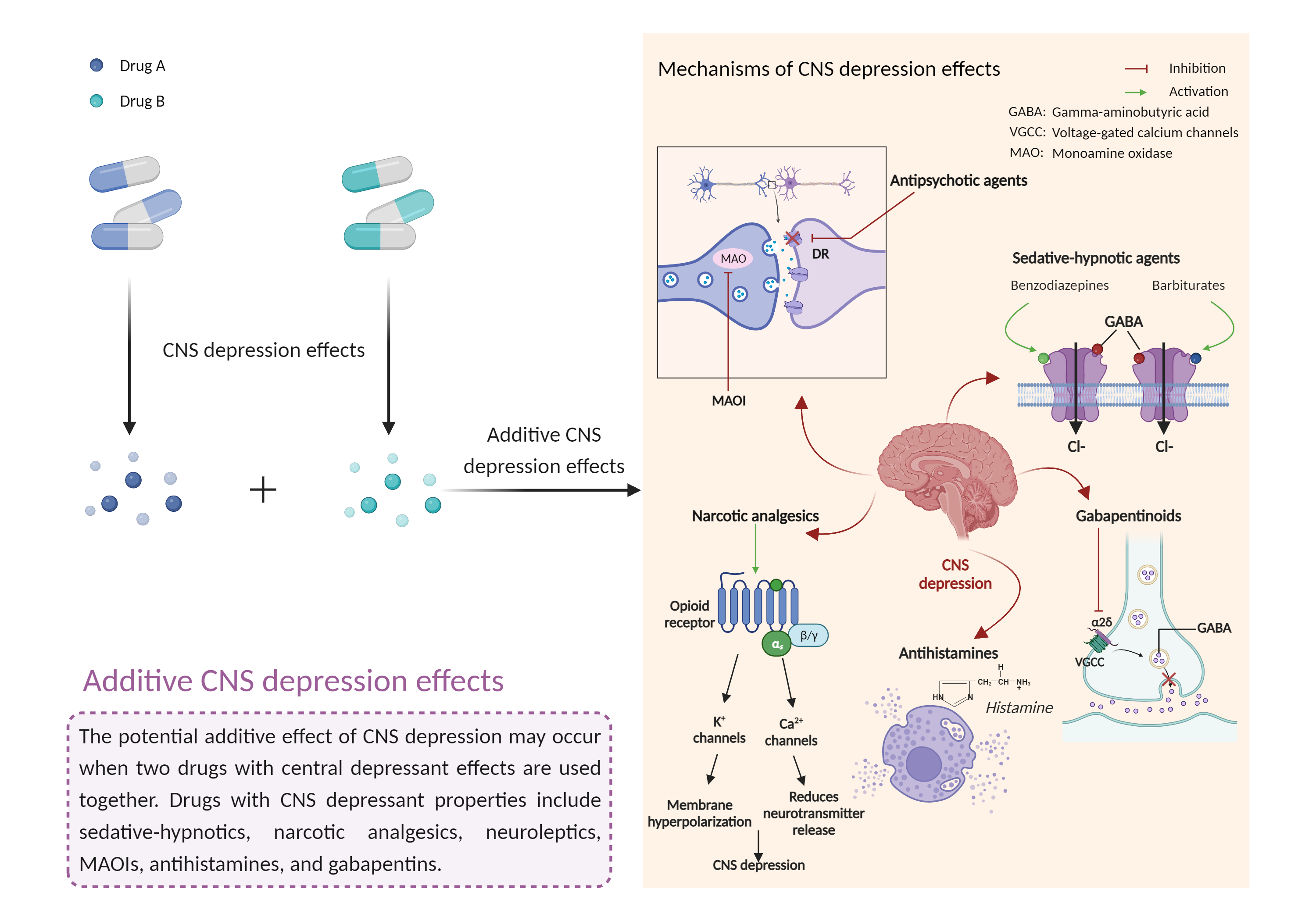
| Additive CNS depression effects Click to Show/Hide Mechanism Graph | |||||||||
 |
|||||||||
| Drug Name | Methohexital | Sodium oxybate | |||||||
| Mechanism | CNS depression effects | CNS depression effects | |||||||
| Key Mechanism Factor 1 | |||||||||
| Factor Name | CNS depression effects | ||||||||
| Factor Description | CNS depressants are drugs that inhibit or suppress brain activity and can reduce mental and physical processes. Excessive CNS depression can lead to decreased heart rate, slow breathing (less than 10 breaths per minute), extreme confusion or loss of memory, nausea and vomiting, poor judgment, blue lips or fingertips, irritability and aggression, and clammy or cold skin. | ||||||||
| Mechanism Description |
|
||||||||
| Recommended Action | |||||||||
|---|---|---|---|---|---|---|---|---|---|
| Management | Concomitant use of sodium oxybate with other CNS depressants should be avoided whenever possible. Otherwise, close monitoring and/or dosage reductions should be considered. If short-term use of a CNS depressant is required (e.g., post- or perioperative opioid), a temporary interruption of sodium oxybate therapy may be appropriate. All patients treated with sodium oxybate should be advised not to drive, operate machinery, or engage in hazardous activities requiring mental alertness and motor coordination for at least 6 hours after taking the second nightly dose of sodium oxybate and until they know how the medication affects them. | ||||||||