
Details of Drug-Drug Interaction
| Drug General Information (ID: DDIV96G2C3) | |||||||||
|---|---|---|---|---|---|---|---|---|---|
| Drug Name | Reserpine | Drug Info | Levobetaxolol (ophthalmic) | Drug Info | |||||
| Drug Type | Small molecule | Small molecule | |||||||
| Therapeutic Class | Antihypertensive Agents | Cardiotonic Agents | |||||||
| Structure | |||||||||
| Mechanism of Reserpine-Levobetaxolol (ophthalmic) Interaction (Severity Level: Moderate) | |||||||||
|---|---|---|---|---|---|---|---|---|---|
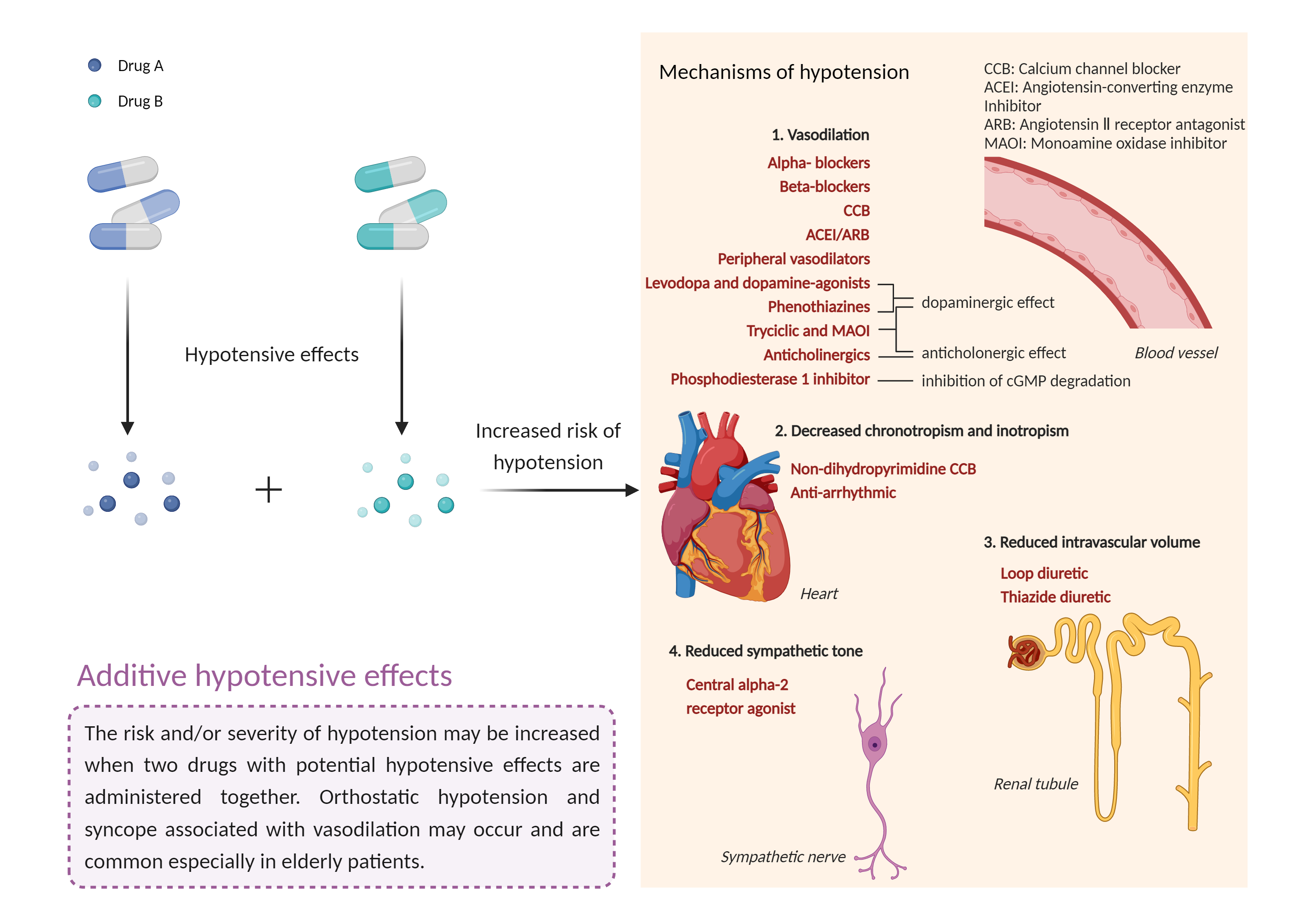
| Additive hypotensive effects Click to Show/Hide Mechanism Graph | |||||||||
 |
|||||||||
| Drug Name | Reserpine | Levobetaxolol (ophthalmic) | |||||||
| Mechanism 1 |
Antihypertensive agent Synaptic vesicular amine transporter Inhibitor |
Antihypertensive agent | |||||||
| Key Mechanism Factor 1 | |||||||||
| Factor Name | Synaptic vesicle amine transporter |
×
Structure
Sequence
MALSELALVRWLQESRRSRKLILFIVFLALLLDNMLLTVVVPIIPSYLYSIKHEKNATEIQTARPVHTASISDSFQSIFSYYDNSTMVTGNATRDLTLHQTATQHMVTNASAVPSDCPSEDKDLLNENVQVGLLFASKATVQLITNPFIGLLTNRIGYPIPIFAGFCIMFVSTIMFAFSSSYAFLLIARSLQGIGSSCSSVAGMGMLASVYTDDEERGNVMGIALGGLAMGVLVGPPFGSVLYEFVGKTAPFLVLAALVLLDGAIQLFVLQPSRVQPESQKGTPLTTLLKDPYILIAAGSICFANMGIAMLEPALPIWMMETMCSRKWQLGVAFLPASISYLIGTNIFGILAHKMGRWLCALLGMIIVGVSILCIPFAKNIYGLIAPNFGVGFAIGMVDSSMMPIMGYLVDLRHVSVYGSVYAIADVAFCMGYAIGPSAGGAIAKAIGFPWLMTIIGIIDILFAPLCFFLRSPPAKEEKMAILMDHNCPIKTKMYTQNNIQSYPIGEDEESESD
|
|||||||
| Gene Name | SLC18A2 | ||||||||
| Uniprot ID | VMAT2_HUMAN | ||||||||
| KEGG Pathway | hsa:6571 | ||||||||
| Protein Family | Major facilitator superfamily | ||||||||
| Protein Function |
Involved in the ATP-dependent vesicular transport of biogenic amine neurotransmitters. Pumps cytosolic monoamines including dopamine, norepinephrine, serotonin, and histamine into synaptic vesicles (PubMed:23363473). Requisite for vesicular amine storage prior to secretion via exocytosis.
Click to Show/Hide
|
||||||||
| Mechanism Description |
|
||||||||
| Mechanism 2 |
Antihypertensive agent Synaptic vesicular amine transporter Inhibitor |
Hypotensive effects | |||||||
| Key Mechanism Factor 2 | |||||||||
| Factor Name | Synaptic vesicle amine transporter |
×
Structure
Sequence
MALSELALVRWLQESRRSRKLILFIVFLALLLDNMLLTVVVPIIPSYLYSIKHEKNATEIQTARPVHTASISDSFQSIFSYYDNSTMVTGNATRDLTLHQTATQHMVTNASAVPSDCPSEDKDLLNENVQVGLLFASKATVQLITNPFIGLLTNRIGYPIPIFAGFCIMFVSTIMFAFSSSYAFLLIARSLQGIGSSCSSVAGMGMLASVYTDDEERGNVMGIALGGLAMGVLVGPPFGSVLYEFVGKTAPFLVLAALVLLDGAIQLFVLQPSRVQPESQKGTPLTTLLKDPYILIAAGSICFANMGIAMLEPALPIWMMETMCSRKWQLGVAFLPASISYLIGTNIFGILAHKMGRWLCALLGMIIVGVSILCIPFAKNIYGLIAPNFGVGFAIGMVDSSMMPIMGYLVDLRHVSVYGSVYAIADVAFCMGYAIGPSAGGAIAKAIGFPWLMTIIGIIDILFAPLCFFLRSPPAKEEKMAILMDHNCPIKTKMYTQNNIQSYPIGEDEESESD
|
|||||||
| Gene Name | SLC18A2 | ||||||||
| Uniprot ID | VMAT2_HUMAN | ||||||||
| KEGG Pathway | hsa:6571 | ||||||||
| Protein Family | Major facilitator superfamily | ||||||||
| Protein Function |
Involved in the ATP-dependent vesicular transport of biogenic amine neurotransmitters. Pumps cytosolic monoamines including dopamine, norepinephrine, serotonin, and histamine into synaptic vesicles (PubMed:23363473). Requisite for vesicular amine storage prior to secretion via exocytosis.
Click to Show/Hide
|
||||||||
| Mechanism Description |
|
||||||||
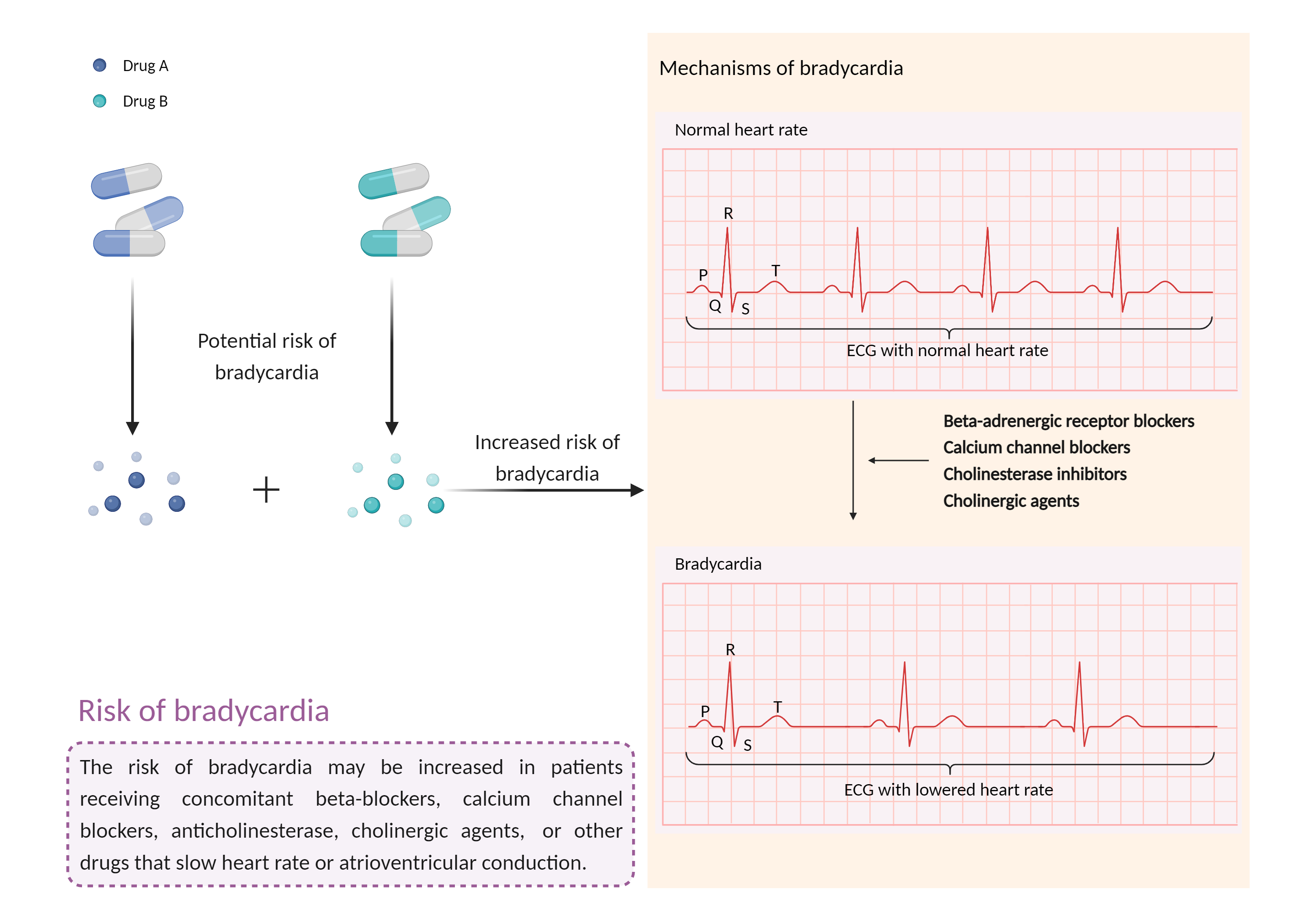
| Increased risk of bradycardia Click to Show/Hide Mechanism Graph | |||||||||
 |
|||||||||
| Drug Name | Reserpine | Levobetaxolol (ophthalmic) | |||||||
| Mechanism 3 | Potentiate the bradycardia effect of beta blocker |
Bradycardia Beta adrenergic receptor Antagonist |
|||||||
| Key Mechanism Factor 3 | |||||||||
| Factor Name | Adrenergic receptor beta | Structure Sequence | |||||||
| Protein Family | G-protein coupled receptor 1 family | ||||||||
| Protein Function |
Beta-adrenergic receptors mediate the catecholamine-induced activation of adenylate cyclase through the action of G proteins. This receptor binds epinephrine and norepinephrine with approximately equal affinity. Mediates Ras activation through G(s)-alpha- and cAMP-mediated signaling. Involved in the regulation of sleep/wake behaviors (PubMed:31473062).
Click to Show/Hide
|
||||||||
| Mechanism Description |
|
||||||||
| Mechanism 4 | Potentiate the bradycardia effect of beta blocker |
Bradycardia Beta-1 adrenergic receptor Antagonist |
|||||||
| Key Mechanism Factor 4 | |||||||||
| Factor Name | Adrenergic receptor beta-1 |
×
Structure
Sequence
MGAGVLVLGASEPGNLSSAAPLPDGAATAARLLVPASPPASLLPPASESPEPLSQQWTAGMGLLMALIVLLIVAGNVLVIVAIAKTPRLQTLTNLFIMSLASADLVMGLLVVPFGATIVVWGRWEYGSFFCELWTSVDVLCVTASIETLCVIALDRYLAITSPFRYQSLLTRARARGLVCTVWAISALVSFLPILMHWWRAESDEARRCYNDPKCCDFVTNRAYAIASSVVSFYVPLCIMAFVYLRVFREAQKQVKKIDSCERRFLGGPARPPSPSPSPVPAPAPPPGPPRPAAAAATAPLANGRAGKRRPSRLVALREQKALKTLGIIMGVFTLCWLPFFLANVVKAFHRELVPDRLFVFFNWLGYANSAFNPIIYCRSPDFRKAFQRLLCCARRAARRRHATHGDRPRASGCLARPGPPPSPGAASDDDDDDVVGATPPARLLEPWAGCNGGAAADSDSSLDEPCRPGFASESKV
|
|||||||
| Gene Name | ADRB1 | ||||||||
| Uniprot ID | ADRB1_HUMAN | ||||||||
| KEGG Pathway | hsa:153 | ||||||||
| Protein Family | G-protein coupled receptor 1 family | ||||||||
| Protein Function |
Beta-adrenergic receptors mediate the catecholamine-induced activation of adenylate cyclase through the action of G proteins. This receptor binds epinephrine and norepinephrine with approximately equal affinity. Mediates Ras activation through G(s)-alpha- and cAMP-mediated signaling. Involved in the regulation of sleep/wake behaviors (PubMed:31473062).
Click to Show/Hide
|
||||||||
| Mechanism Description |
|
||||||||
| Recommended Action | |||||||||
|---|---|---|---|---|---|---|---|---|---|
| Management | Caution is advised if beta-blockers, including ophthalmic formulations, are prescribed in combination with sympathetic ganglion-blocking or catecholamine-depleting agents. Patients should contact their doctor if they experience dizziness, lightheadedness, syncope, bradycardia, shortness of breath, difficulty breathing, edema, and/or chest pain. | ||||||||