
Details of Drug-Drug Interaction
| Drug General Information (ID: DDIP973BLT) | |||||||||
|---|---|---|---|---|---|---|---|---|---|
| Drug Name | Beclomethasone dipropionate | Drug Info | Amphotericin B (lipid complex) | Drug Info | |||||
| Drug Type | Small molecule | Small molecule | |||||||
| Therapeutic Class | Inhaled Corticosteroids | Antifungal Agents | |||||||
| Structure | |||||||||
| Mechanism of Beclomethasone dipropionate-Amphotericin B (lipid complex) Interaction (Severity Level: Moderate) | |||||||||
|---|---|---|---|---|---|---|---|---|---|
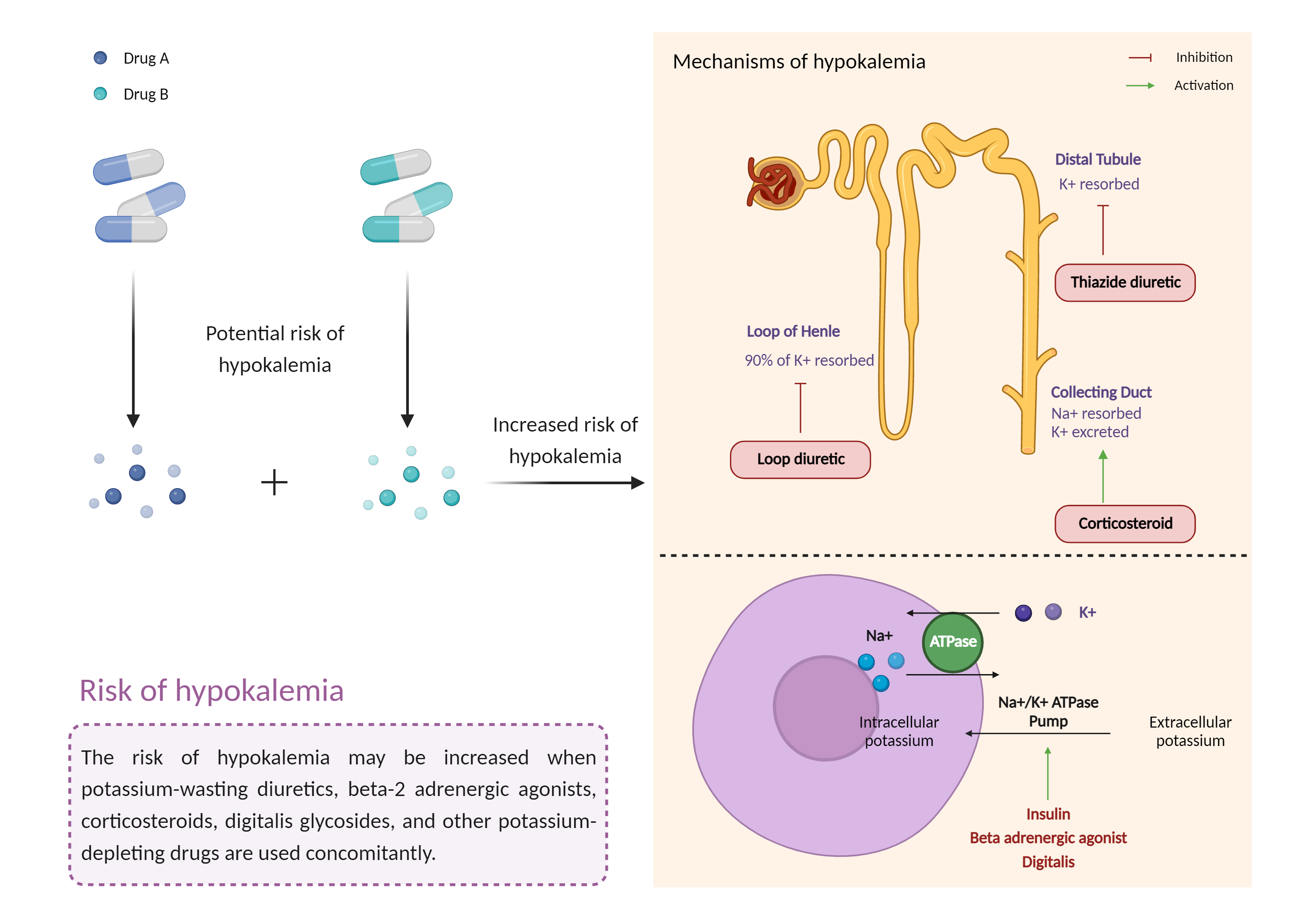
| Increased risk of hypokalemia Click to Show/Hide Mechanism Graph | |||||||||
 |
|||||||||
| Drug Name | Beclomethasone dipropionate | Amphotericin B (lipid complex) | |||||||
| Mechanism | Hypokalemia | Hypokalemia | |||||||
| Key Mechanism Factor 1 | |||||||||
| Factor Name | Hypokalemia | ||||||||
| Factor Description | Hypokalemia is a condition in which the amount of potassium in your blood is lower than normal. If you are mildly hypokalemic, you may not have any signs or symptoms, but severe hypokalemia may have the following symptoms: fatigue, constipation, frequent or heavy urination, muscle cramps or skin tingling, muscle weakness, and a fast or irregular heartbeat. | ||||||||
| Mechanism Description |
|
||||||||
| Recommended Action | |||||||||
|---|---|---|---|---|---|---|---|---|---|
| Management | Patients receiving potassium-depleting agents with corticosteroids should be monitored closely for development of hypokalemia, particularly if fludrocortisone or large doses of another corticosteroid or adrenocorticotropic agent is given. Potassium supplementation may be necessary. Patients should be advised to notify their physician if they experience signs of electrolyte disturbances such as weakness, lethargy, and muscle pains or cramps. | ||||||||