
Details of Drug-Drug Interaction
| Drug General Information (ID: DDIO6I97GJ) | |||||||||
|---|---|---|---|---|---|---|---|---|---|
| Drug Name | Ethanol | Drug Info | Anisindione | Drug Info | |||||
| Drug Type | Small molecule | Small molecule | |||||||
| Therapeutic Class | Analgesics | Anticoagulants | |||||||
| Structure | |||||||||
| Mechanism of Ethanol-Anisindione Interaction (Severity Level: Moderate) | |||||||||
|---|---|---|---|---|---|---|---|---|---|
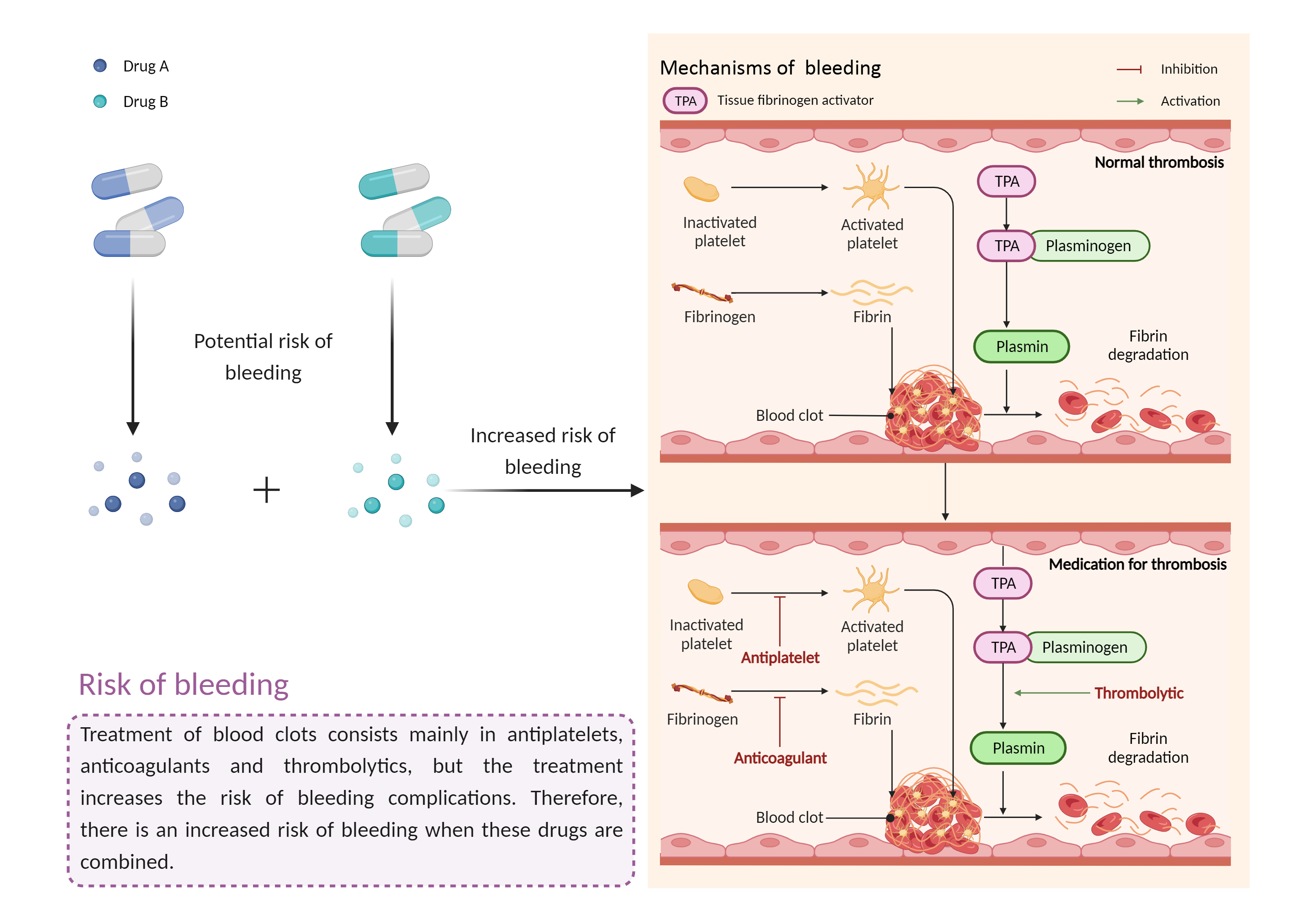
| Increased risk of bleeding Click to Show/Hide Mechanism Graph | |||||||||
 |
|||||||||
| Drug Name | Ethanol | Anisindione | |||||||
| Mechanism | Potentiate the hypoprothrombinemic effect of vitamin K antagonist | Vitamin K antagonist | |||||||
| Key Mechanism Factor 1 | |||||||||
| Factor Name | Bleeding | ||||||||
| Factor Description | Patients may be at risk for bleeding when the outcome of a disease or disease treatment confounds the standard mechanisms for maintaining hemostasis. Signs or symptoms of abnormal bleeding include: bleeding that takes a long time to stop (including nosebleeds, bleeding gums, bleeding from cuts and abrasions, and menstrual bleeding); severe unexplained bruising, or bruising that becomes larger; blood in the urine or stool, etc. | ||||||||
| Mechanism Description |
|
||||||||
| Recommended Action | |||||||||
|---|---|---|---|---|---|---|---|---|---|
| Management | Patients taking oral anticoagulants should be counseled to avoid large amounts of ethanol, but moderate consumption (one to two drinks per day) are not likely to affect the response to the anticoagulant in patients with normal liver function. Frequent INR/PT monitoring is recommended, especially if alcohol intake changes considerably. It may be advisable to avoid oral anticoagulant therapy in patients with uncontrollable drinking problems. Patients should be advised to promptly report any signs of bleeding to their doctor, including pain, swelling, headache, dizziness, weakness, prolonged bleeding from cuts, increased menstrual flow, nosebleeds, bleeding of gums from brushing, unusual bleeding or bruising, red or brown urine, or red or black stools. | ||||||||