Drug General Information (ID: DDINFSD0HA)
  Drug Name Colestipol Drug Info Norgestrel Drug Info
  Drug Type Small molecule Small molecule
  Therapeutic Class Bile Acid Sequestrants Contraceptive Agents
  Structure

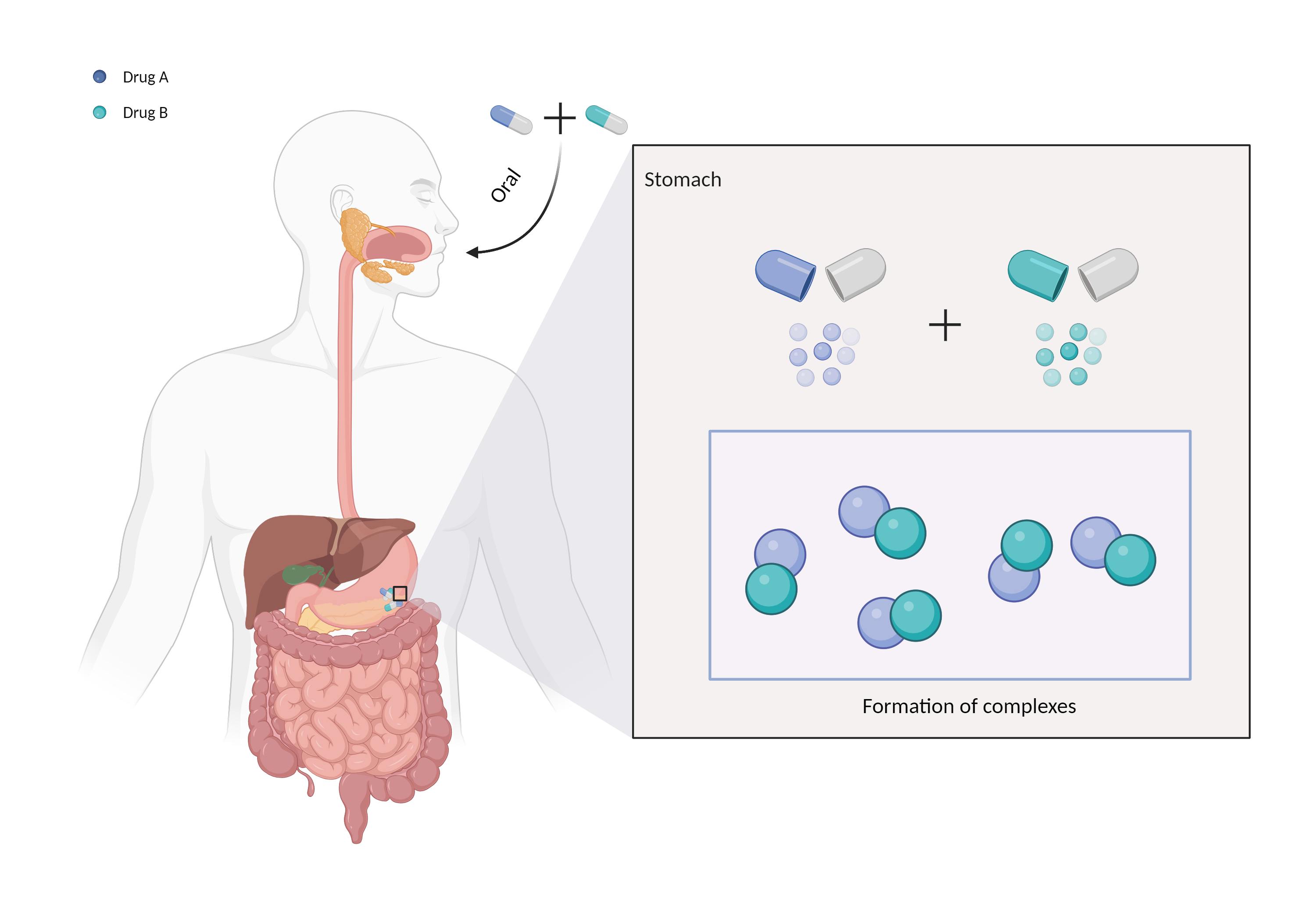
 Mechanism of Colestipol-Norgestrel Interaction (Severity Level: Moderate)
     Complex formation Click to Show/Hide Mechanism Graph
Could Not Find 2D Structure
      Drug Name Colestipol Norgestrel
      Mechanism Anion exchange resin/polymer Binds to anion exchange resin/polymer
      Key Mechanism Factor 1
Factor Name Chelation
Factor Description Chelation is a direct drug interaction that usually involves the formation of dimers or trimers, resulting in larger complexes and poorer absorption.
      Mechanism Description
  • Decreased absorption of Colestipol due to formation of complexes caused by Norgestrel 

Recommended Action
      Management Estrogens and/or progestin-containing oral medications should be administered at least one hour before or four to six hours after bile-acid binding resins such as cholestyramine, colestipol, and colesevelam. Patients receiving this combination should be advised to closely follow dosing schedules to prevent loss of therapeutic effects.

References
1 Agencia Espaola de Medicamentos y Productos Sanitarios Healthcare "Centro de informacion online de medicamentos de la AEMPS - CIMA.".
2 Arts CJM, Govers CARL, van den Berg H, Wolters MGE, van Leeuwen P, Thijssen JHH "In vitro binding of estrogens by dietary fiber and the in vivo apparent digestibility tested in pigs." J Steroid Biochem Mol Biol 38 (1991): 621-8. [PMID: 1645589]
3 Cerner Multum, Inc. "Australian Product Information.".
4 Cerner Multum, Inc. "Canadian Product Information.".
5 Product Information. Nextstellis (drospirenone-estetrol). Mayne Pharma, Greenville, NC.
6 Product Information. Questran (cholestyramine). Par Pharmaceutical Inc, Chestnut Ridge, NY.
7 Underhill KL, Rotter BA, Thompson BK, Prelusky DB, Trenholm HL "Effectiveness of cholestyramine in the detoxification of zearalenone as determined in mice." Bull Environ Contam Toxicol 54 (1995): 128-34. [PMID: 7756775]