
Details of Drug-Drug Interaction
| Drug General Information (ID: DDIGOSJ1P2) | |||||||||
|---|---|---|---|---|---|---|---|---|---|
| Drug Name | Eptifibatide | Drug Info | Anagrelide | Drug Info | |||||
| Drug Type | Small molecule | Small molecule | |||||||
| Therapeutic Class | Anticoagulants | Antithrombotic Agents | |||||||
| Structure | |||||||||
| Mechanism of Eptifibatide-Anagrelide Interaction (Severity Level: Major) | |||||||||
|---|---|---|---|---|---|---|---|---|---|
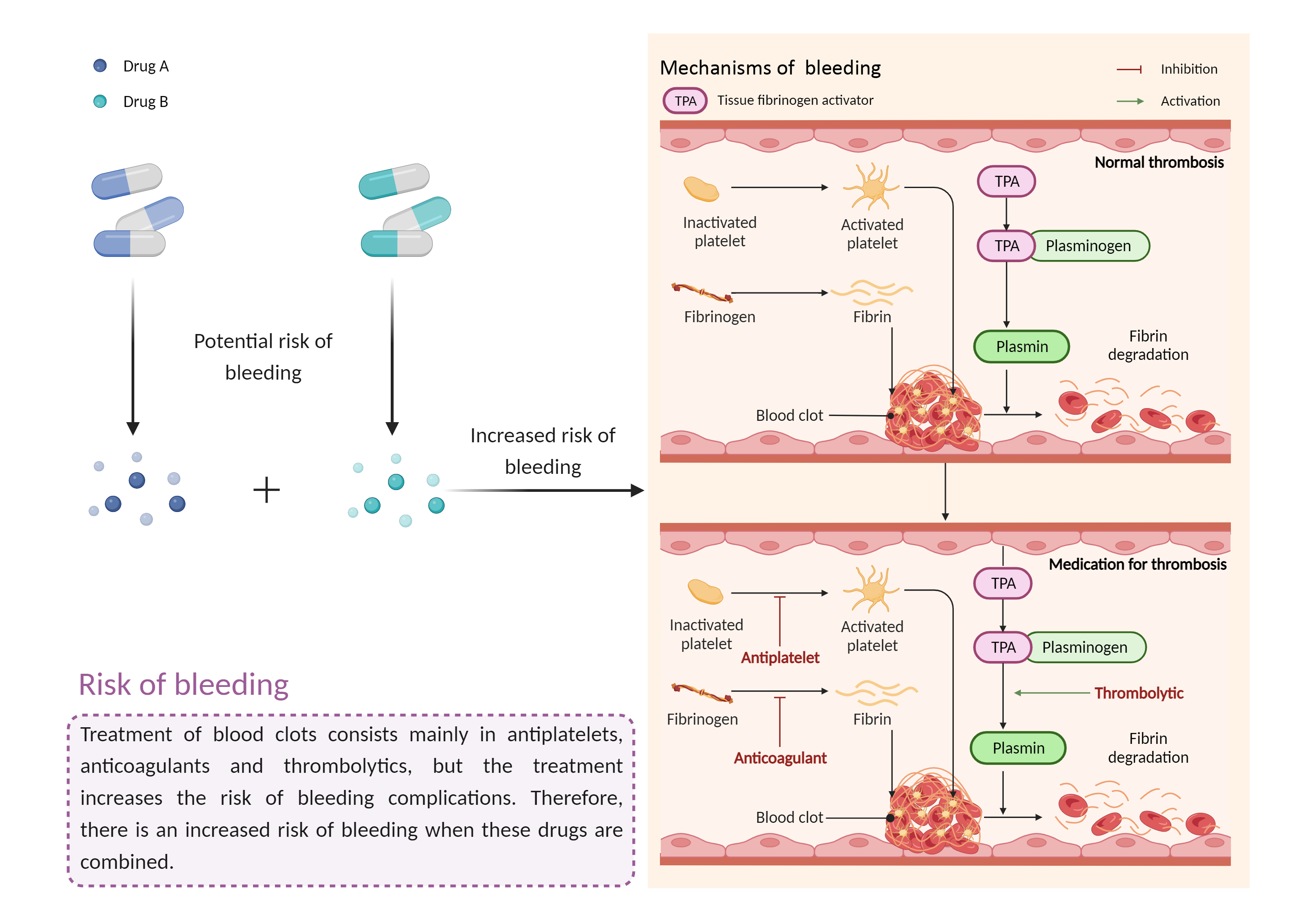
| Increased risk of bleeding Click to Show/Hide Mechanism Graph | |||||||||
 |
|||||||||
| Drug Name | Eptifibatide | Anagrelide | |||||||
| Mechanism |
Risk of bleeding Antiplatelet |
Risk of bleeding Antiplatelet |
|||||||
| Key Mechanism Factor 1 | |||||||||
| Factor Name | Bleeding | ||||||||
| Factor Description | Patients may be at risk for bleeding when the outcome of a disease or disease treatment confounds the standard mechanisms for maintaining hemostasis. Signs or symptoms of abnormal bleeding include: bleeding that takes a long time to stop (including nosebleeds, bleeding gums, bleeding from cuts and abrasions, and menstrual bleeding); severe unexplained bruising, or bruising that becomes larger; blood in the urine or stool, etc. | ||||||||
| Mechanism Description |
|
||||||||
| Recommended Action | |||||||||
|---|---|---|---|---|---|---|---|---|---|
| Management | Extraordinary precautions are recommended if these drugs must be used together, including monitoring platelet counts and hemoglobin concentrations. In addition, invasive procedures, such as urinary catheterization, nasogastric or nasotracheal intubation, and even venous punctures should be avoided or minimized. Non-compressible venous access sites, such as jugular or subclavian sites, should be avoided. | ||||||||
| References | |||||||||||||||||||
|---|---|---|---|---|---|---|---|---|---|---|---|---|---|---|---|---|---|---|---|
| 1 | Product Information. Integrilin (eptifibatide). Schering Laboratories, Kenilworth, NJ. | ||||||||||||||||||
| 2 | Product Information. ReoPro (abciximab). Lilly, Eli and Company, Indianapolis, IN. | ||||||||||||||||||