Drug General Information (ID: DDIDUCI2P5)
  Drug Name Sulfamethoxazole Drug Info Arsenic trioxide Drug Info
  Drug Type Small molecule Small molecule
  Therapeutic Class Antiinfective Agents Antineoplastics
  Structure

 Mechanism of Sulfamethoxazole-Arsenic trioxide Interaction (Severity Level: Minor)
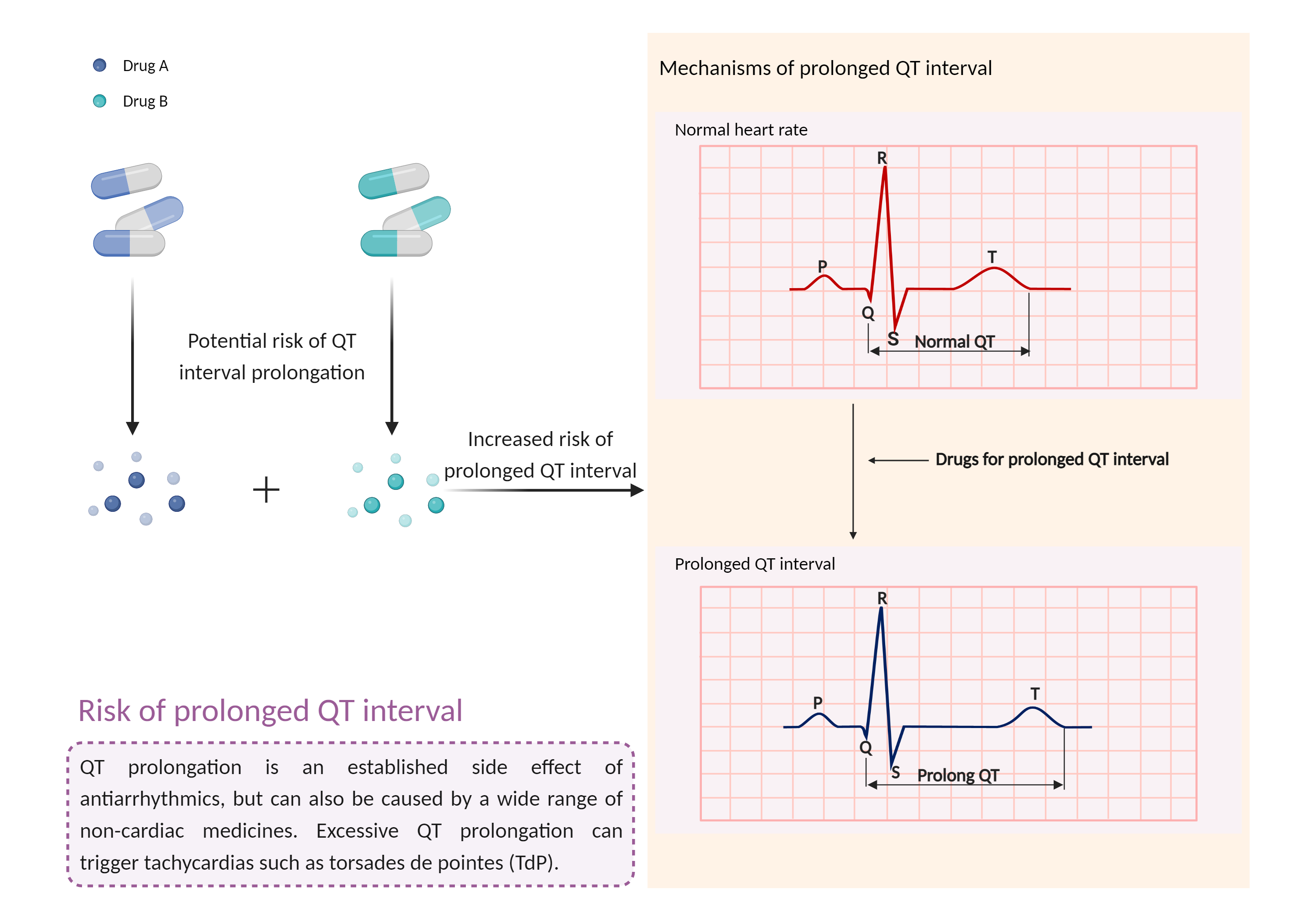
     Increased risk of prolong QT interval Click to Show/Hide Mechanism Graph
Could Not Find 2D Structure
      Drug Name Sulfamethoxazole Arsenic trioxide
      Mechanism Prolong QT interval Prolong QT interval
      Key Mechanism Factor 1
Factor Name QT interval
Factor Description Long QT syndrome is a heart signaling disorder that can cause a fast, chaotic heartbeat (arrhythmia). Many people may not exhibit symptoms, and usually the condition is detected during routine medical tests. In others, the most common symptoms include: sudden fainting, palpitations, dizziness, seizures, sudden death.
      Mechanism Description
  • Increased risk of prolong QT interval by the combination of Sulfamethoxazole and Arsenic trioxide 

References
1 Canadian Pharmacists Association.
2 Cerner Multum, Inc. "Australian Product Information.".
3 Cerner Multum, Inc. "UK Summary of Product Characteristics.".
4 Crouch MA, Limon L, Cassano AT "Clinical relevance and management of drug-related QT interval prolongation." Pharmacotherapy 23 (2003): 881-908. [PMID: 12885102]
5 Darpo B "Spectrum of drugs prolonging QT interval and the incidence of torsades de pointes." Eur Heart J Suppl 3(Suppl K) (2001): K70-80.
6 Lopez JA, Harold JG, Rosenthal MC, Oseran DS, Schapira JN, Peter T "QT prolongation and torsades de pointes after administration of trimethoprin-sulfamethoxazole." Am J Cardiol 59 (1987): 376-7. [PMID: 3492908]
7 Wiener I, Rubin D, Martinez E, et al "QT prolongation and paroxysmal ventricular tachycardia occurring during fever following trimethoprim-sulfamethoxazole administration." Mt Sinai J Med 48 (1981): 53-5. [PMID: 6970886]