Drug General Information (ID: DDIC0J4KGV)
  Drug Name Potassium Iodide Drug Info Azilsartan medoxomil Drug Info
  Drug Type Small molecule Small molecule
  Therapeutic Class Minerals And Electrolytes Antihypertensive Agents
  Structure

 Mechanism of Potassium Iodide-Azilsartan medoxomil Interaction (Severity Level: Major)
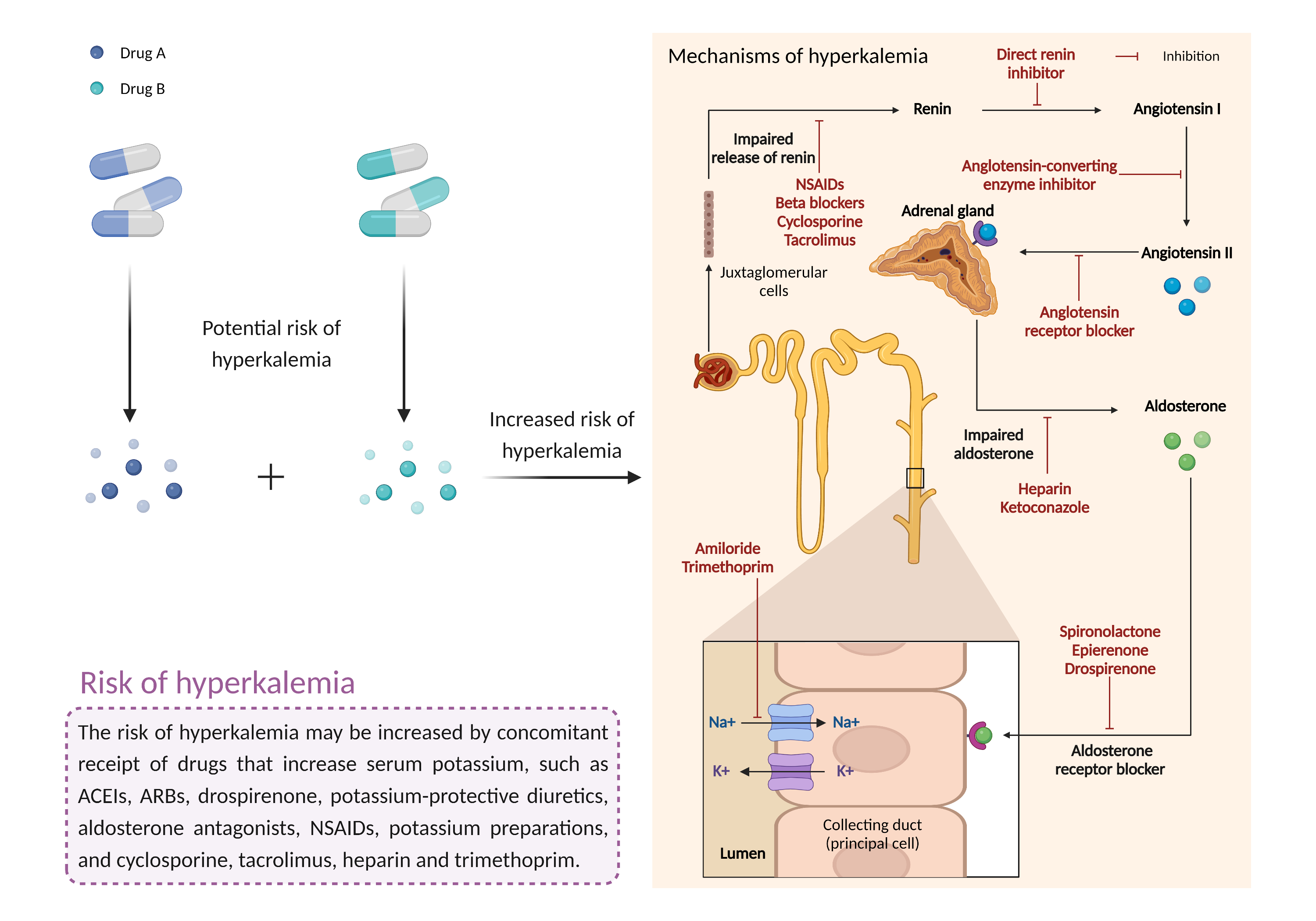
     Increased risk of hyperkalemia Click to Show/Hide Mechanism Graph
Could Not Find 2D Structure
      Drug Name Potassium Iodide Azilsartan medoxomil
      Mechanism Hyperkalemia Hyperkalemia
      Key Mechanism Factor 1
Factor Name Hyperkalemia
Factor Description Hyperkalemia is a condition in which the level of potassium in the blood is higher than normal. While mild cases may not produce symptoms, severe hyperkalemia can lead to fatal arrhythmias if left untreated.
      Mechanism Description
  • Increased risk of hyperkalemia by the combination of Potassium Iodide and Azilsartan medoxomil 

Recommended Action
      Management Caution is advised if angiotensin II receptor blockers must be used concurrently with potassium salts, particularly in patients with renal impairment, diabetes, old age, severe or worsening heart failure, dehydration, or concomitant therapy with other agents that increase serum potassium such as nonsteroidal anti-inflammatory drugs, beta-blockers, cyclosporine, heparin, tacrolimus, and trimethoprim. The combination should generally be avoided in these patients unless absolutely necessary and the benefits outweigh the potential risks. Serum potassium and renal function should be checked prior to initiating therapy and regularly thereafter. Patients should be given counseling on the appropriate levels of potassium and fluid intake, and advised to seek medical attention if they experience signs and symptoms of hyperkalemia such as nausea, vomiting, weakness, listlessness, tingling of the extremities, paralysis, confusion, weak pulse, and a slow or irregular heartbeat.

References
1 Walmsley RN, White GH, Cain M, McCarthy PJ, Booth J "Hyperkalemia in the elderly." Clin Chem 30 (1984): 1409-12. [PMID: 6744599]
2 Product Information. Cozaar (losartan). Merck & Co, Inc, West Point, PA.
3 Jarman PR, Kehely AM, Mather HM "Hyperkalaemia in diabetes: prevalence and associations." Postgrad Med J 71 (1995): 551-2. [PMID: 7479468]
4 Jarman PR, Mather HM "Diabetes may be independent risk factor for hyperkalaemia." BMJ 327 (2003): 812. [PMID: 14525902]
5 Product Information. Diovan (valsartan). Novartis Pharmaceuticals, East Hanover, NJ.
6 Large DM, Carr PH, Laing I, Davies M "Hyperkalaemia in diabetes mellitus--potential hazards of coexisting hyporeninaemic hypoaldosteronism." Postgrad Med J 60 (1984): 370-3. [PMID: 6377287]
7 Perazella MA, Mahnensmith RL "Hyperkalemia in the elderly: drugs exacerbate impaired potassium homeostasis." J Gen Intern Med 12 (1997): 646-56. [PMID: 9346463]
8 Perazella MA "Drug-induced hyperkalemia: old culprits and new offenders." Am J Med 109 (2000): 307-14. [PMID: 10996582]
9 Lawson DH "Adverse reactions to potassium chloride." Q J Med 43 (1974): 433-40. [PMID: 4424028]
10 Lawson DH, O'Connor PC, Jick H "Drug attributed alterations in potassium handling in congestive cardiac failure." Eur J Clin Pharmacol 23 (1982): 21-5. [PMID: 7128669]
11 Obialo CI, Ofili EO, Mirza T "Hyperkalemia in congestive heart failure patients aged 63 to 85 years with subclinical renal disease." Am J Cardiol 90 (2002): 663-5. [PMID: 12231103]