
Details of Drug-Drug Interaction
| Drug General Information (ID: DDIA3Q0R4F) | |||||||||
|---|---|---|---|---|---|---|---|---|---|
| Drug Name | Arsenic trioxide | Drug Info | Ivabradine | Drug Info | |||||
| Drug Type | Small molecule | Small molecule | |||||||
| Therapeutic Class | Antineoplastics | Cardiovascular Agents | |||||||
| Structure | |||||||||
| Mechanism of Arsenic trioxide-Ivabradine Interaction (Severity Level: Major) | |||||||||
|---|---|---|---|---|---|---|---|---|---|
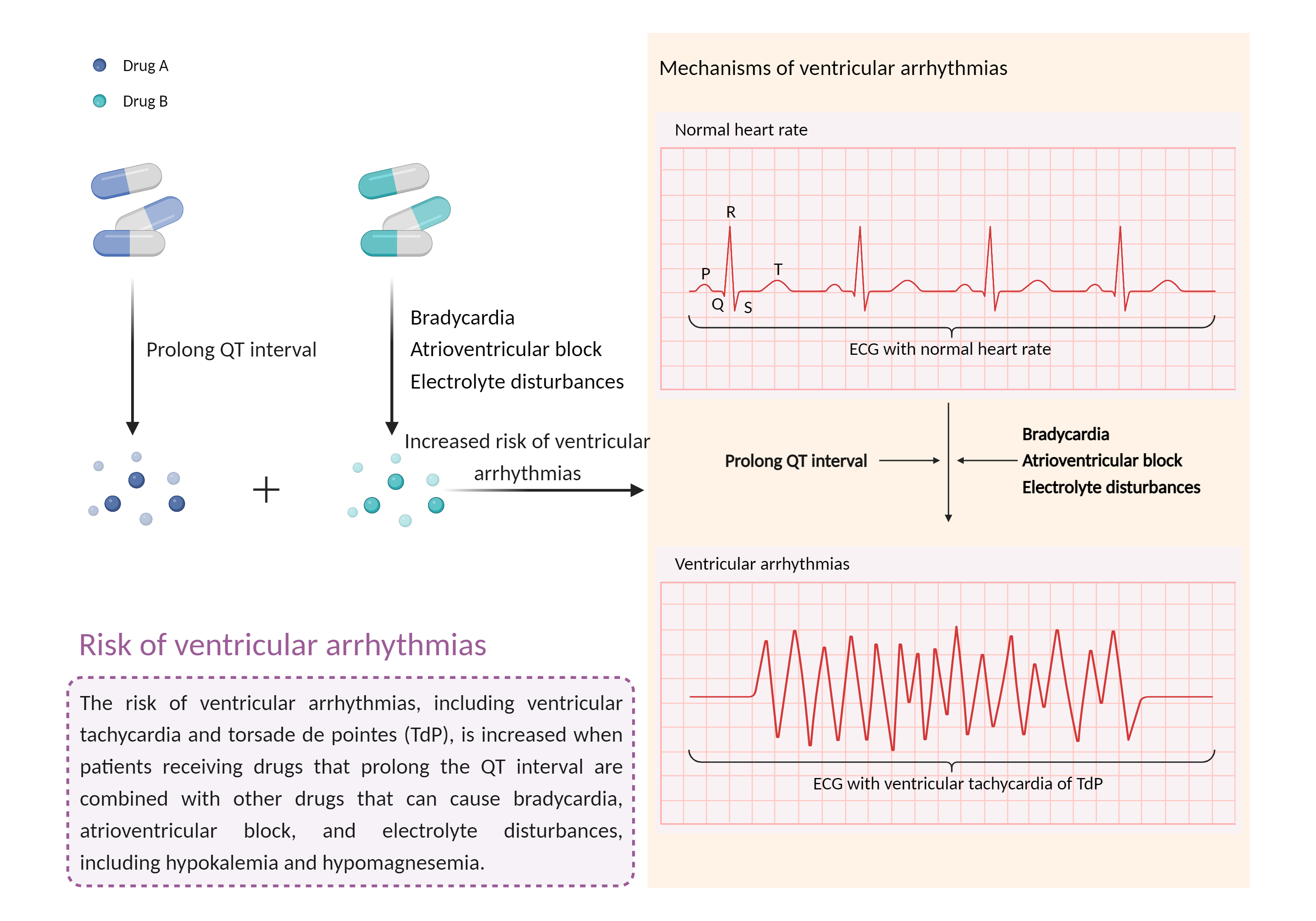
| Increased risk of ventricular arrhythmias Click to Show/Hide Mechanism Graph | |||||||||
 |
|||||||||
| Drug Name | Arsenic trioxide | Ivabradine | |||||||
| Mechanism | Prolong QT interval | Bradycardia | |||||||
| Key Mechanism Factor 1 | |||||||||
| Factor Name | Ventricular arrhythmias | ||||||||
| Factor Description | Ventricular arrhythmias are abnormal heart rhythms that cause your heart's lower chambers to pump blood instead of pumping it. This can limit or stop your heart from supplying blood to your body. While some of these arrhythmias are harmless and do not cause symptoms, others can have serious, even fatal, effects on your body. | ||||||||
| Mechanism Description |
|
||||||||
| Recommended Action | |||||||||
|---|---|---|---|---|---|---|---|---|---|
| Management | Coadministration of ivabradine with drugs that can prolong the QT interval should generally be avoided. Caution and cardiac monitoring are recommended if concomitant use is required. | ||||||||