
Details of Drug-Drug Interaction
| Drug General Information (ID: DDIZT9F8CG) | |||||||||
|---|---|---|---|---|---|---|---|---|---|
| Drug Name | Mecamylamine | Drug Info | Licorice | Drug Info | |||||
| Drug Type | Small molecule | Natural product | |||||||
| Therapeutic Class | Antihypertensive Agents | Herbal Products | |||||||
| Structure | |||||||||
| Mechanism of Mecamylamine-Licorice Interaction (Severity Level: Moderate) | |||||||||
|---|---|---|---|---|---|---|---|---|---|
| Antagonize the effect of antihypertensive agents Click to Show/Hide Mechanism Graph | |||||||||
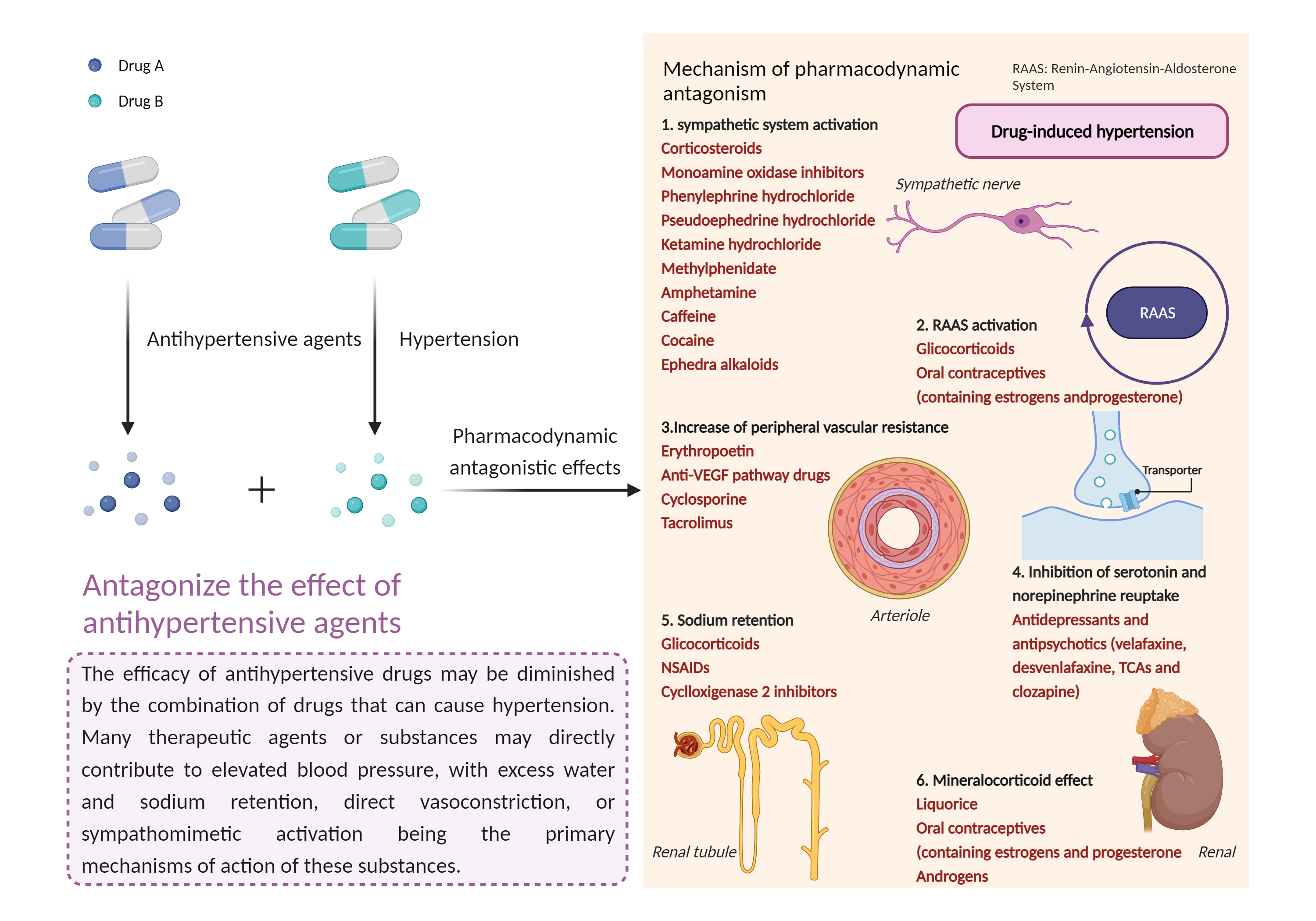 |
|||||||||
| Drug Name | Mecamylamine | Licorice | |||||||
| Mechanism |
Hypotensive effects Neuronal acetylcholine receptor Antagonist |
Hypertensive effects Mineralocorticoid and renin-suppressing effects |
|||||||
| Key Mechanism Factor 1 | |||||||||
| Factor Name | Neuronal acetylcholine receptor | Structure Sequence | |||||||
| Protein Family | Ligand-gated ion channel (TC 1.A.9) family | ||||||||
| Protein Function |
After binding acetylcholine, the AChR responds by an extensive change in conformation that affects all subunits and leads to opening of an ion-conducting channel across the plasma membrane.
Click to Show/Hide
|
||||||||
| Mechanism Description |
|
||||||||
| Recommended Action | |||||||||
|---|---|---|---|---|---|---|---|---|---|
| Management | Patients receiving antihypertensive therapy should avoid or limit the consumption of licorice-containing products. Even relatively moderate doses of licorice may be problematic in susceptible patients when ingested regularly for prolonged periods. | ||||||||