
Details of Drug-Drug Interaction
| Drug General Information (ID: DDIZGXFQ6K) | |||||||||
|---|---|---|---|---|---|---|---|---|---|
| Drug Name | Ketorolac | Drug Info | Potassium Iodide | Drug Info | |||||
| Drug Type | Small molecule | Small molecule | |||||||
| Therapeutic Class | Analgesics | Minerals And Electrolytes | |||||||
| Structure | |||||||||
| Mechanism of Ketorolac-Potassium Iodide Interaction (Severity Level: Moderate) | |||||||||
|---|---|---|---|---|---|---|---|---|---|
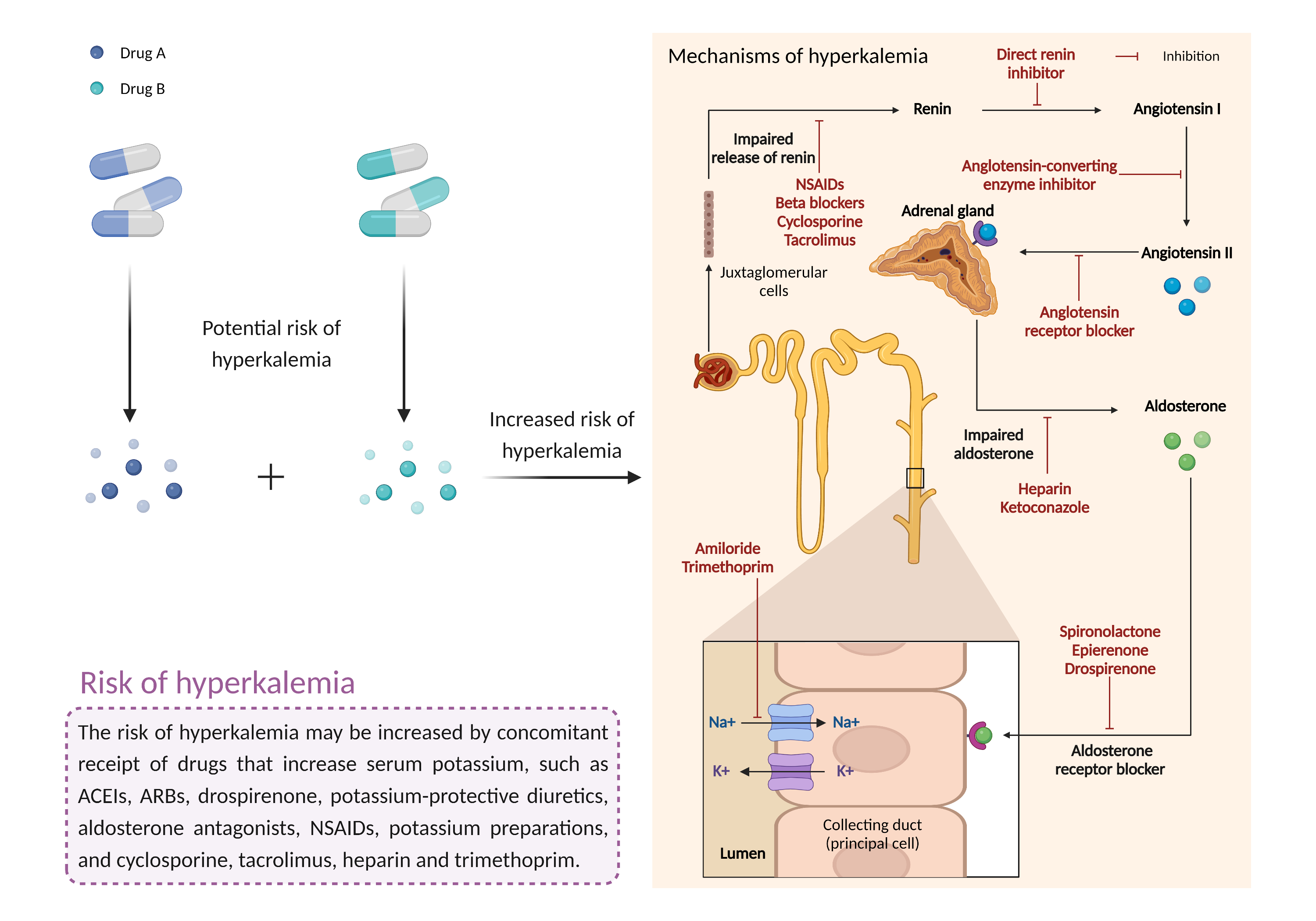
| Increased risk of hyperkalemia Click to Show/Hide Mechanism Graph | |||||||||
 |
|||||||||
| Drug Name | Ketorolac | Potassium Iodide | |||||||
| Mechanism | Hyperkalemia | Hyperkalemia | |||||||
| Key Mechanism Factor 1 | |||||||||
| Factor Name | Hyperkalemia | ||||||||
| Factor Description | Hyperkalemia is a condition in which the level of potassium in the blood is higher than normal. While mild cases may not produce symptoms, severe hyperkalemia can lead to fatal arrhythmias if left untreated. | ||||||||
| Mechanism Description |
|
||||||||
| Recommended Action | |||||||||
|---|---|---|---|---|---|---|---|---|---|
| Management | Closely monitor potassium levels in patients receiving both potassium salts and NSAID therapy, especially those with renal impairment, diabetes, older age, severe or worsening heart failure, dehydration, or concomitant therapy with other agents that increase serum potassium (e.g., beta-blockers, cyclosporine, heparin, tacrolimus, and trimethoprim). Patients should be advised to seek medical attention if they experience signs and symptoms of hyperkalemia such as nausea, vomiting, weakness, listlessness, tingling of the extremities, paralysis, confusion, weak pulse, and a slow or irregular heartbeat. | ||||||||