Drug General Information (ID: DDIZA46BSP)
  Drug Name Alprazolam Drug Info Ethotoin Drug Info
  Drug Type Small molecule Small molecule
  Therapeutic Class Anxiolytics/Sedatives/Hypnotics Anticonvulsants
  Structure

 Mechanism of Alprazolam-Ethotoin Interaction (Severity Level: Moderate)
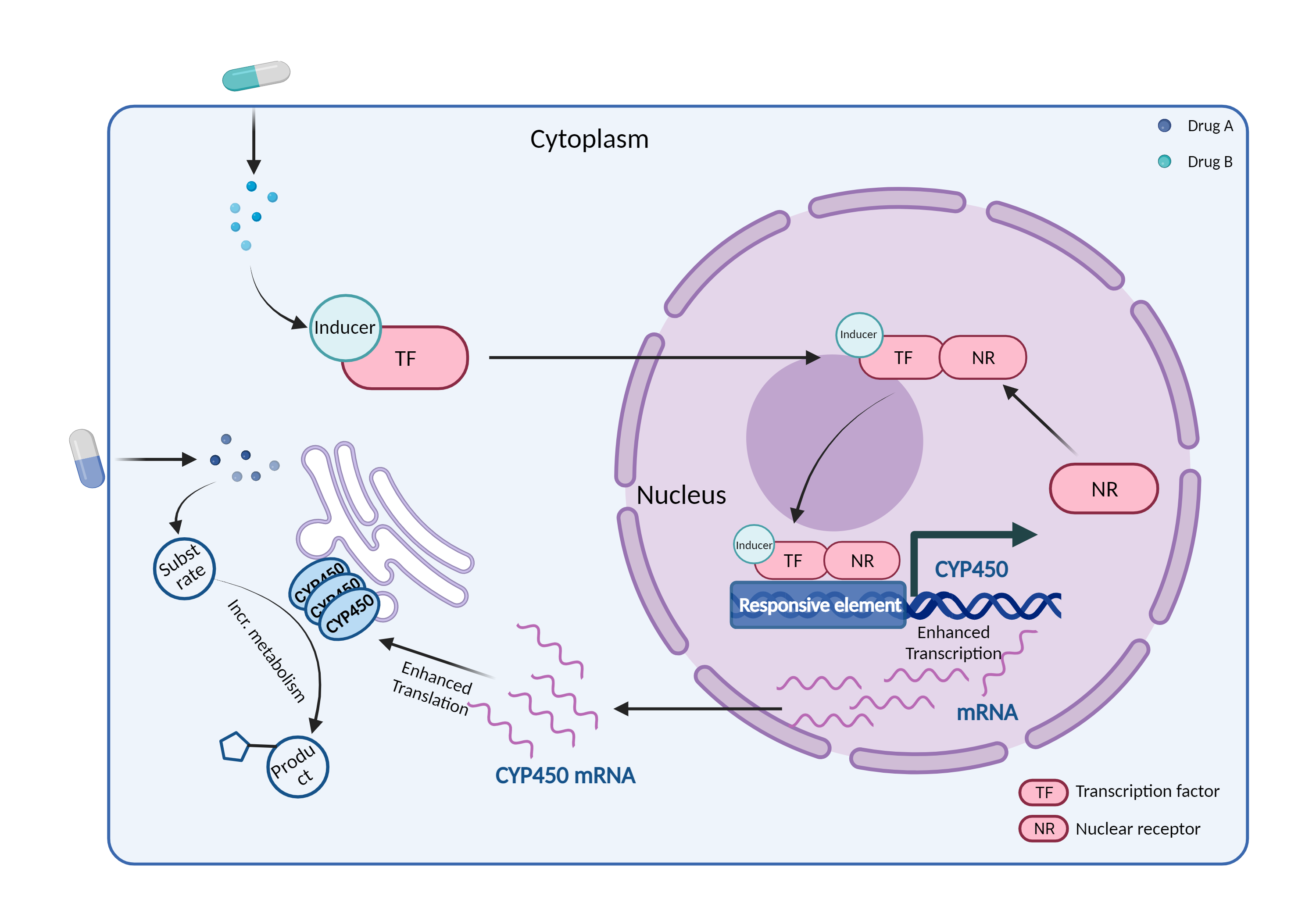
     CYP450 enzyme induction Click to Show/Hide Mechanism Graph
Could Not Find 2D Structure
      Drug Name Alprazolam Ethotoin
      Mechanism CYP450 substrate CYP450 inducer
      Key Mechanism Factor 1
Factor Name Cytochrome P450 Structure Sequence
Protein Family Cytochrome P450 family
Protein Function
A cytochrome P450 monooxygenase involved in the metabolism of sterols, steroid hormones, retinoids and fatty acids (PubMed:10681376, PubMed:11093772, PubMed:11555828, PubMed:14559847, PubMed:12865317, PubMed:15373842, PubMed:15764715, PubMed:20702771, PubMed:19965576, PubMed:21490593, PubMed:21576599). Mechanistically, uses molecular oxygen inserting one oxygen atom into a substrate, and reducing the second into a water molecule, with two electrons provided by NADPH via cytochrome P450 reductase (NADPH--hemoprotein reductase). Catalyzes the hydroxylation of carbon-hydrogen bonds (PubMed:2732228, PubMed:14559847, PubMed:12865317, PubMed:15373842, PubMed:15764715, PubMed:21576599, PubMed:21490593). Exhibits high catalytic activity for the formation of hydroxyestrogens from estrone (E1) and 17beta-estradiol (E2), namely 2-hydroxy E1 and E2, as well as D-ring hydroxylated E1 and E2 at the C-16 position (PubMed:11555828, PubMed:14559847, PubMed:12865317). Plays a role in the metabolism of androgens, particularly in oxidative deactivation of testosterone (PubMed:2732228, PubMed:15373842, PubMed:15764715, PubMed:22773874). Metabolizes testosterone to less biologically active 2beta- and 6beta-hydroxytestosterones (PubMed:2732228, PubMed:15373842, PubMed:15764715). Contributes to the formation of hydroxycholesterols (oxysterols), particularly A-ring hydroxylated cholesterol at the C-4beta position, and side chain hydroxylated cholesterol at the C-25 position, likely contributing to cholesterol degradation and bile acid biosynthesis (PubMed:21576599). Catalyzes bisallylic hydroxylation of polyunsaturated fatty acids (PUFA) (PubMed:9435160). Catalyzes the epoxidation of double bonds of PUFA with a preference for the last double bond (PubMed:19965576). Metabolizes endocannabinoid arachidonoylethanolamide (anandamide) to 8,9-, 11,12-, and 14,15-epoxyeicosatrienoic acid ethanolamides (EpETrE-EAs), potentially modulating endocannabinoid system signaling (PubMed:20702771). Plays a role in the metabolism of retinoids. Displays high catalytic activity for oxidation of all-trans-retinol to all-trans-retinal, a rate-limiting step for the biosynthesis of all-trans-retinoic acid (atRA) (PubMed:10681376). Further metabolizes atRA toward 4-hydroxyretinoate and may play a role in hepatic atRA clearance (PubMed:11093772). Responsible for oxidative metabolism of xenobiotics. Acts as a 2-exo-monooxygenase for plant lipid 1,8-cineole (eucalyptol) (PubMed:11159812). Metabolizes the majority of the administered drugs. Catalyzes sulfoxidation of the anthelmintics albendazole and fenbendazole (PubMed:10759686). Hydroxylates antimalarial drug quinine (PubMed:8968357). Acts as a 1,4-cineole 2-exo-monooxygenase (PubMed:11695850). Also involved in vitamin D catabolism and calcium homeostasis. Catalyzes the inactivation of the active hormone calcitriol (1-alpha,25-dihydroxyvitamin D(3)) (PubMed:29461981).
    Click to Show/Hide
      Mechanism Description
  • Increased metabolism of Alprazolam caused by Ethotoin mediated induction of CYP450 enzyme

Recommended Action
      Management Pharmacologic response and serum hydantoin levels should be monitored more closely whenever a benzodiazepine is added to or withdrawn from therapy, and the hydantoin dosage adjusted as necessary. Patients should be advised to contact their physician if they experience symptoms of hydantoin toxicity such as nausea, vomiting, tremors, ataxia, lethargy, slurred speech, visual disturbances, or changes in mental status. The potential for diminished or inadequate benzodiazepine effects should be considered during concomitant use with phenytoin.

References
1 Backman JT, Olkkola KT, Ojala M, Laaksovirta H, Neuvonen PJ "Concentrations and effects of oral midazolam are greatly reduced in patients treated with carbamazepine or phenytoin." Epilepsia 37 (1996): 253-7. [PMID: 8598183]
2 Johannessen SI, Strandjord RE, Munthe-Kaas AW "Lack of effect of clonazepam on serum levels of diphenylhydantoin, phenobarbital and carbamazepine." Acta Neurol Scand 55 (1977): 506-12. [PMID: 878840]
3 Khoo KC, Mendels J, Rothbart M, et al "Influence of phenytoin and phenobarbital on the disposition of a single oral dose of clonazepam." Clin Pharmacol Ther 28 (1980): 368-75. [PMID: 7408397]
4 Kutt H "Interactions of antiepileptic drugs." Epilepsia 16 (1975): 393-402. [PMID: 50232]
5 Murphy A, Wilbur K "Phenytoin-diazepam interaction." Ann Pharmacother 37 (2003): 659-63. [PMID: 12708941]
6 Saavedra IN, Aguilera LI, Faure E, Galdames DG "Phenytoin/clonazepam interaction." Ther Drug Monit 7 (1985): 481-4. [PMID: 4082246]
7 Scott AK, Khir AS, Steele WH, et al "Oxazepam pharmacokinetics in patients with epilepsy treated long-term with phenytoin alone or in combination with phenobarbitone." Br J Clin Pharmacol 16 (1983): 441-4. [PMID: 6626439]
8 Sennoune S, Mesdjian E, Bonneton J, et al "Interactions between clobazam and standard antiepileptic drugs in patients with epilepsy." Ther Drug Monit 14 (1992): 269-74. [PMID: 1519299]
9 Shuttleworth E, Wise G, Paulson G "Choreoathetosis and diphenylhydantoin intoxication." JAMA 230 (1974): 1170-1. [PMID: 4479423]
10 Siris JH, Pippenger CE, Werner WL, Masland RL "Anticonvulsant drug-serum levels in psychiatric patients with seizure disorders. Effects of certain psychotropic drugs." N Y State J Med 74 (1974): 1554-6. [PMID: 4527066]
11 Vajda FJ, Prineas RJ, Lovell RR "Interaction between phenytoin and the benzodiazepines." Br Med J 1 (1971): 346. [PMID: 5541733]
12 Windorfer A Jr, Sauer W "Drug interactions during anticonvulsant therapy in childhood: diphenylhydantoin, primidone, phenobarbitone, clonazepam, nitrazepam, carbamazepin and dipropylacetate." Neuropadiatrie 8 (1977): 29-41. [PMID: 321985]
13 Zifkin B, Sherwin A, Andermann F "Phenytoin toxicity due to interaction with clobazam." Neurology 41 (1991): 313-4. [PMID: 1992382]