
Details of Drug-Drug Interaction
| Drug General Information (ID: DDIZ4OSJK8) | |||||||||
|---|---|---|---|---|---|---|---|---|---|
| Drug Name | Lamivudine | Drug Info | Ribavirin | Drug Info | |||||
| Drug Type | Small molecule | Small molecule | |||||||
| Therapeutic Class | Anti-Hiv Agents | Antiviral Agents | |||||||
| Structure | |||||||||
| Mechanism of Lamivudine-Ribavirin Interaction (Severity Level: Moderate) | |||||||||
|---|---|---|---|---|---|---|---|---|---|
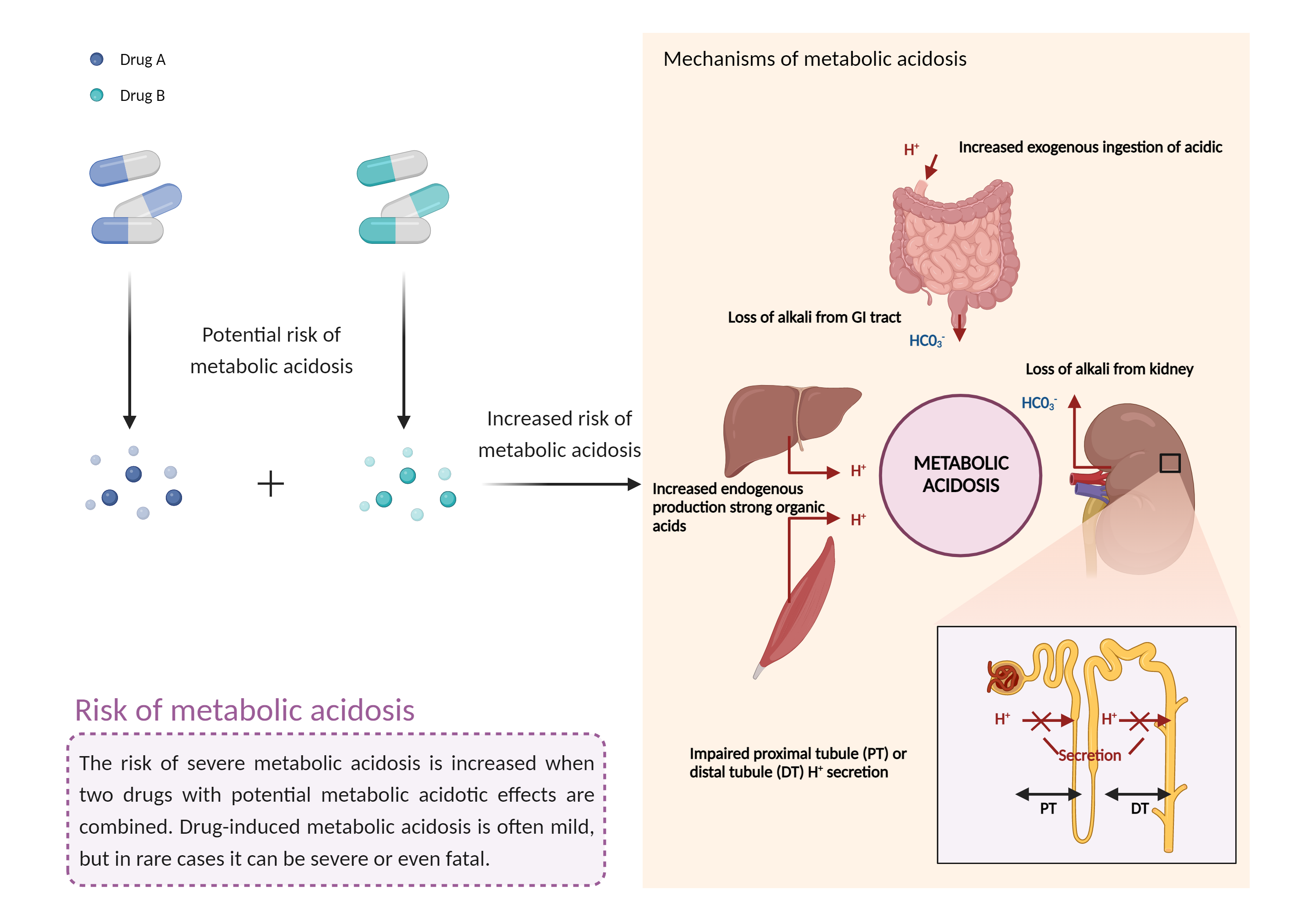
| Increased risk of metabolic acidosis Click to Show/Hide Mechanism Graph | |||||||||
 |
|||||||||
| Drug Name | Lamivudine | Ribavirin | |||||||
| Mechanism | Metabolic acidosis | Metabolic acidosis | |||||||
| Key Mechanism Factor 1 | |||||||||
| Factor Name | Metabolic acidosis | ||||||||
| Factor Description | Metabolic acidosis is a clinical disorder defined as a pH below 7.35 and low HCO3 levels. Metabolic acidosis occurs when the body produces too much acid or the kidneys are unable to remove enough acid from the body. Symptoms vary depending on the underlying cause, but some common symptoms are as follows: shortness of breath, confusion, fatigue, shock, fruity taste of the patient's breath (diabetic ketoacidosis), rapid heartbeat, headache, weakness, and nausea. | ||||||||
| Mechanism Description |
|
||||||||
| Recommended Action | |||||||||
|---|---|---|---|---|---|---|---|---|---|
| Management | Coadministration of ribavirin and NRTIs should be undertaken with caution and only if the benefit is anticipated to outweigh the potential risks. Patients should be advised to promptly seek medical attention if they experience symptoms of toxicity such as nausea, vomiting, abdominal pain/distention, fatigue, unexplained weight loss, tachypnea, dyspnea, motor weakness, numbness, tingling, and pain in hands and feet. | ||||||||