| Mechanism of Diclofenamide-Digitoxin Interaction
(Severity Level: Moderate)
|
|
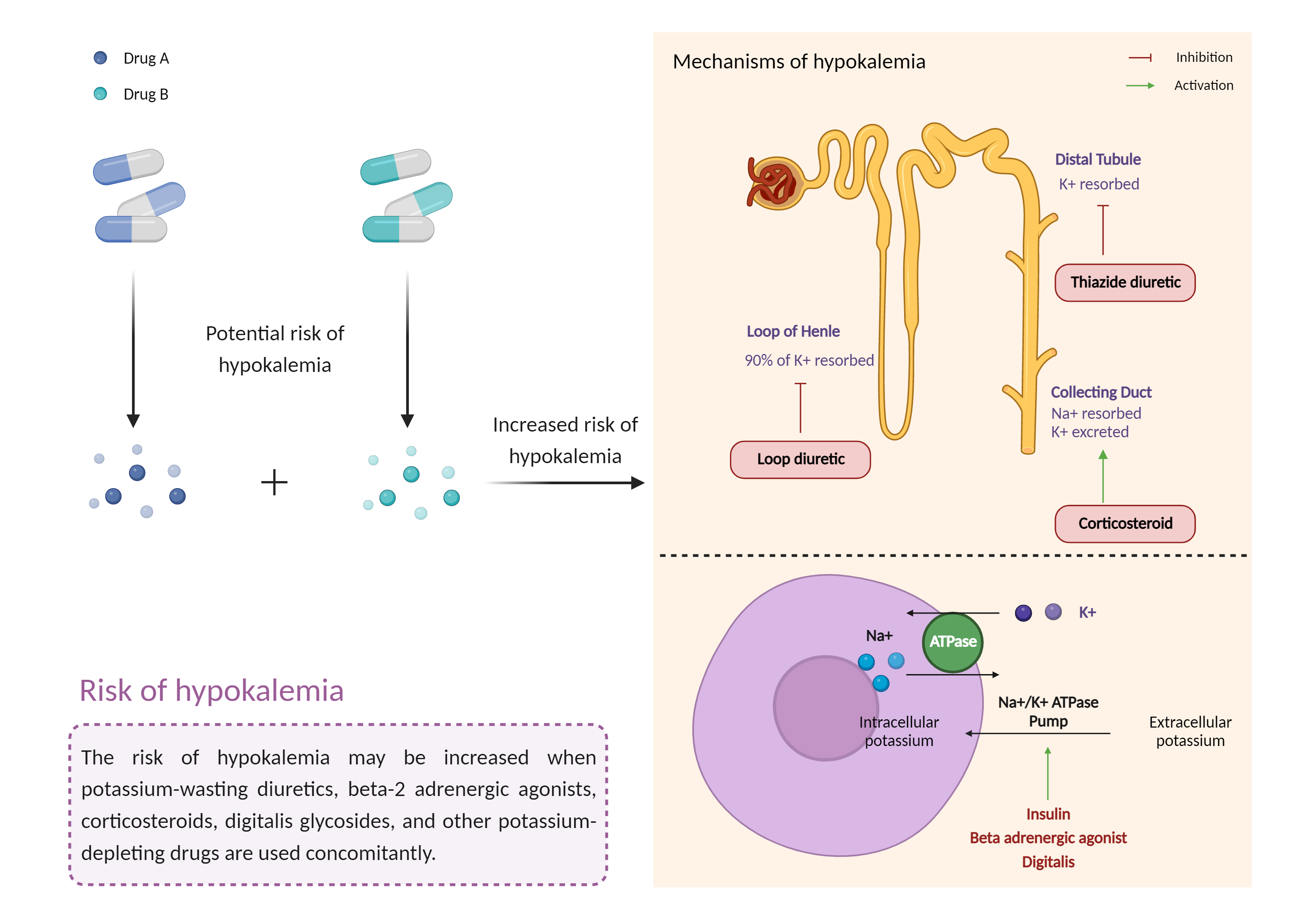
Increased risk of hypokalemia
Click to Show/Hide Mechanism Graph
|
 |
| Drug Name |
Diclofenamide |
Digitoxin |
|
Mechanism 1
|
Hypokalemia |
Hypokalemia |
| Key Mechanism Factor 1 |
| Factor Name |
Hypokalemia |
| Factor Description |
Hypokalemia is a condition in which the amount of potassium in your blood is lower than normal. If you are mildly hypokalemic, you may not have any signs or symptoms, but severe hypokalemia may have the following symptoms: fatigue, constipation, frequent or heavy urination, muscle cramps or skin tingling, muscle weakness, and a fast or irregular heartbeat. |
| Mechanism Description |
- Increased risk of hypokalemia by the combination of Diclofenamide and Digitoxin
|
|
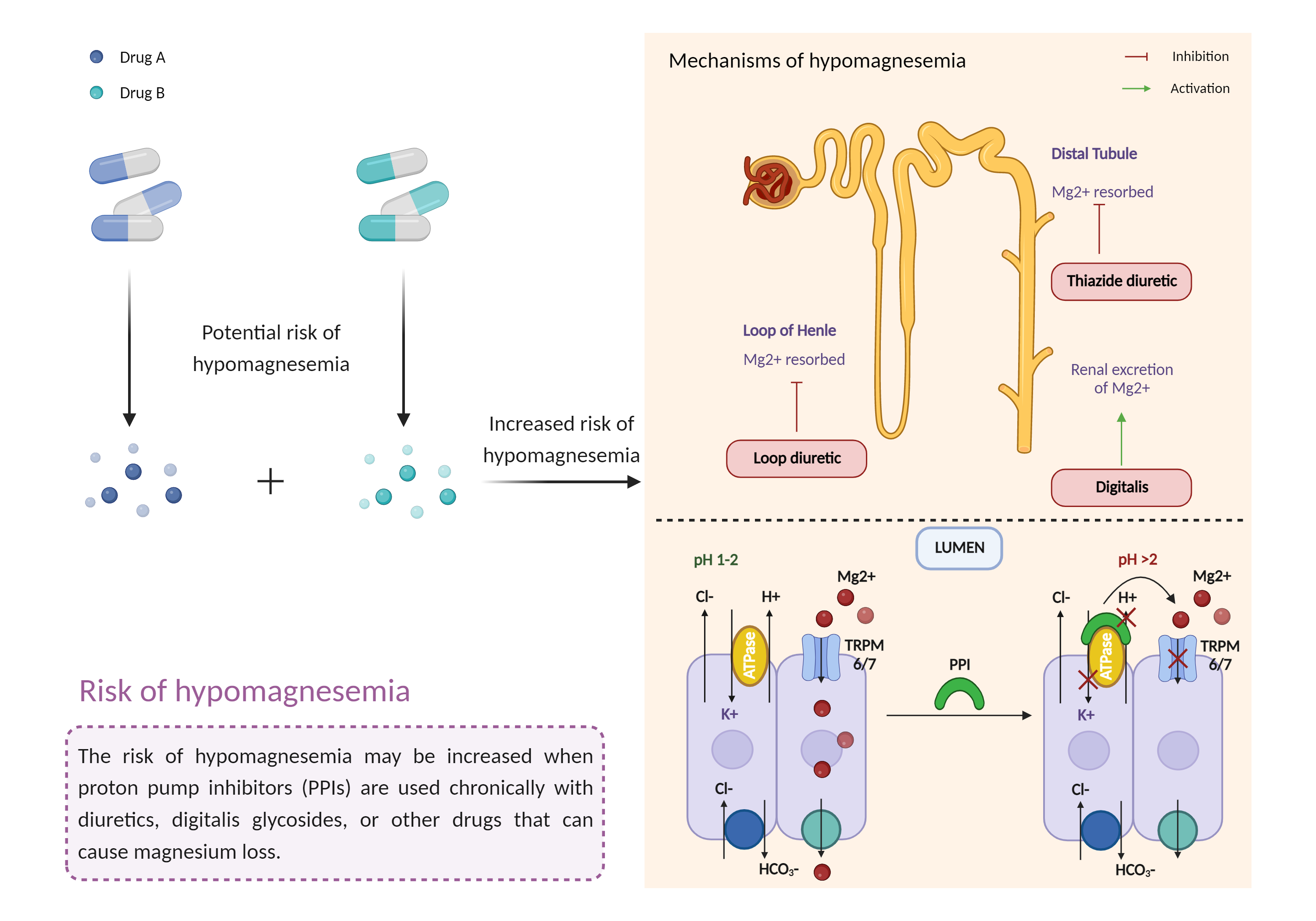
Increased risk of hypomagnesemia
Click to Show/Hide Mechanism Graph
|
 |
| Drug Name |
Diclofenamide |
Digitoxin |
|
Mechanism 2
|
Hypomagnesemia |
Hypomagnesemia |
| Key Mechanism Factor 2 |
| Factor Name |
Hypomagnesemia |
| Factor Description |
Hypomagnesemia is a condition that occurs when you have too much magnesium in your body. Symptoms of hypomagnesemia include: nausea, vomiting, neurological damage, abnormally low blood pressure (hypotension), flushing, and headaches. |
| Mechanism Description |
- Increased risk of hypomagnesemia by the combination of Diclofenamide and Digitoxin
|
