
Details of Drug-Drug Interaction
| Drug General Information (ID: DDIYK482V3) | |||||||||
|---|---|---|---|---|---|---|---|---|---|
| Drug Name | Nefazodone | Drug Info | Terazosin | Drug Info | |||||
| Drug Type | Small molecule | Small molecule | |||||||
| Therapeutic Class | Antidepressants | Antineoplastics | |||||||
| Structure | |||||||||
| Mechanism of Nefazodone-Terazosin Interaction (Severity Level: Moderate) | |||||||||
|---|---|---|---|---|---|---|---|---|---|
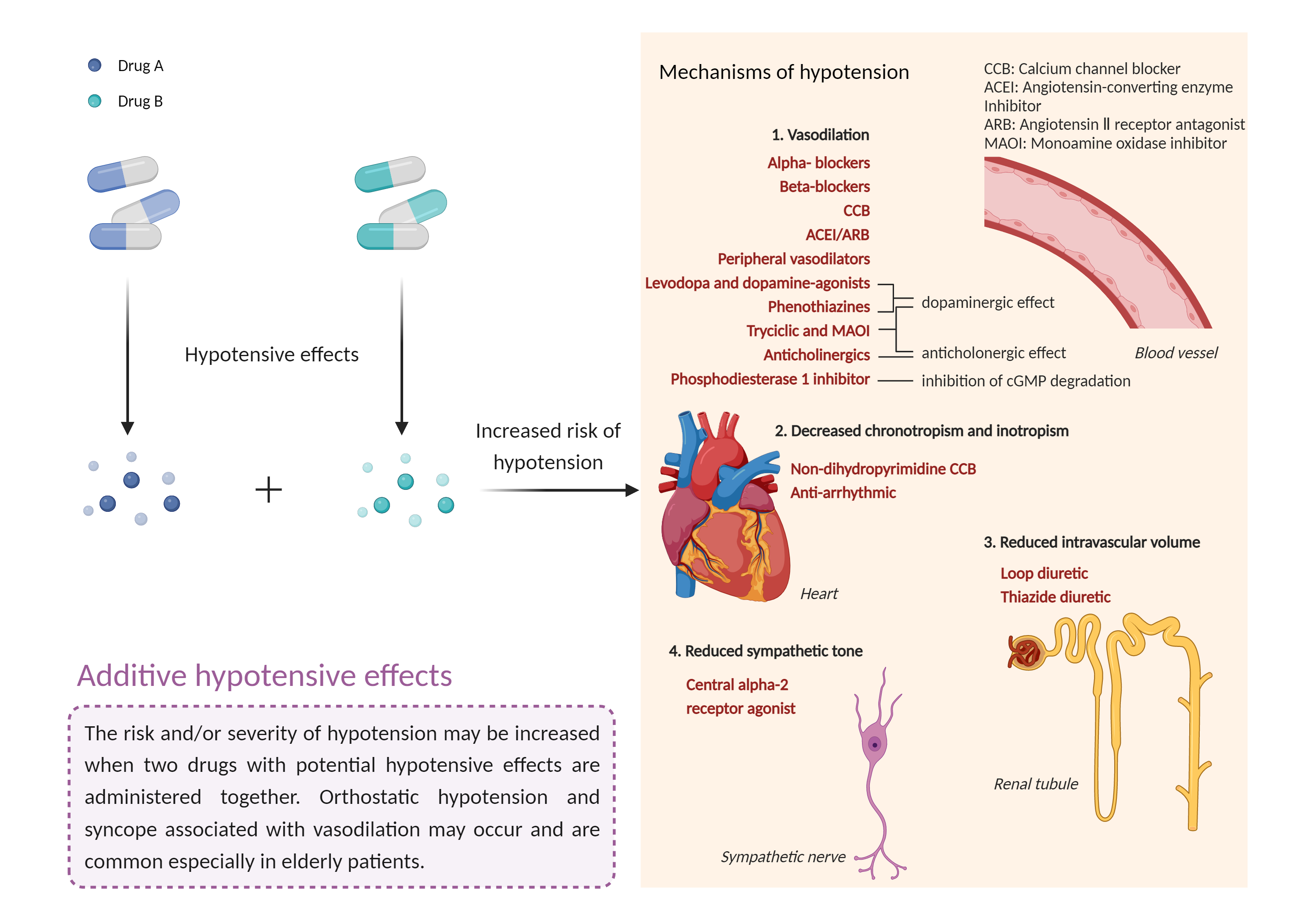
| Additive hypotensive effects Click to Show/Hide Mechanism Graph | |||||||||
 |
|||||||||
| Drug Name | Nefazodone | Terazosin | |||||||
| Mechanism | Potentiate the hypotensive effect of antihypertensive agents |
Antihypertensive agent Alpha-1 adrenergic receptor Antagonist |
|||||||
| Key Mechanism Factor 1 | |||||||||
| Factor Name | Adrenergic receptor alpha-1 | Structure Sequence | |||||||
| Protein Family | G-protein coupled receptor 1 family | ||||||||
| Protein Function |
This alpha-adrenergic receptor mediates its action by association with G proteins that activate a phosphatidylinositol-calcium second messenger system. Its effect is mediated by G(q) and G(11) proteins. Nuclear ADRA1A-ADRA1B heterooligomers regulate phenylephrine(PE)-stimulated ERK signaling in cardiac myocytes.
Click to Show/Hide
|
||||||||
| Mechanism Description |
|
||||||||
| Recommended Action | |||||||||
|---|---|---|---|---|---|---|---|---|---|
| Management | Caution and close monitoring for altered efficacy and safety are recommended if patients receive nefazodone with agents that can produce significant hypotension such as antihypertensive agents or vasodilators. Patients should be made aware of the possible side effects (e.g., dizziness, lightheadedness, orthostasis) and be cautioned about driving, operating machinery, or performing other hazardous tasks. | ||||||||