
Details of Drug-Drug Interaction
| Drug General Information (ID: DDIYIU5WAR) | |||||||||
|---|---|---|---|---|---|---|---|---|---|
| Drug Name | Chloroquine | Drug Info | Penicillamine | Drug Info | |||||
| Drug Type | Small molecule | Small molecule | |||||||
| Therapeutic Class | Antimalarial Agents | Antidotes | |||||||
| Structure | |||||||||
| Mechanism of Chloroquine-Penicillamine Interaction (Severity Level: Moderate) | |||||||||
|---|---|---|---|---|---|---|---|---|---|
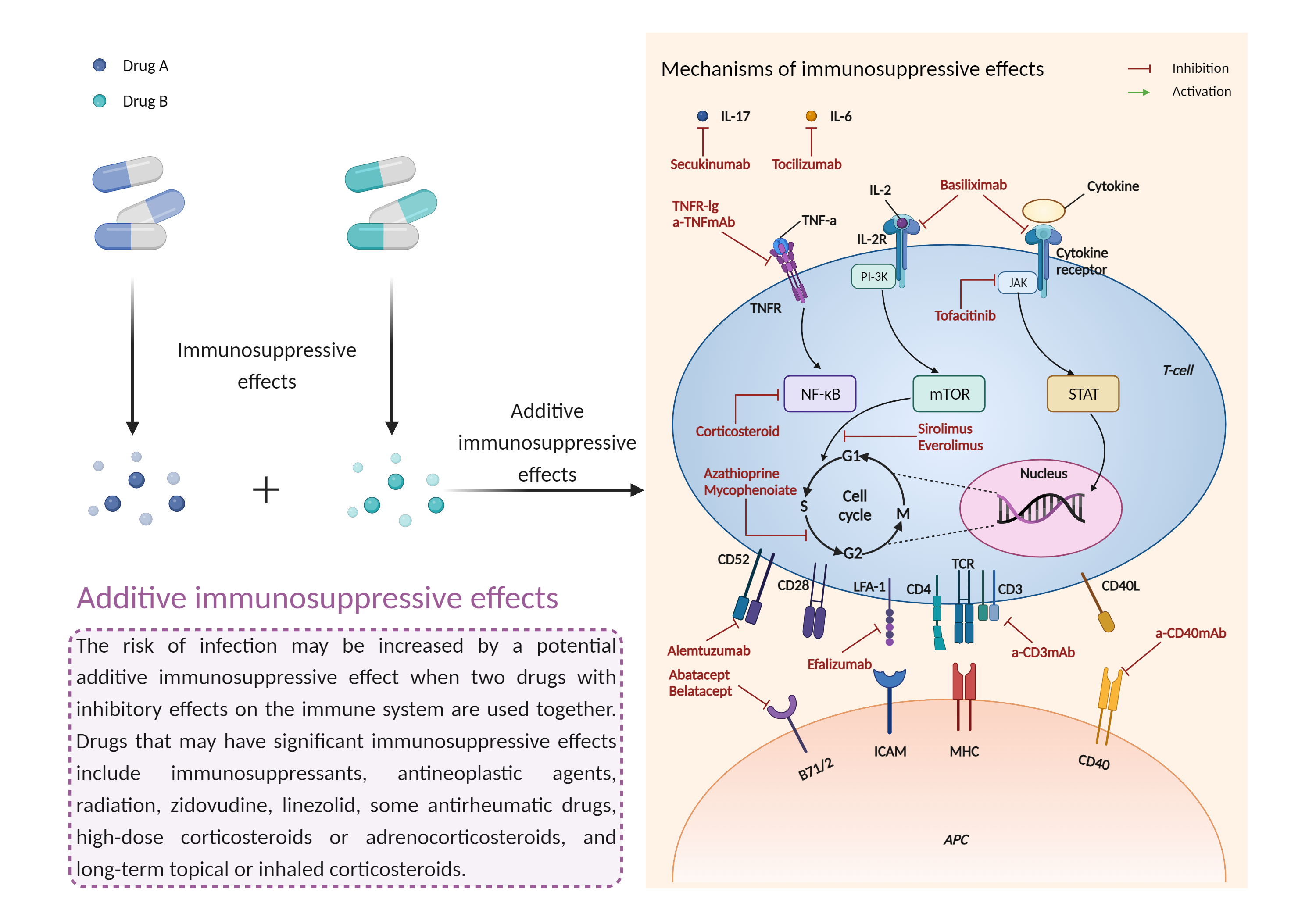
| Additive immunosuppressive effects Click to Show/Hide Mechanism Graph | |||||||||
 |
|||||||||
| Drug Name | Chloroquine | Penicillamine | |||||||
| Mechanism | Myelosuppressive effects | Myelosuppressive effects | |||||||
| Key Mechanism Factor 1 | |||||||||
| Factor Name | Immunosuppressive effects | ||||||||
| Factor Description | Immunosuppression is when your immune system is not functioning as it should. The immune system is made up of cells, tissues and organs that help the body fight off infections. If the immune system is suppressed, an infection that your body was able to control may become serious or even fatal. | ||||||||
| Mechanism Description |
|
||||||||
| Recommended Action | |||||||||
|---|---|---|---|---|---|---|---|---|---|
| Management | In general, penicillamine and chloroquine or hydroxychloroquine therapy should not be administered concurrently. Caution is advised if these drugs must be used together. Pharmacologic response to penicillamine should be monitored more closely whenever chloroquine is added to or withdrawn from therapy, and the penicillamine dosage adjusted as necessary. Patients should be advised to notify their physician if they experience signs and symptoms of toxicity such as fever, chills, sore throat, unusual bruising or bleeding, hematuria, coughing, wheezing, unexplained shortness of breath, muscle weakness, or visual disturbances. | ||||||||