
Details of Drug-Drug Interaction
| Drug General Information (ID: DDIYGRDNK1) | |||||||||
|---|---|---|---|---|---|---|---|---|---|
| Drug Name | Ticlopidine | Drug Info | Escitalopram | Drug Info | |||||
| Drug Type | Small molecule | Small molecule | |||||||
| Therapeutic Class | Fibrinolytic Agents | Antidepressants | |||||||
| Structure | |||||||||
| Mechanism of Ticlopidine-Escitalopram Interaction (Severity Level: Moderate) | |||||||||
|---|---|---|---|---|---|---|---|---|---|
| Increased risk of bleeding Click to Show/Hide Mechanism Graph | |||||||||
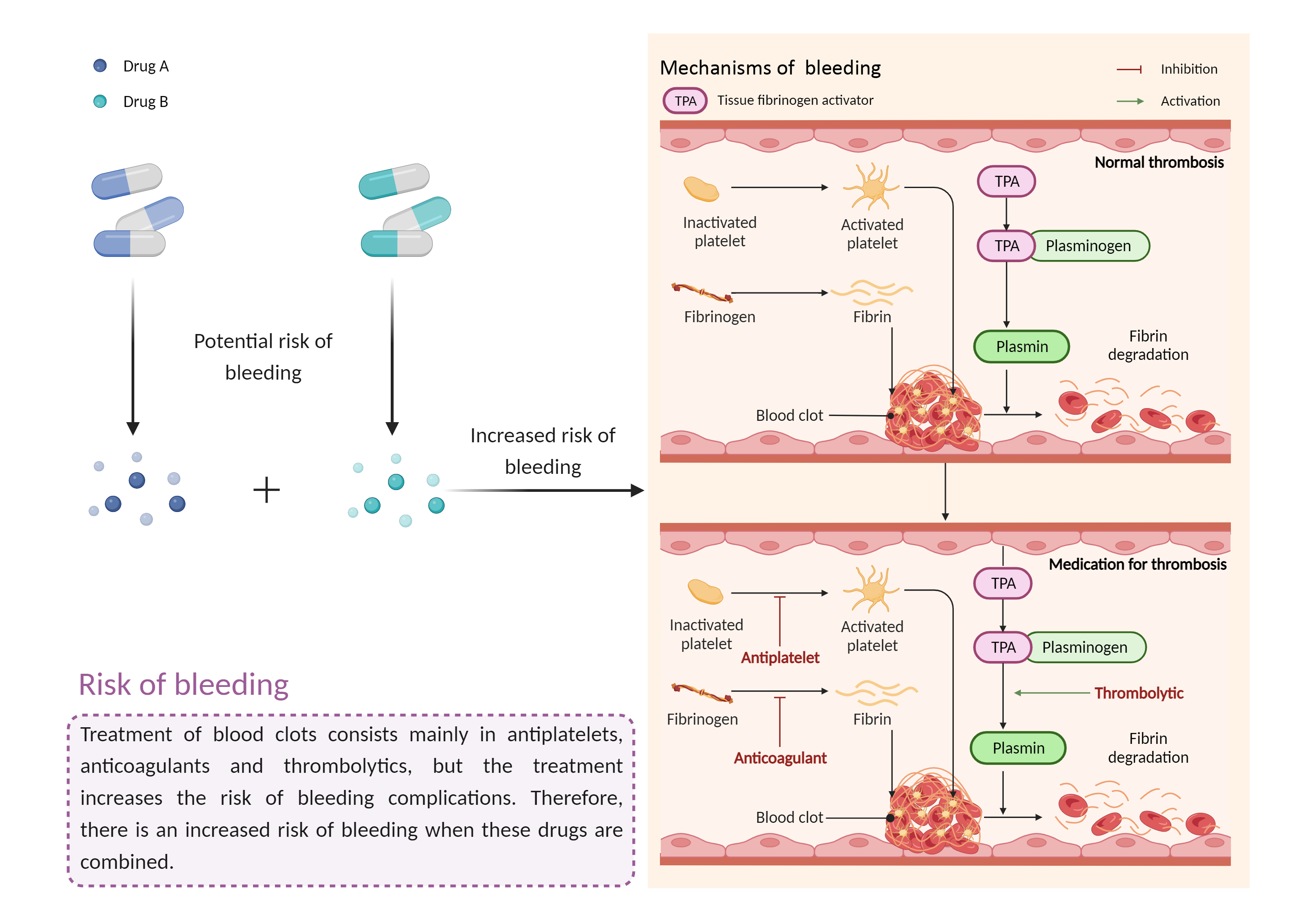 |
|||||||||
| Drug Name | Ticlopidine | Escitalopram | |||||||
| Mechanism 1 |
Risk of bleeding Antiplatelet |
Risk of bleeding Antiplatelet effects |
|||||||
| Key Mechanism Factor 1 | |||||||||
| Factor Name | Bleeding | ||||||||
| Factor Description | Patients may be at risk for bleeding when the outcome of a disease or disease treatment confounds the standard mechanisms for maintaining hemostasis. Signs or symptoms of abnormal bleeding include: bleeding that takes a long time to stop (including nosebleeds, bleeding gums, bleeding from cuts and abrasions, and menstrual bleeding); severe unexplained bruising, or bruising that becomes larger; blood in the urine or stool, etc. | ||||||||
| Mechanism Description |
|
||||||||
| Mechanism 2 |
Risk of bleeding Antiplatelet |
Risk of bleeding Antiplatelet effects |
|||||||
| Key Mechanism Factor 2 | |||||||||
| Factor Name | Bleeding | ||||||||
| Factor Description | Patients may be at risk for bleeding when the outcome of a disease or disease treatment confounds the standard mechanisms for maintaining hemostasis. Signs or symptoms of abnormal bleeding include: bleeding that takes a long time to stop (including nosebleeds, bleeding gums, bleeding from cuts and abrasions, and menstrual bleeding); severe unexplained bruising, or bruising that becomes larger; blood in the urine or stool, etc. | ||||||||
| Mechanism Description |
|
||||||||
| Recommended Action | |||||||||
|---|---|---|---|---|---|---|---|---|---|
| Management | Caution is advised if escitalopram must be used in combination with CYP450 2C19 inhibitors including ticlopidine. Pharmacologic response to escitalopram should be monitored more closely whenever ticlopidine is added to or withdrawn from therapy, and the escitalopram dosage adjusted as necessary. This may be particularly important in patients receiving escitalopram at the upper end of the dosage range. Patients should be advised to seek medical attention if they experience symptoms that could indicate the occurrence of torsade de pointes such as dizziness, lightheadedness, fainting, palpitation, irregular heartbeat, shortness of breath, or syncope. Patients should also be closely monitored for symptoms of the serotonin syndrome and potential bleeding complications during treatment. | ||||||||