| Mechanism of Cyclosporine-Trandolapril Interaction
(Severity Level: Moderate)
|
|
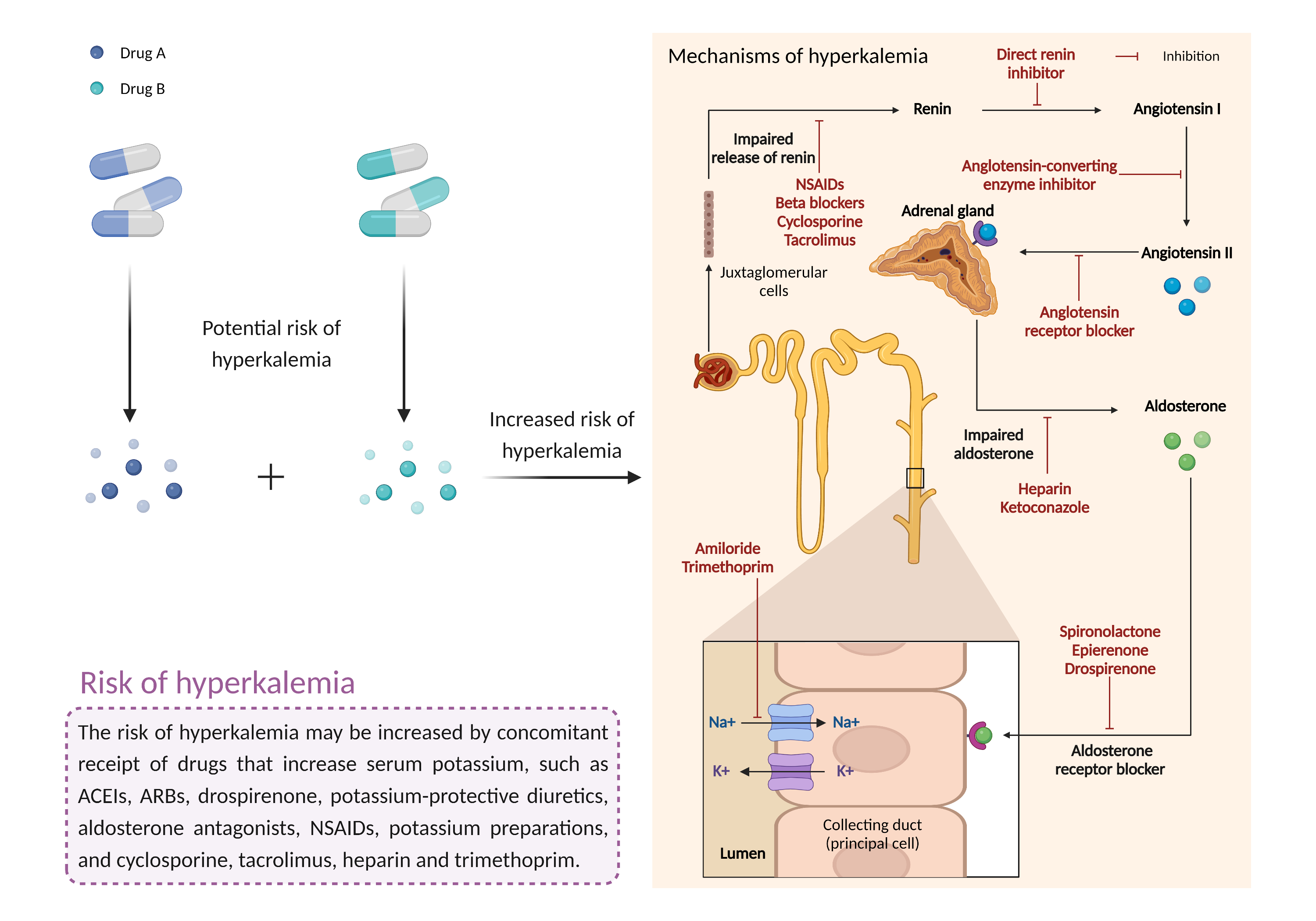
Increased risk of hyperkalemia
Click to Show/Hide Mechanism Graph
|
 |
| Drug Name |
Cyclosporine |
Trandolapril |
|
Mechanism 1
|
Hyperkalemia |
Hyperkalemia |
| Key Mechanism Factor 1 |
| Factor Name |
Hyperkalemia |
| Factor Description |
Hyperkalemia is a condition in which the level of potassium in the blood is higher than normal. While mild cases may not produce symptoms, severe hyperkalemia can lead to fatal arrhythmias if left untreated. |
| Mechanism Description |
- Increased risk of hyperkalemia by the combination of Cyclosporine and Trandolapril
|
|
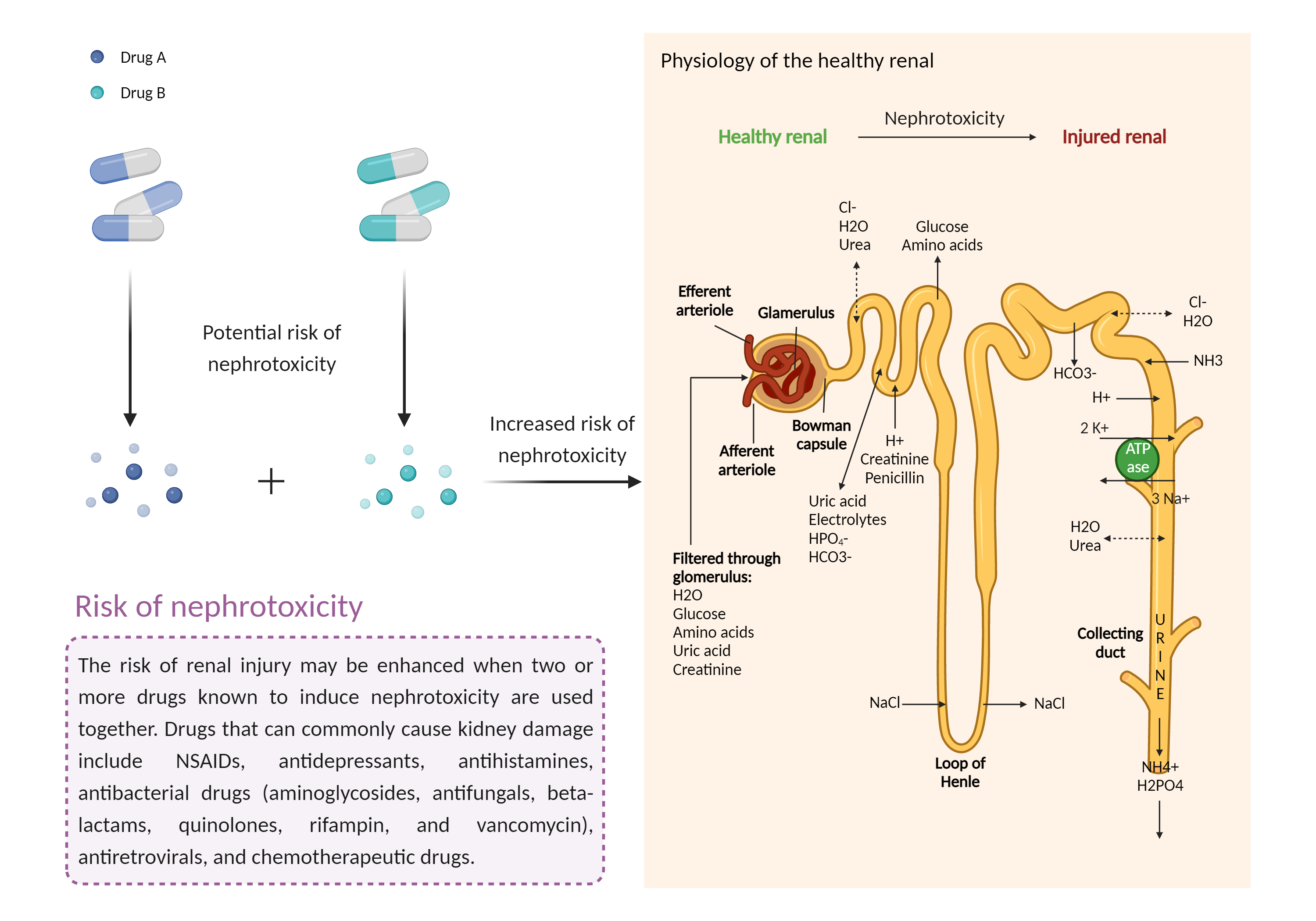
Increased risk of nephrotoxicity
Click to Show/Hide Mechanism Graph
|
 |
| Drug Name |
Cyclosporine |
Trandolapril |
| Mechanism 2 |
Nephrotoxicity |
Nephrotoxicity |
| Key Mechanism Factor 2 |
| Factor Name |
Nephrotoxicity |
| Factor Description |
The combination of drugs that can induce nephrotoxicity may increase the risk of kidney injury. When kidney injury occurs, the inability to remove excess urine and waste from the body can lead to high levels of urea nitrogen, creatinine, and electrolytes (such as potassium and magnesium) in the blood. |
| Mechanism Description |
- Increased risk of nephrotoxicity by the combination of Cyclosporine and Trandolapril
|
| Mechanism 3 |
Nephrotoxicity |
Nephrotoxicity
Decrease renal perfusion
|
| Key Mechanism Factor 3 |
| Factor Name |
Nephrotoxicity |
| Factor Description |
The combination of drugs that can induce nephrotoxicity may increase the risk of kidney injury. When kidney injury occurs, the inability to remove excess urine and waste from the body can lead to high levels of urea nitrogen, creatinine, and electrolytes (such as potassium and magnesium) in the blood. |
| Mechanism Description |
- Increased risk of nephrotoxicity by the combination of Cyclosporine and Trandolapril
|
| Mechanism 4 |
Nephrotoxicity |
Decrease renal perfusion/blood flow rate |
| Key Mechanism Factor 4 |
| Factor Name |
Nephrotoxicity |
| Factor Description |
The combination of drugs that can induce nephrotoxicity may increase the risk of kidney injury. When kidney injury occurs, the inability to remove excess urine and waste from the body can lead to high levels of urea nitrogen, creatinine, and electrolytes (such as potassium and magnesium) in the blood. |
| Mechanism Description |
- Increased risk of nephrotoxicity by the combination of Cyclosporine and Trandolapril
|
