
Details of Drug-Drug Interaction
| Drug General Information (ID: DDIXN0I5YJ) | |||||||||
|---|---|---|---|---|---|---|---|---|---|
| Drug Name | Methocarbamol | Drug Info | Trimethaphan | Drug Info | |||||
| Drug Type | Small molecule | Small molecule | |||||||
| Therapeutic Class | Muscle Relaxants | Antihypertensive Agents | |||||||
| Structure | |||||||||
| Mechanism of Methocarbamol-Trimethaphan Interaction (Severity Level: Moderate) | |||||||||
|---|---|---|---|---|---|---|---|---|---|
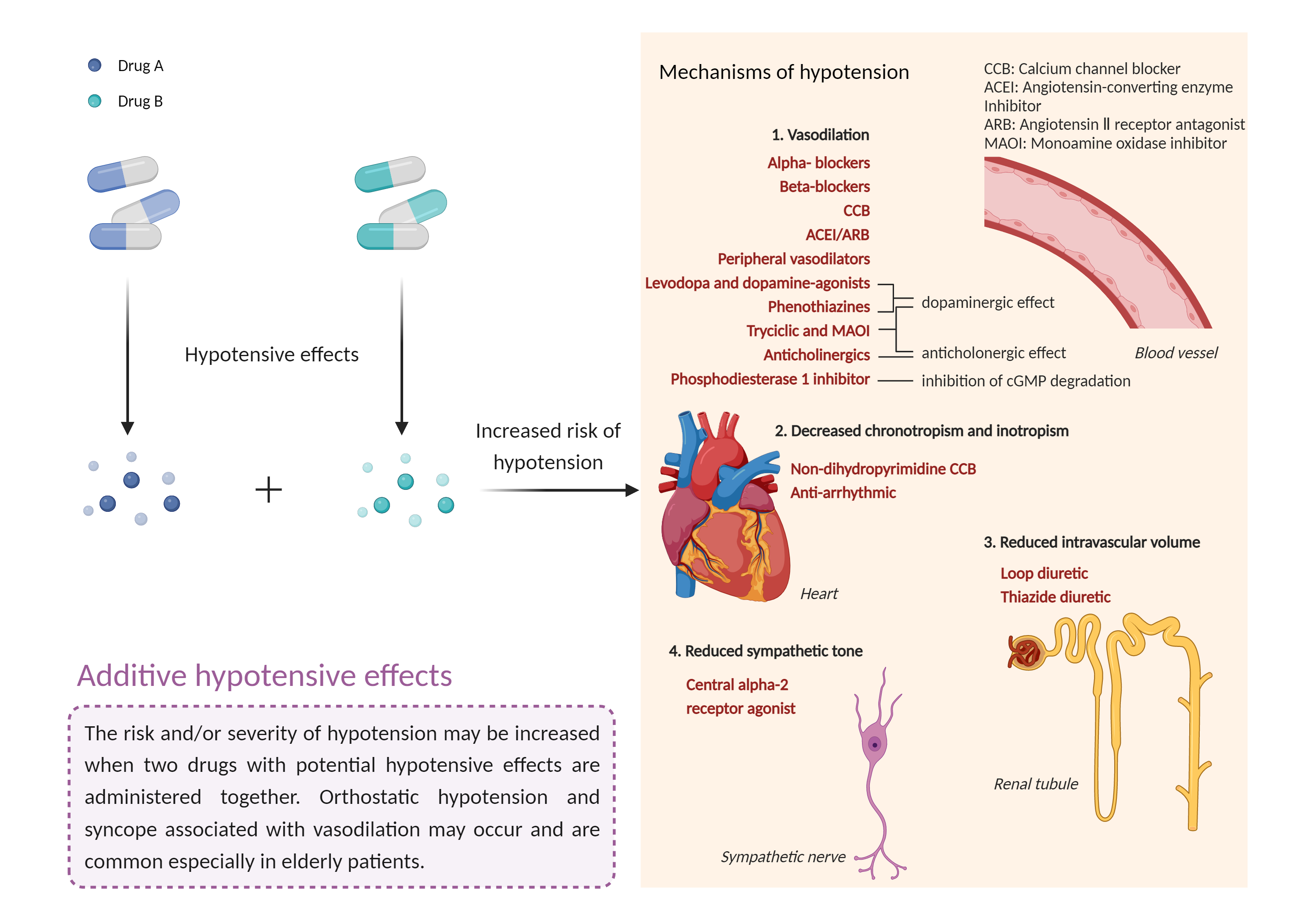
| Additive hypotensive effects Click to Show/Hide Mechanism Graph | |||||||||
 |
|||||||||
| Drug Name | Methocarbamol | Trimethaphan | |||||||
| Mechanism 1 | Antihypertensive agent |
Antihypertensive agent Neuronal acetylcholine receptor Antagonist |
|||||||
| Key Mechanism Factor 1 | |||||||||
| Factor Name | Neuronal acetylcholine receptor | Structure Sequence | |||||||
| Protein Family | Ligand-gated ion channel (TC 1.A.9) family | ||||||||
| Protein Function |
After binding acetylcholine, the AChR responds by an extensive change in conformation that affects all subunits and leads to opening of an ion-conducting channel across the plasma membrane.
Click to Show/Hide
|
||||||||
| Mechanism Description |
|
||||||||
| Mechanism 2 | Hypotensive effects |
Antihypertensive agent Neuronal acetylcholine receptor Antagonist |
|||||||
| Key Mechanism Factor 2 | |||||||||
| Factor Name | Neuronal acetylcholine receptor | Structure Sequence | |||||||
| Protein Family | Ligand-gated ion channel (TC 1.A.9) family | ||||||||
| Protein Function |
After binding acetylcholine, the AChR responds by an extensive change in conformation that affects all subunits and leads to opening of an ion-conducting channel across the plasma membrane.
Click to Show/Hide
|
||||||||
| Mechanism Description |
|
||||||||
| Recommended Action | |||||||||
|---|---|---|---|---|---|---|---|---|---|
| Management | Caution and close monitoring for development of hypotension is advised during coadministration of these agents. Avoid alcohol in patients receiving vasodilating antihypertensive drugs. Patients should be advised to avoid rising abruptly from a sitting or recumbent position and to notify their physician if they experience dizziness, lightheadedness, syncope, orthostasis, or tachycardia. | ||||||||