| Mechanism of Heparin-Cefoxitin Interaction
(Severity Level: Minor)
|
|
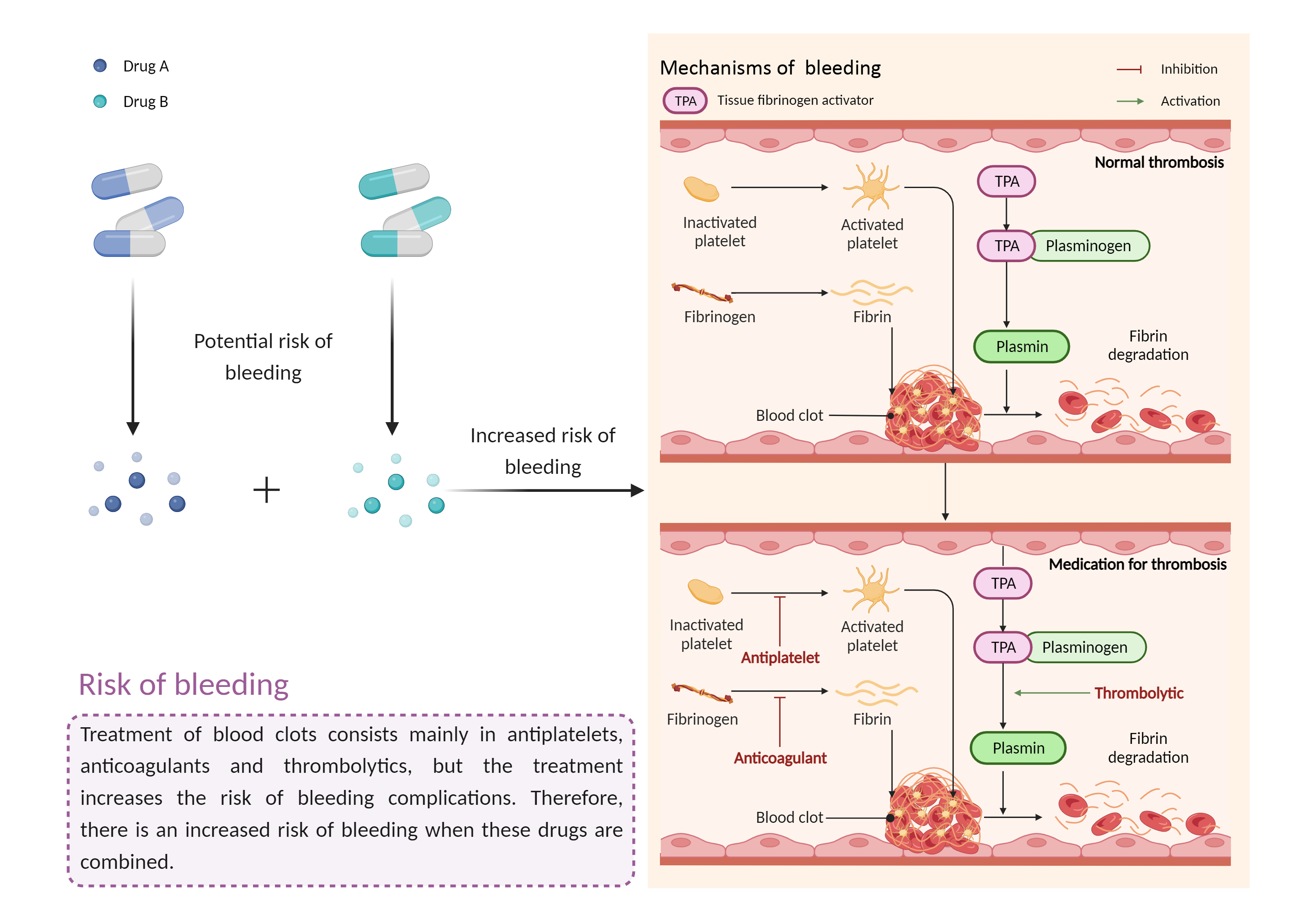
Increased risk of bleeding
Click to Show/Hide Mechanism Graph
|
 |
| Drug Name |
Heparin |
Cefoxitin |
|
Mechanism
|
Risk of bleeding
Anticoagulant
|
Risk of bleeding
Inhibit the growth of vitamin K-producing intestinal bacteria, inhibit the production of vitamin K-dependent coagulation factors via the methylsulfotetrazole side chain, and/or inhibit platelet activity
|
| Key Mechanism Factor 1 |
| Factor Name |
Bleeding |
| Factor Description |
Patients may be at risk for bleeding when the outcome of a disease or disease treatment confounds the standard mechanisms for maintaining hemostasis. Signs or symptoms of abnormal bleeding include: bleeding that takes a long time to stop (including nosebleeds, bleeding gums, bleeding from cuts and abrasions, and menstrual bleeding); severe unexplained bruising, or bruising that becomes larger; blood in the urine or stool, etc. |
| Mechanism Description |
- Increased risk of bleeding by the combination of Heparin and Cefoxitin
|
