
Details of Drug-Drug Interaction
| Drug General Information (ID: DDIWU6X2BV) | |||||||||
|---|---|---|---|---|---|---|---|---|---|
| Drug Name | Droperidol | Drug Info | Halazepam | Drug Info | |||||
| Drug Type | Small molecule | Small molecule | |||||||
| Therapeutic Class | Antipsychotic Agents | Antianxiety Agents | |||||||
| Structure | |||||||||
| Mechanism of Droperidol-Halazepam Interaction (Severity Level: Major) | |||||||||
|---|---|---|---|---|---|---|---|---|---|
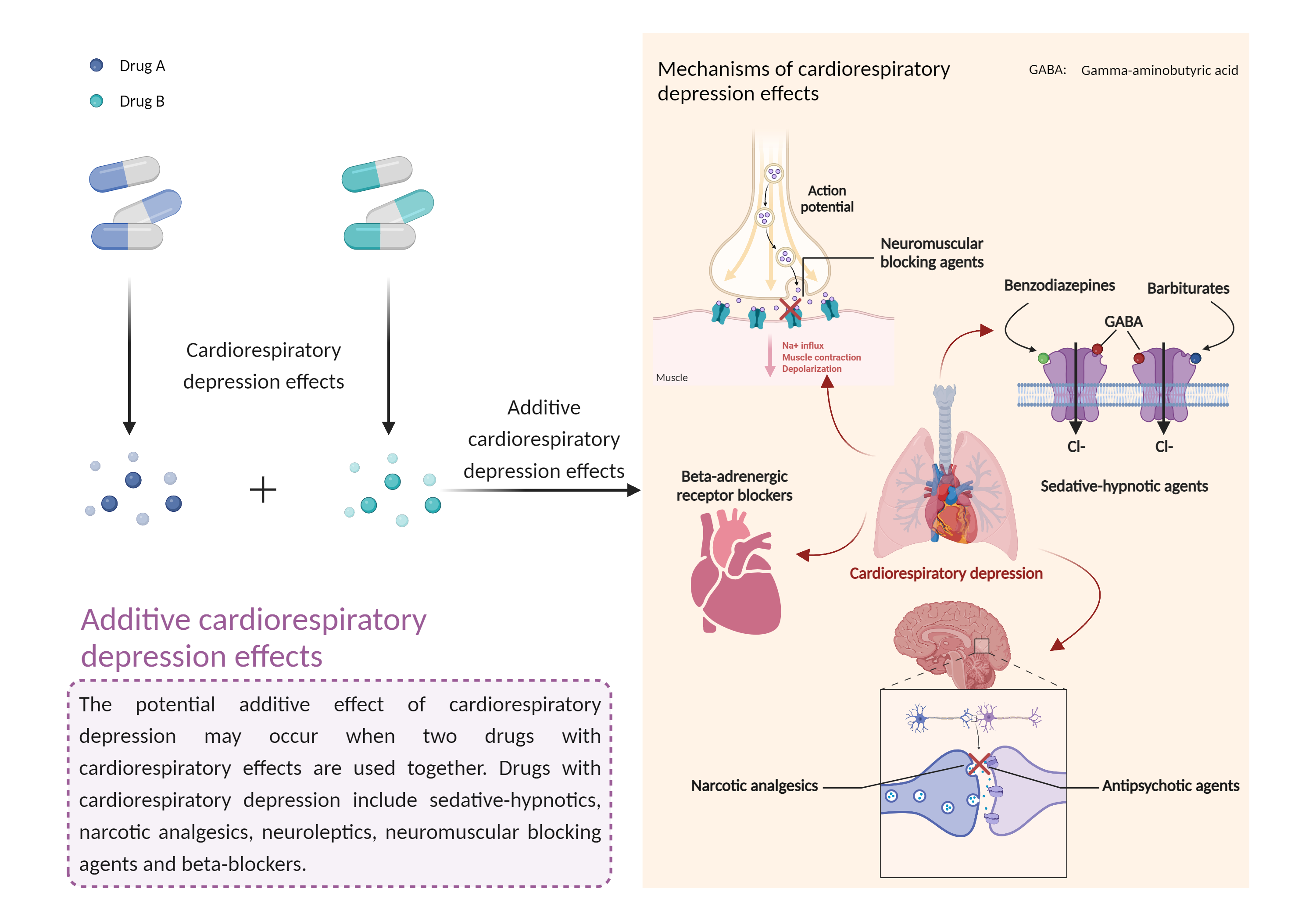
| Additive cardiorespiratory depression effects Click to Show/Hide Mechanism Graph | |||||||||
 |
|||||||||
| Drug Name | Droperidol | Halazepam | |||||||
| Mechanism 1 | Respiratory depression effects | Respiratory depression effects | |||||||
| Key Mechanism Factor 1 | |||||||||
| Factor Name | Cardiorespiratory depression effects | ||||||||
| Factor Description | Cardiorespiratory depression is a reduction or inhibition of the normal function of the heart and lungs. The heart and lungs are the most important organs of the body's circulatory system, and when excessively depressed may result in decreased heart rate, decreased blood pressure, heart failure, slowed breathing (little to no visible chest movement), apnea, narrowed or pinpoint pupils, and seizures. | ||||||||
| Mechanism Description |
|
||||||||
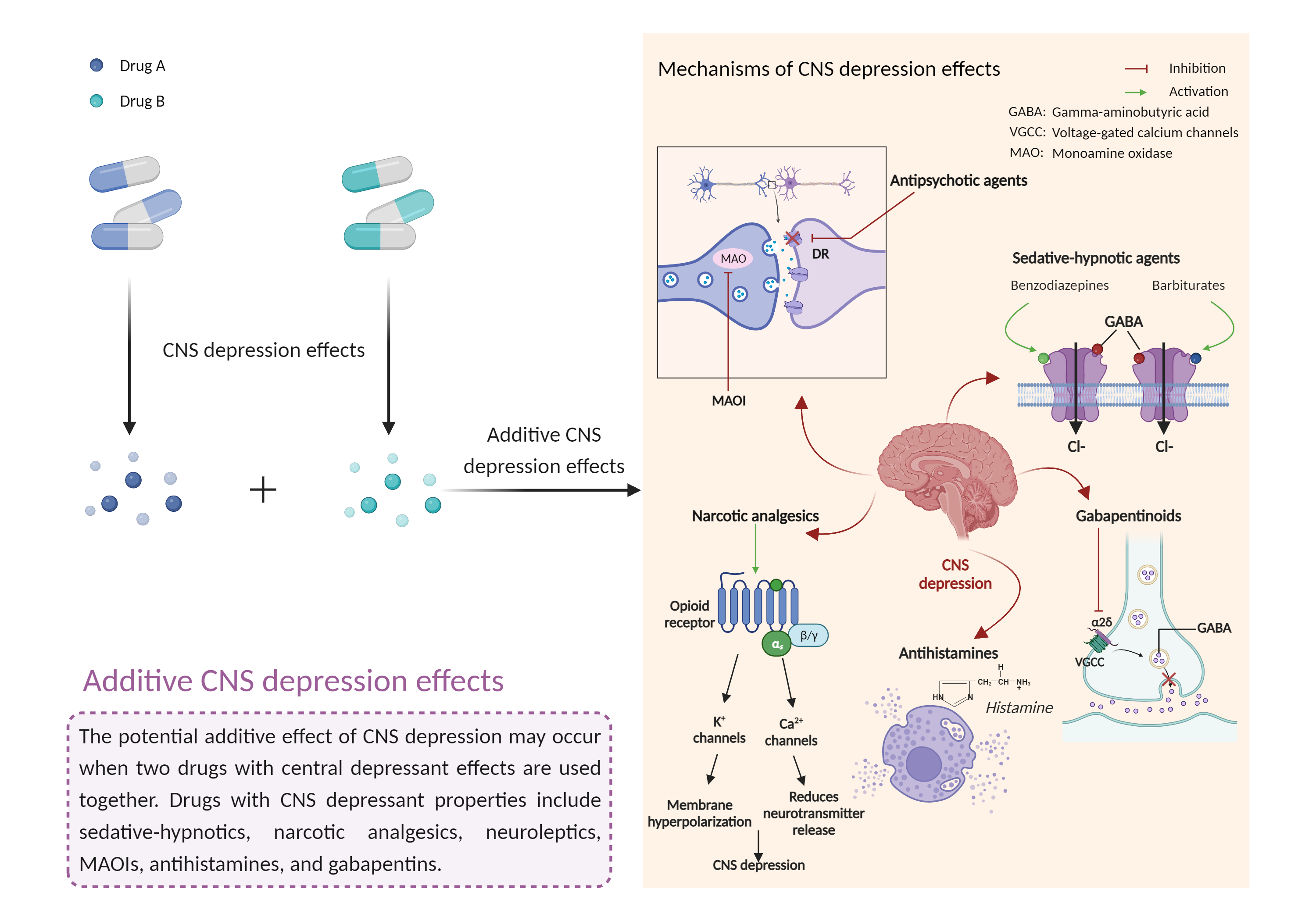
| Additive CNS depression effects Click to Show/Hide Mechanism Graph | |||||||||
 |
|||||||||
| Drug Name | Droperidol | Halazepam | |||||||
| Mechanism 2 | CNS depression effects | CNS depression effects | |||||||
| Key Mechanism Factor 2 | |||||||||
| Factor Name | CNS depression effects | ||||||||
| Factor Description | CNS depressants are drugs that inhibit or suppress brain activity and can reduce mental and physical processes. Excessive CNS depression can lead to decreased heart rate, slow breathing (less than 10 breaths per minute), extreme confusion or loss of memory, nausea and vomiting, poor judgment, blue lips or fingertips, irritability and aggression, and clammy or cold skin. | ||||||||
| Mechanism Description |
|
||||||||
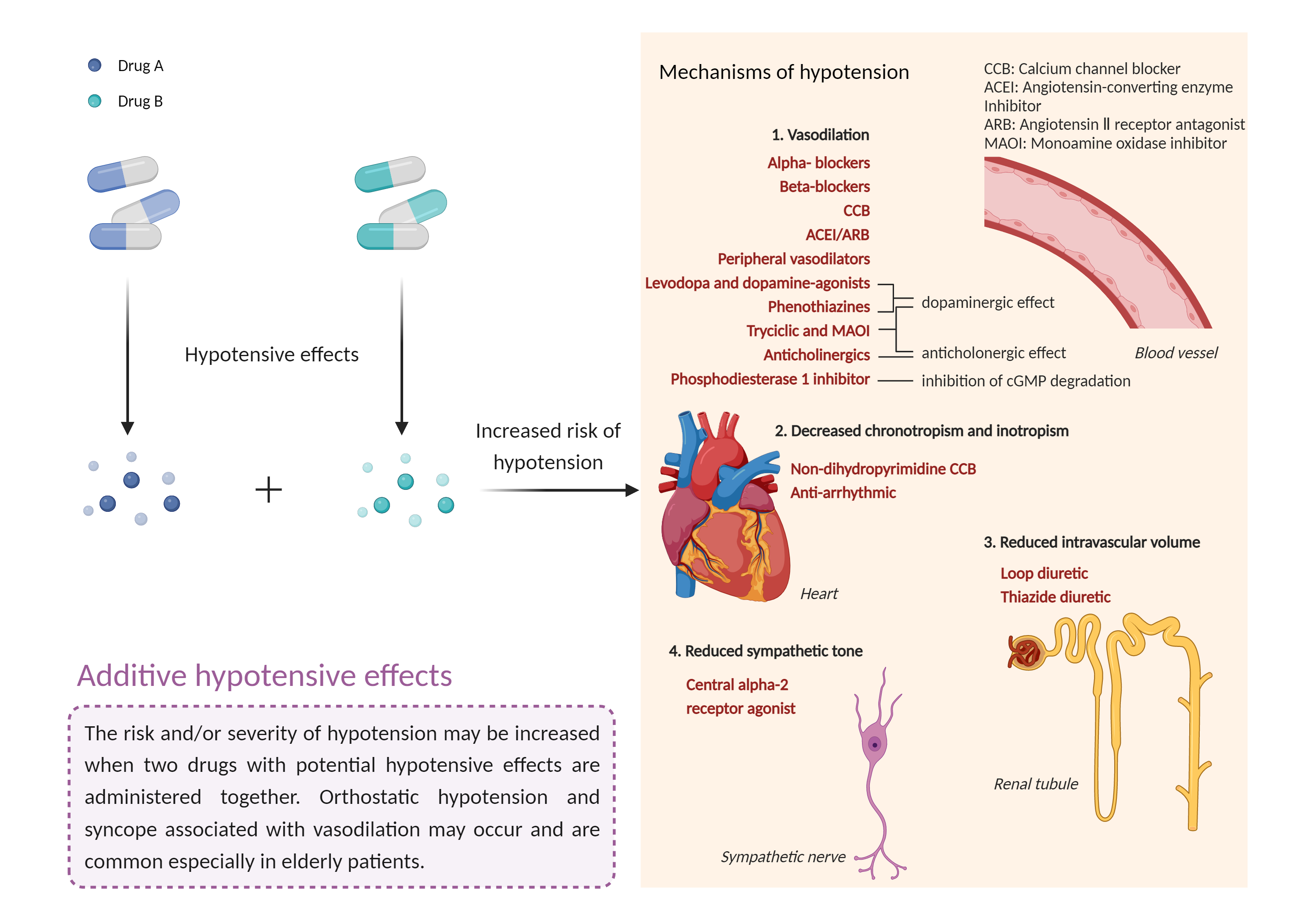
| Additive hypotensive effects Click to Show/Hide Mechanism Graph | |||||||||
 |
|||||||||
| Drug Name | Droperidol | Halazepam | |||||||
| Mechanism 3 |
Hypotensive effects Alpha-1 adrenergic receptor Antagonist |
Hypotensive effects Gamma-aminobutyric acid receptor Agonist |
|||||||
| Key Mechanism Factor 3 | |||||||||
| Factor Name | Adrenergic receptor alpha-1 | Structure Sequence | |||||||
| Protein Family | G-protein coupled receptor 1 family | ||||||||
| Protein Function |
This alpha-adrenergic receptor mediates its action by association with G proteins that activate a phosphatidylinositol-calcium second messenger system. Its effect is mediated by G(q) and G(11) proteins. Nuclear ADRA1A-ADRA1B heterooligomers regulate phenylephrine(PE)-stimulated ERK signaling in cardiac myocytes.
Click to Show/Hide
|
||||||||
| Key Mechanism Factor 4 | |||||||||
| Factor Name | GABA (A) receptor | Structure Sequence | |||||||
| Protein Family | Ligand-gated ion channel (TC 1.A.9) family | ||||||||
| Protein Function |
Ligand-gated chloride channel which is a component of the heteropentameric receptor for GABA, the major inhibitory neurotransmitter in the brain (PubMed:23909897, PubMed:25489750, PubMed:29950725). Plays an important role in the formation of functional inhibitory GABAergic synapses in addition to mediating synaptic inhibition as a GABA-gated ion channel (PubMed:23909897, PubMed:25489750). The gamma2 subunit is necessary but not sufficient for a rapid formation of active synaptic contacts and the synaptogenic effect of this subunit is influenced by the type of alpha and beta subunits present in the receptor pentamer (By similarity). The alpha1/beta2/gamma2 receptor and the alpha1/beta3/gamma2 receptor exhibit synaptogenic activity (PubMed:23909897, PubMed:25489750). GABRA1-mediated plasticity in the orbitofrontal cortex regulates context-dependent action selection (By similarity). Functions also as histamine receptor and mediates cellular responses to histamine (By similarity).
Click to Show/Hide
|
||||||||
| Mechanism Description |
|
||||||||
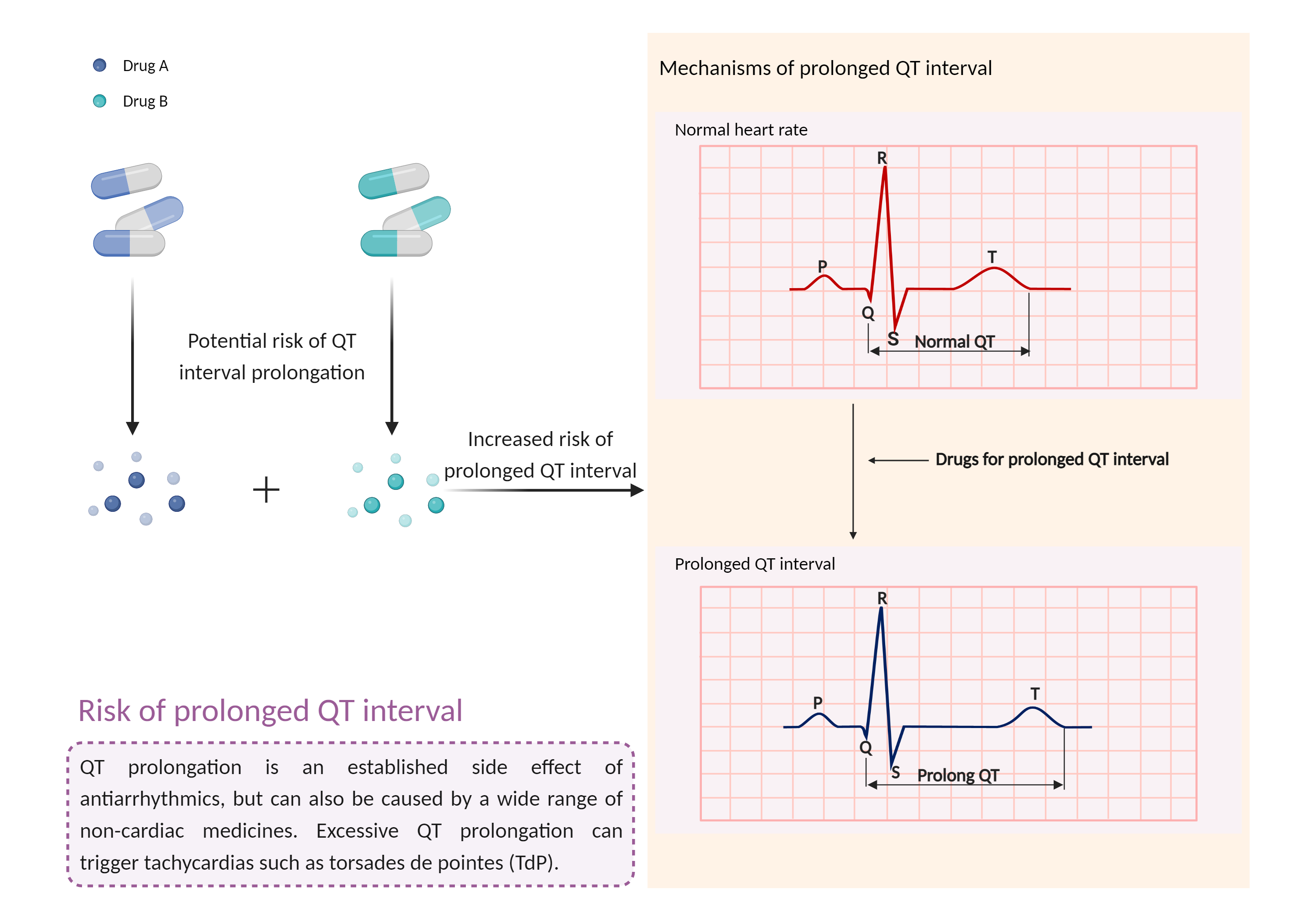
| Increased risk of prolong QT interval Click to Show/Hide Mechanism Graph | |||||||||
 |
|||||||||
| Drug Name | Droperidol | Halazepam | |||||||
| Mechanism 4 | Prolong QT interval | Prolong QT interval | |||||||
| Key Mechanism Factor 5 | |||||||||
| Factor Name | QT interval | ||||||||
| Factor Description | Long QT syndrome is a heart signaling disorder that can cause a fast, chaotic heartbeat (arrhythmia). Many people may not exhibit symptoms, and usually the condition is detected during routine medical tests. In others, the most common symptoms include: sudden fainting, palpitations, dizziness, seizures, sudden death. | ||||||||
| Mechanism Description |
|
||||||||
| Recommended Action | |||||||||
|---|---|---|---|---|---|---|---|---|---|
| Management | Extreme caution and close monitoring are recommended if droperidol must be administered concomitantly with other bradycardic drugs. The dosage of droperidol should be individualized and titrated to the desired effect. Routine vital sign and ECG monitoring is recommended. When droperidol is used in combination with benzodiazepines or opiates, patients should be monitored for potentially excessive or prolonged CNS or respiratory depression as well as severe hypotension. Ambulatory patients should be counseled to avoid hazardous activities requiring mental alertness and motor coordination until they know how these agents affect them, and to notify their doctor if they experience excessive or prolonged CNS effects that interfere with their normal activities. | ||||||||