
Details of Drug-Drug Interaction
| Drug General Information (ID: DDIWHMOFUG) | |||||||||
|---|---|---|---|---|---|---|---|---|---|
| Drug Name | Treprostinil | Drug Info | Hydralazine | Drug Info | |||||
| Drug Type | Small molecule | Small molecule | |||||||
| Therapeutic Class | Antihypertensive Agents | Antihypertensive Agents | |||||||
| Structure | |||||||||
| Mechanism of Treprostinil-Hydralazine Interaction (Severity Level: Moderate) | |||||||||
|---|---|---|---|---|---|---|---|---|---|
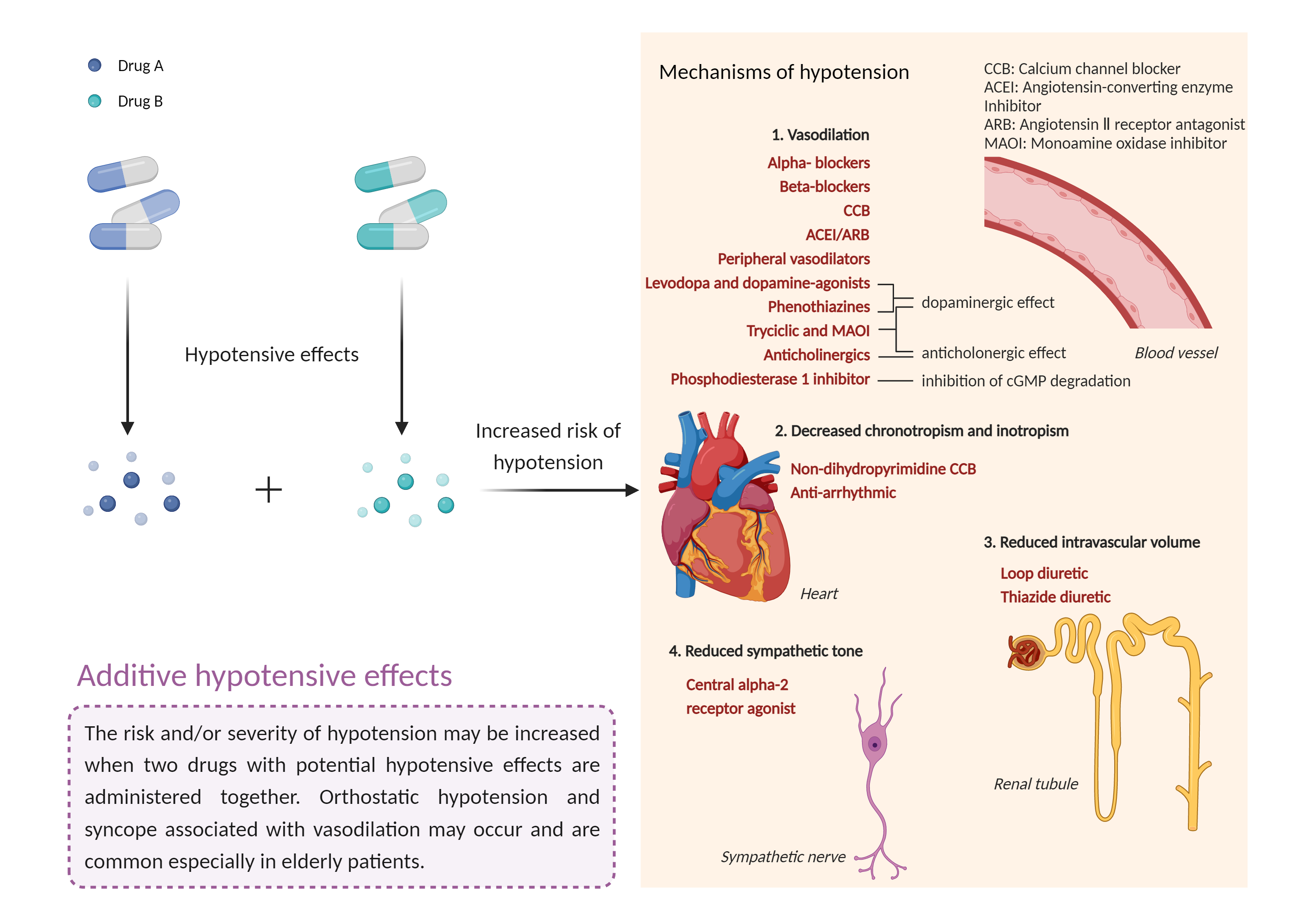
| Additive hypotensive effects Click to Show/Hide Mechanism Graph | |||||||||
 |
|||||||||
| Drug Name | Treprostinil | Hydralazine | |||||||
| Mechanism |
Antihypertensive agent Prostaglandin receptor Agonist |
Antihypertensive agent Membrane copper amine oxidase Inhibitor |
|||||||
| Key Mechanism Factor 1 | |||||||||
| Factor Name | Prostaglandin D2 receptor |
×
Structure
Sequence
MKSPFYRCQNTTSVEKGNSAVMGGVLFSTGLLGNLLALGLLARSGLGWCSRRPLRPLPSVFYMLVCGLTVTDLLGKCLLSPVVLAAYAQNRSLRVLAPALDNSLCQAFAFFMSFFGLSSTLQLLAMALECWLSLGHPFFYRRHITLRLGALVAPVVSAFSLAFCALPFMGFGKFVQYCPGTWCFIQMVHEEGSLSVLGYSVLYSSLMALLVLATVLCNLGAMRNLYAMHRRLQRHPRSCTRDCAEPRADGREASPQPLEELDHLLLLALMTVLFTMCSLPVIYRAYYGAFKDVKEKNRTSEEAEDLRALRFLSVISIVDPWIFIIFRSPVFRIFFHKIFIRPLRYRSRCSNSTNMESSL
|
|||||||
| Gene Name | PTGDR | ||||||||
| Uniprot ID | PD2R_HUMAN | ||||||||
| KEGG Pathway | hsa:5729 | ||||||||
| Protein Family | G-protein coupled receptor 1 family | ||||||||
| Protein Function |
Receptor for prostaglandin D2 (PGD2). The activity of this receptor is mainly mediated by G(s) proteins that stimulate adenylate cyclase, resulting in an elevation of intracellular cAMP. A mobilization of calcium is also observed, but without formation of inositol 1,4,5-trisphosphate (By similarity). Involved in PLA2G3-dependent maturation of mast cells. PLA2G3 is secreted by immature mast cells and acts on nearby fibroblasts upstream to PTDGS to synthesize PGD2, which in turn promotes mast cell maturation and degranulation via PTGDR (By similarity).
Click to Show/Hide
|
||||||||
| Key Mechanism Factor 2 | |||||||||
| Factor Name | Membrane copper amine oxidase |
×
Structure
Sequence
MNQKTILVLLILAVITIFALVCVLLVGRGGDGGEPSQLPHCPSVSPSAQPWTHPGQSQLFADLSREELTAVMRFLTQRLGPGLVDAAQARPSDNCVFSVELQLPPKAAALAHLDRGSPPPAREALAIVFFGRQPQPNVSELVVGPLPHPSYMRDVTVERHGGPLPYHRRPVLFQEYLDIDQMIFNRELPQASGLLHHCCFYKHRGRNLVTMTTAPRGLQSGDRATWFGLYYNISGAGFFLHHVGLELLVNHKALDPARWTIQKVFYQGRYYDSLAQLEAQFEAGLVNVVLIPDNGTGGSWSLKSPVPPGPAPPLQFYPQGPRFSVQGSRVASSLWTFSFGLGAFSGPRIFDVRFQGERLVYEISLQEALAIYGGNSPAAMTTRYVDGGFGMGKYTTPLTRGVDCPYLATYVDWHFLLESQAPKTIRDAFCVFEQNQGLPLRRHHSDLYSHYFGGLAETVLVVRSMSTLLNYDYVWDTVFHPSGAIEIRFYATGYISSAFLFGATGKYGNQVSEHTLGTVHTHSAHFKVDLDVAGLENWVWAEDMVFVPMAVPWSPEHQLQRLQVTRKLLEMEEQAAFLVGSATPRYLYLASNHSNKWGHPRGYRIQMLSFAGEPLPQNSSMARGFSWERYQLAVTQRKEEEPSSSSVFNQNDPWAPTVDFSDFINNETIAGKDLVAWVTAGFLHIPHAEDIPNTVTVGNGVGFFLRPYNFFDEDPSFYSADSIYFRGDQDAGACEVNPLACLPQAAACAPDLPAFSHGGFSHN
|
|||||||
| Gene Name | AOC3 | ||||||||
| Uniprot ID | AOC3_HUMAN | ||||||||
| KEGG Pathway | hsa:8639 | ||||||||
| Protein Family | Copper/topaquinone oxidase family | ||||||||
| Protein Function |
Cell adhesion protein that participates in lymphocyte extravasation and recirculation by mediating the binding of lymphocytes to peripheral lymph node vascular endothelial cells in an L-selectin-independent fashion. Has semicarbazide-sensitive (SSAO) monoamine oxidase activity. May play a role in adipogenesis.
Click to Show/Hide
|
||||||||
| Mechanism Description |
|
||||||||
| Recommended Action | |||||||||
|---|---|---|---|---|---|---|---|---|---|
| Management | While therapies that target the prostacyclin pathway have been used in combination with diuretics, antihypertensives, or other vasodilators in the management of pulmonary arterial hypertension, caution is recommended if they must be administered concurrently. If these drugs are used together, it is generally recommended that blood pressure be measured more frequently until a stable blood pressure pattern is observed. Patients should be advised to avoid rising abruptly from a sitting or recumbent position and to notify their doctor if they experience dizziness, lightheadedness, syncope, orthostatic hypotension, or tachycardia. | ||||||||