
Details of Drug-Drug Interaction
| Drug General Information (ID: DDIVIPR4OD) | |||||||||
|---|---|---|---|---|---|---|---|---|---|
| Drug Name | Cabergoline | Drug Info | Metoclopramide | Drug Info | |||||
| Drug Type | Small molecule | Small molecule | |||||||
| Therapeutic Class | Antineoplastics | Antiemetics | |||||||
| Structure | |||||||||
| Mechanism of Cabergoline-Metoclopramide Interaction (Severity Level: Moderate) | |||||||||
|---|---|---|---|---|---|---|---|---|---|
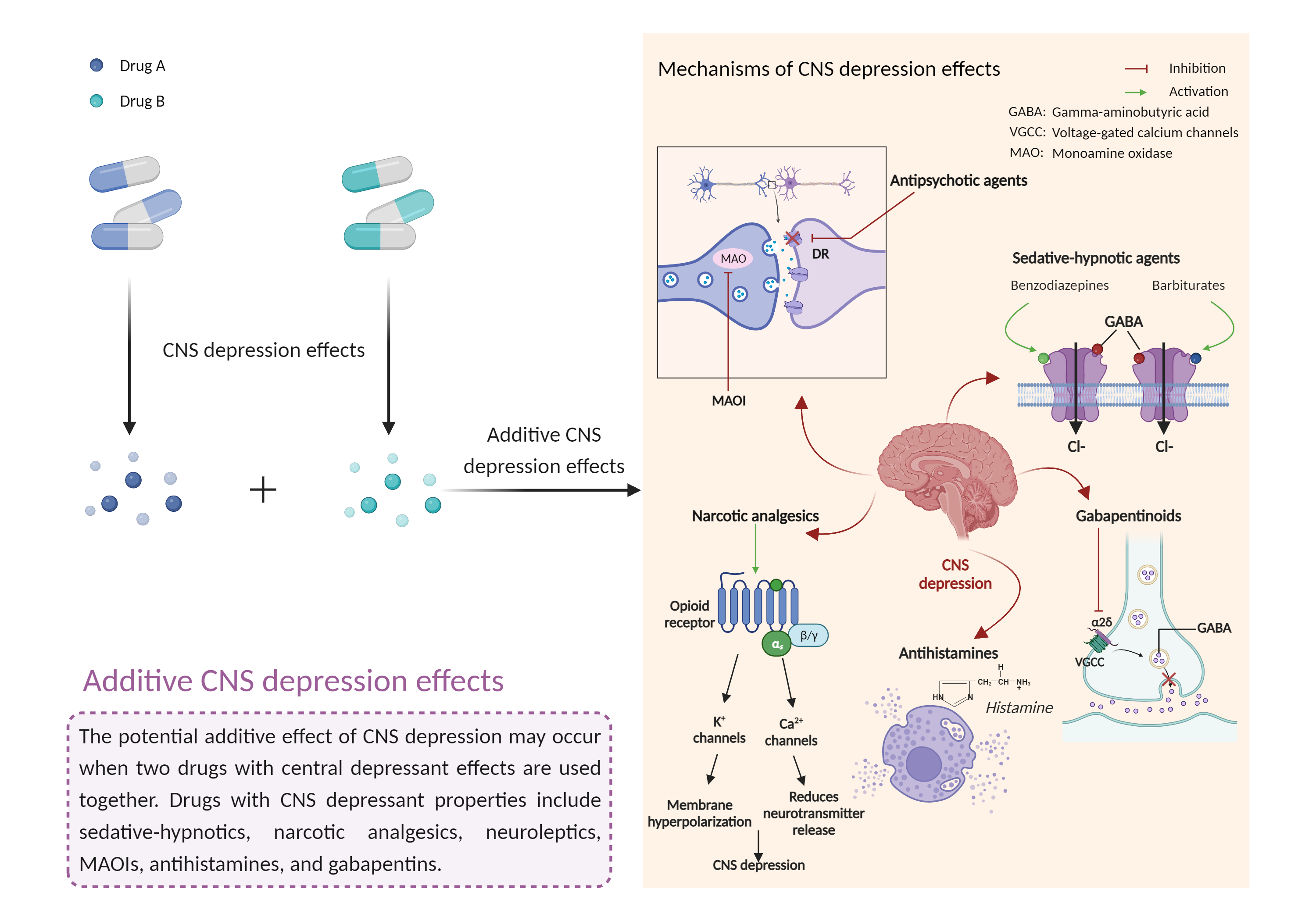
| Additive CNS depression effects Click to Show/Hide Mechanism Graph | |||||||||
 |
|||||||||
| Drug Name | Cabergoline | Metoclopramide | |||||||
| Mechanism 1 | CNS depression effects | CNS depression effects | |||||||
| Key Mechanism Factor 1 | |||||||||
| Factor Name | CNS depression effects | ||||||||
| Factor Description | CNS depressants are drugs that inhibit or suppress brain activity and can reduce mental and physical processes. Excessive CNS depression can lead to decreased heart rate, slow breathing (less than 10 breaths per minute), extreme confusion or loss of memory, nausea and vomiting, poor judgment, blue lips or fingertips, irritability and aggression, and clammy or cold skin. | ||||||||
| Mechanism Description |
|
||||||||
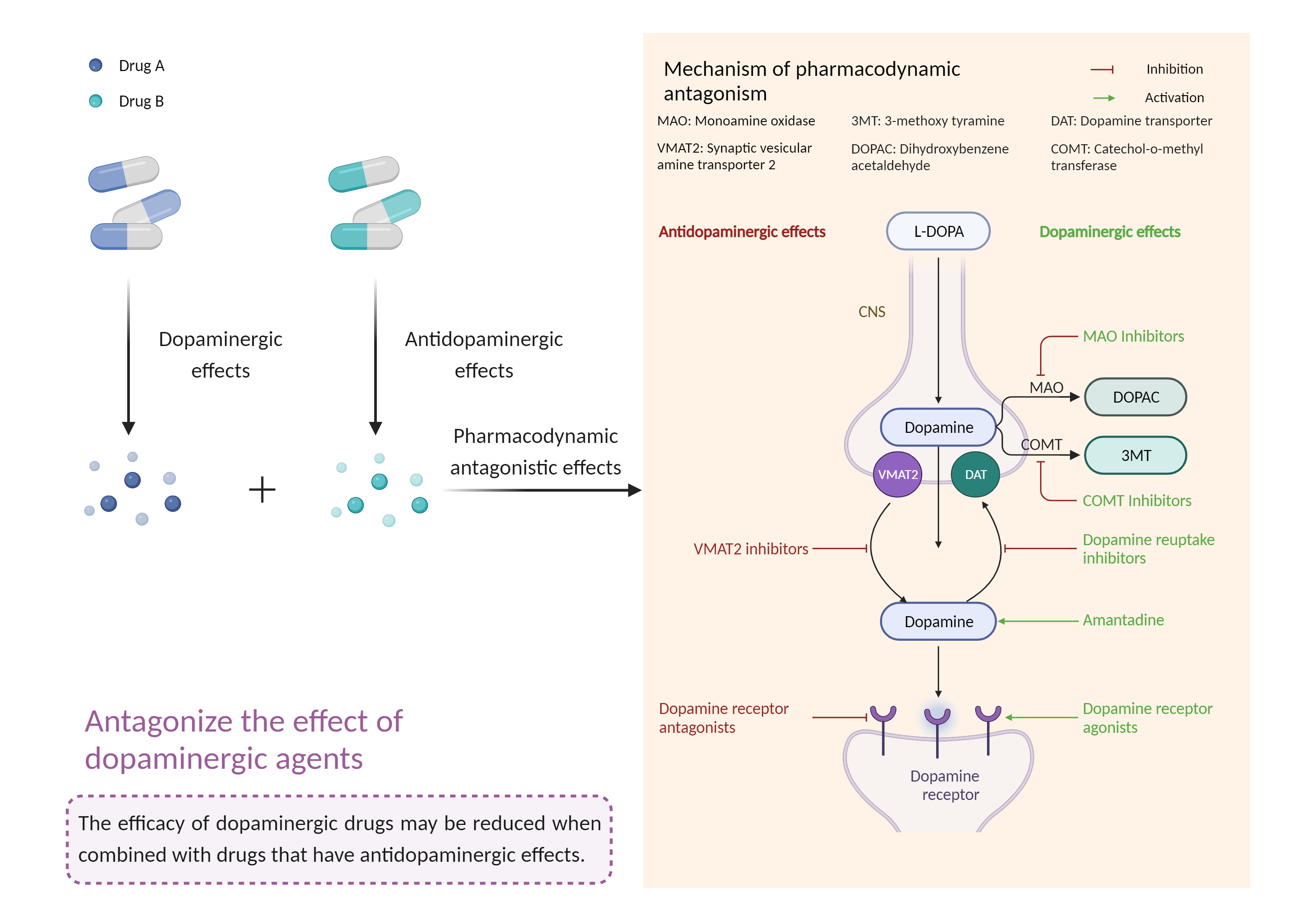
| Antagonize the effect of dopaminergic agents Click to Show/Hide Mechanism Graph | |||||||||
 |
|||||||||
| Drug Name | Cabergoline | Metoclopramide | |||||||
| Mechanism 2 |
Dopaminergic agent Dopamine receptor Agonist |
Antidopaminergic effects Dopamine receptor Antagonist |
|||||||
| Key Mechanism Factor 2 | |||||||||
| Factor Name | Dopamine receptor | Structure Sequence | |||||||
| Protein Family | G-protein coupled receptor 1 family | ||||||||
| Protein Function |
Dopamine receptor whose activity is mediated by G proteins which activate adenylyl cyclase.
Click to Show/Hide
|
||||||||
| Mechanism Description |
|
||||||||
| Recommended Action | |||||||||
|---|---|---|---|---|---|---|---|---|---|
| Management | Concomitant use of dopaminergic drugs with antidopaminergic agents should generally be avoided. If coadministration is necessary, patients should be alerted to the possibility of excessive drowsiness and monitored for potentially diminished therapeutic response to both treatments. Patients treated for Parkinson's disease should generally avoid antidopaminergic agents, since they may cause extrapyramidal reactions and exacerbate the symptoms of Parkinson's disease. | ||||||||