| Mechanism of Arsenic trioxide-Clomipramine Interaction
(Severity Level: Major)
|
|
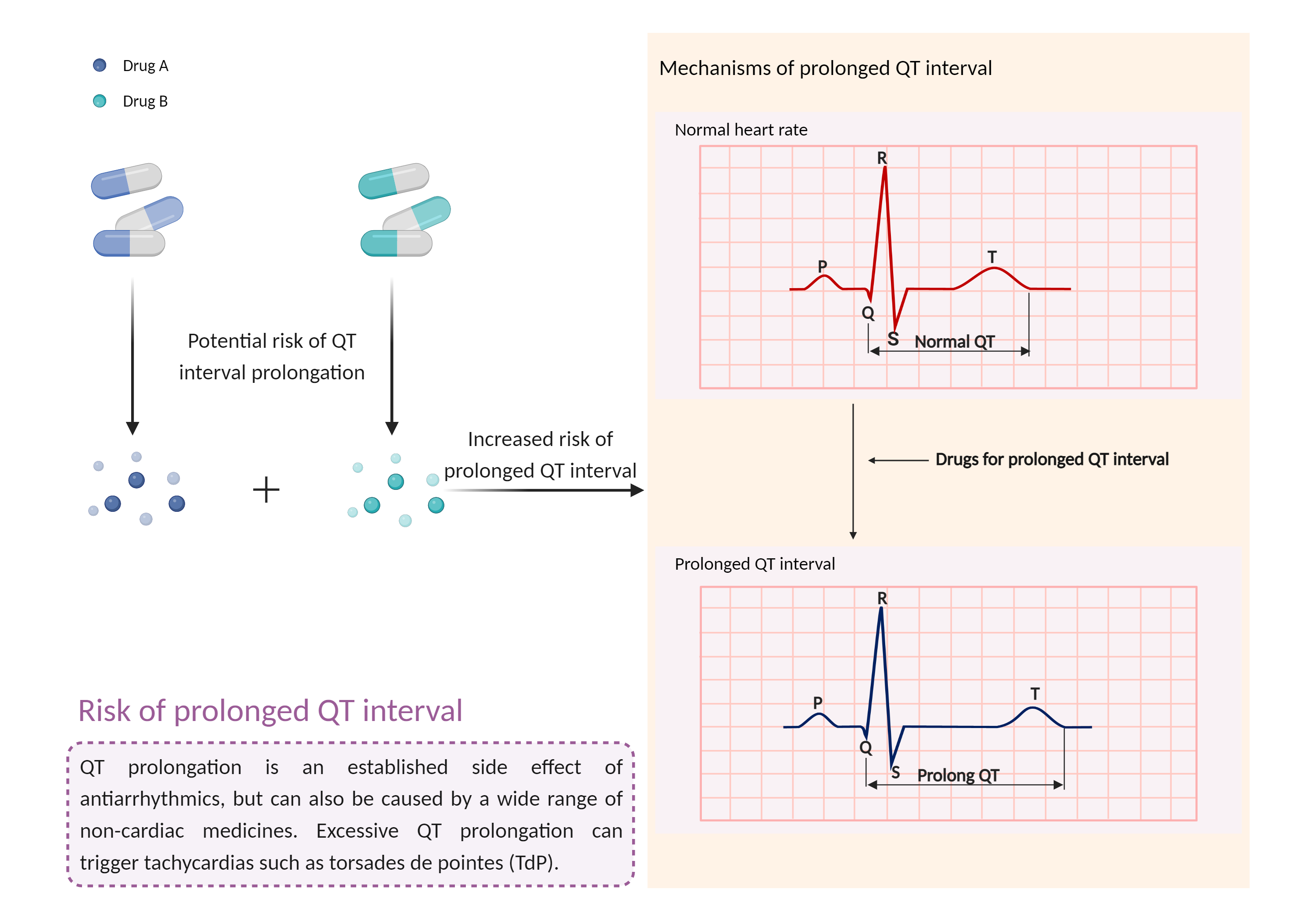
Increased risk of prolong QT interval
Click to Show/Hide Mechanism Graph
|
 |
| Drug Name |
Arsenic trioxide |
Clomipramine |
|
Mechanism 1
|
Prolong QT interval |
Prolong QT interval |
| Key Mechanism Factor 1 |
| Factor Name |
QT interval |
| Factor Description |
Long QT syndrome is a heart signaling disorder that can cause a fast, chaotic heartbeat (arrhythmia). Many people may not exhibit symptoms, and usually the condition is detected during routine medical tests. In others, the most common symptoms include: sudden fainting, palpitations, dizziness, seizures, sudden death. |
| Mechanism Description |
- Increased risk of prolong QT interval by the combination of Arsenic trioxide and Clomipramine
|
|
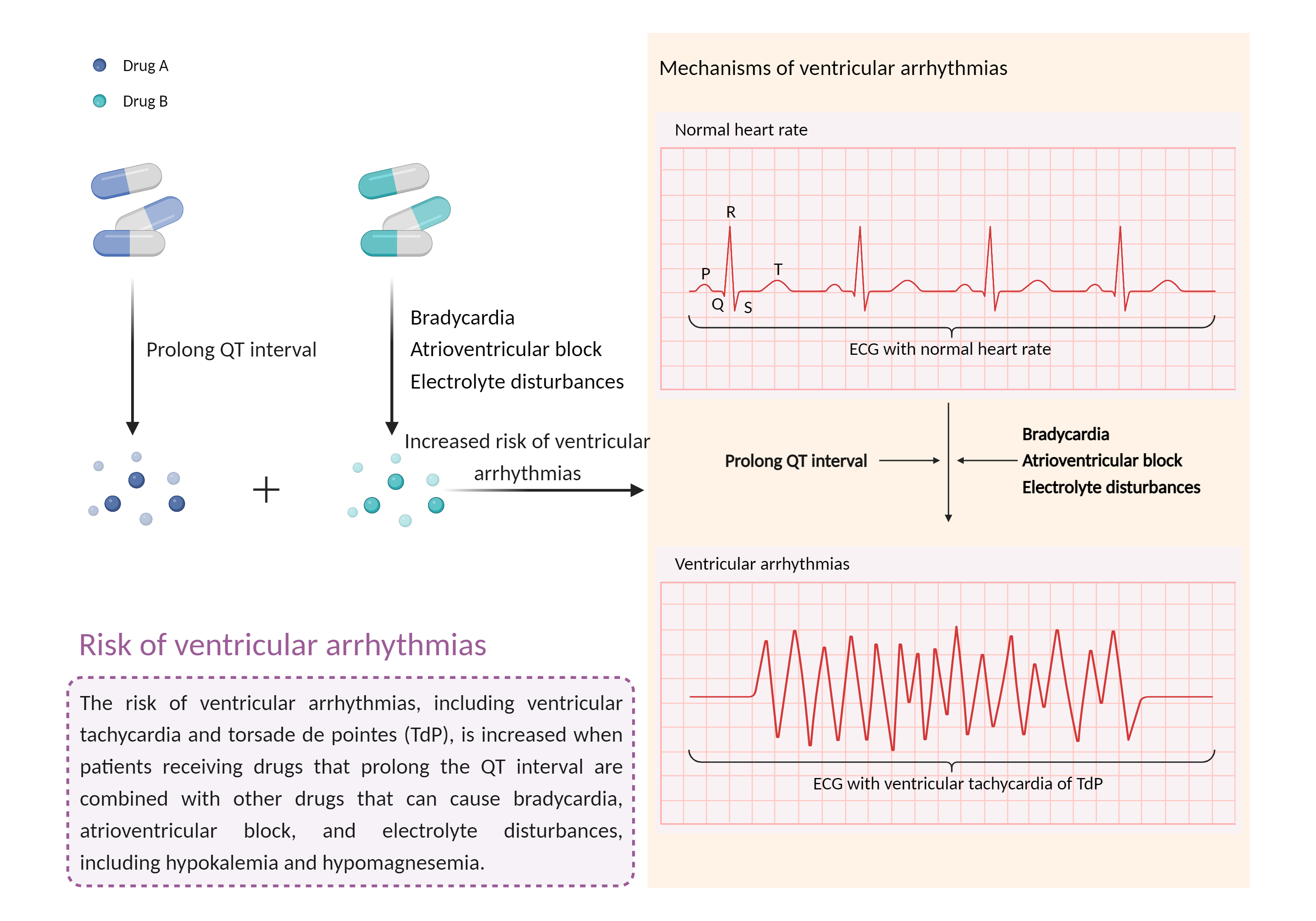
Increased risk of ventricular arrhythmias
Click to Show/Hide Mechanism Graph
|
 |
| Drug Name |
Arsenic trioxide |
Clomipramine |
|
Mechanism 2
|
Delay atrioventricular conduction |
Prolong QT interval |
| Key Mechanism Factor 2 |
| Factor Name |
Ventricular arrhythmias |
| Factor Description |
Ventricular arrhythmias are abnormal heart rhythms that cause your heart's lower chambers to pump blood instead of pumping it. This can limit or stop your heart from supplying blood to your body. While some of these arrhythmias are harmless and do not cause symptoms, others can have serious, even fatal, effects on your body. |
| Mechanism Description |
- Increased risk of ventricular arrhythmias by the combination of Arsenic trioxide and Clomipramine
|
