
Details of Drug-Drug Interaction
| Drug General Information (ID: DDITOB8UAF) | |||||||||
|---|---|---|---|---|---|---|---|---|---|
| Drug Name | Trimipramine | Drug Info | Anisindione | Drug Info | |||||
| Drug Type | Small molecule | Small molecule | |||||||
| Therapeutic Class | Antidepressants | Anticoagulants | |||||||
| Structure | |||||||||
| Mechanism of Trimipramine-Anisindione Interaction (Severity Level: Moderate) | |||||||||
|---|---|---|---|---|---|---|---|---|---|
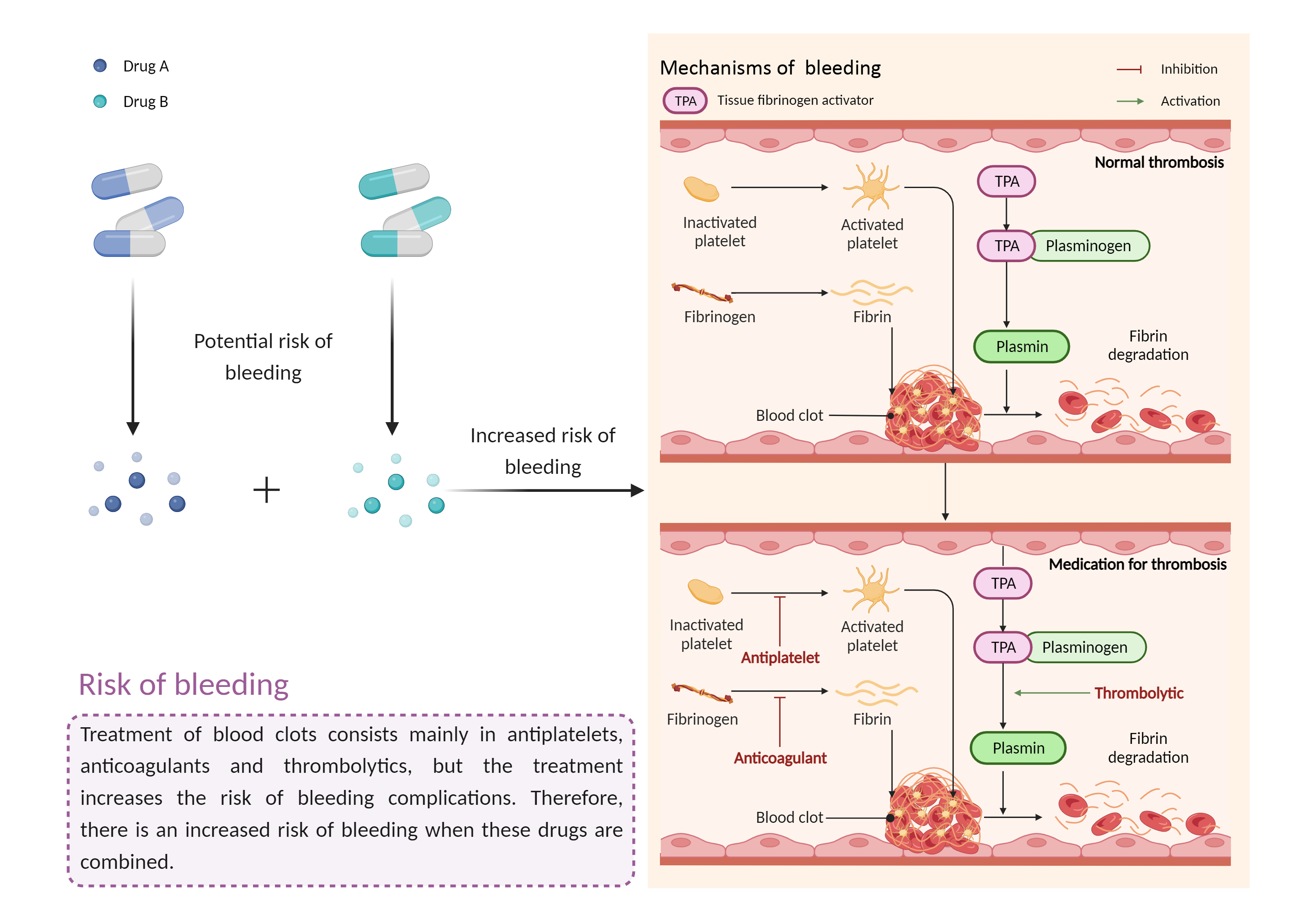
| Increased risk of bleeding Click to Show/Hide Mechanism Graph | |||||||||
 |
|||||||||
| Drug Name | Trimipramine | Anisindione | |||||||
| Mechanism | Potentiate the hypoprothrombinemic effect of vitamin K antagonist | Vitamin K antagonist | |||||||
| Key Mechanism Factor 1 | |||||||||
| Factor Name | Bleeding | ||||||||
| Factor Description | Patients may be at risk for bleeding when the outcome of a disease or disease treatment confounds the standard mechanisms for maintaining hemostasis. Signs or symptoms of abnormal bleeding include: bleeding that takes a long time to stop (including nosebleeds, bleeding gums, bleeding from cuts and abrasions, and menstrual bleeding); severe unexplained bruising, or bruising that becomes larger; blood in the urine or stool, etc. | ||||||||
| Mechanism Description |
|
||||||||
| Recommended Action | |||||||||
|---|---|---|---|---|---|---|---|---|---|
| Management | Until more information is available, it may be advisable to monitor the International Normalized Ratio (INR) or prothrombin time and clinical response if these agents are administered concomitantly. Patients should be advised to promptly report possible signs of bleeding (e.g., pain, swelling, headache, dizziness, weakness, nosebleeds, bleeding of gums from brushing, unusual bruising, red or brown urine, or red or black stools) or clots (e.g. chest pain, shortness of breath, sudden loss of vision, or pain, redness or swelling in an extremity). | ||||||||