
Details of Drug-Drug Interaction
| Drug General Information (ID: DDIRYZLJ71) | |||||||||
|---|---|---|---|---|---|---|---|---|---|
| Drug Name | Triamterene | Drug Info | Licorice | Drug Info | |||||
| Drug Type | Small molecule | Natural product | |||||||
| Therapeutic Class | Diuretics | Herbal Products | |||||||
| Structure | |||||||||
| Mechanism of Triamterene-Licorice Interaction (Severity Level: Moderate) | |||||||||
|---|---|---|---|---|---|---|---|---|---|
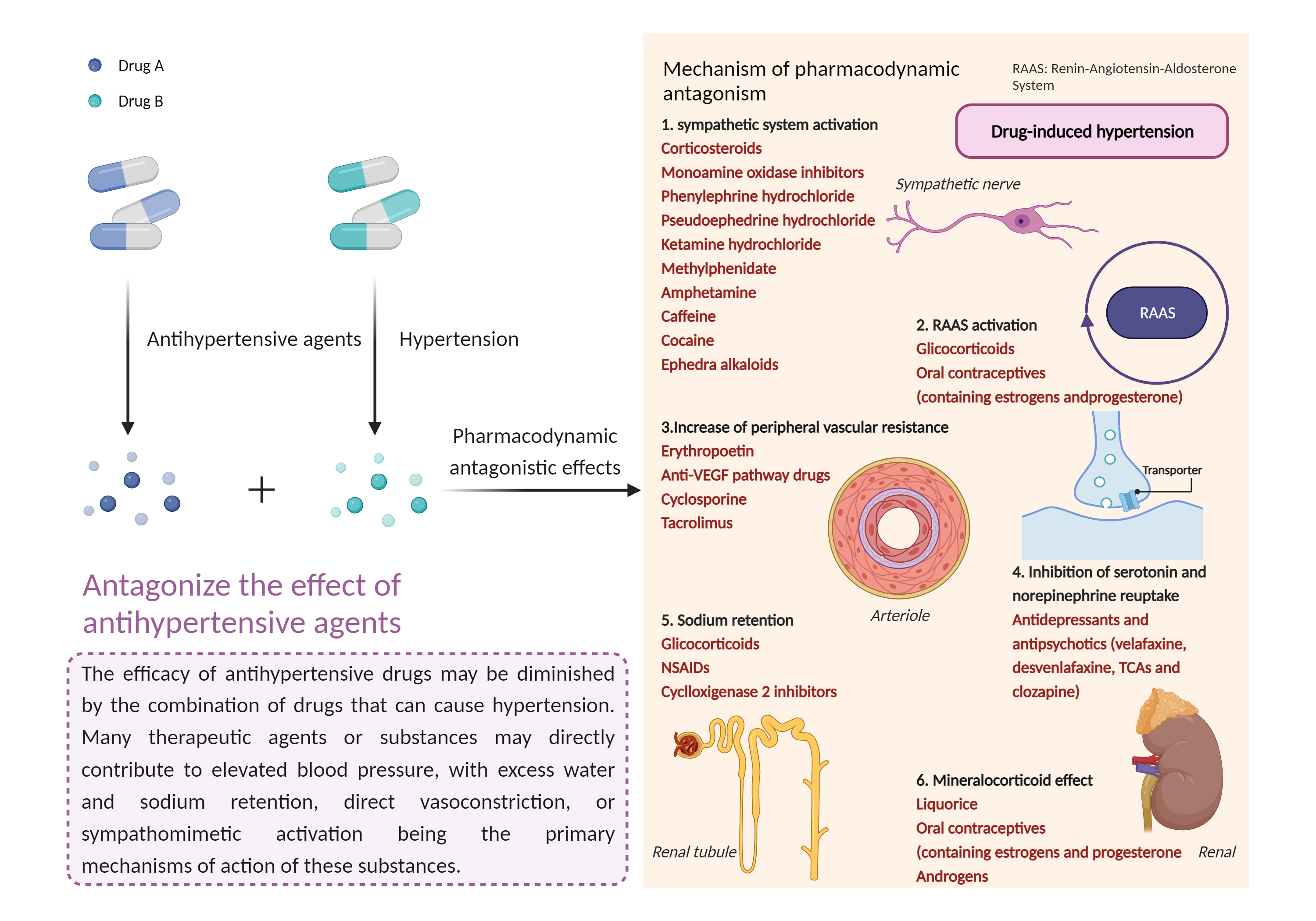
| Antagonize the effect of antihypertensive agents Click to Show/Hide Mechanism Graph | |||||||||
 |
|||||||||
| Drug Name | Triamterene | Licorice | |||||||
| Mechanism |
Antihypertensive agent Amiloride-sensitive sodium channel Blocker |
Hypertensive effects Mineralocorticoid and renin-suppressing effects |
|||||||
| Key Mechanism Factor 1 | |||||||||
| Factor Name | Amiloride-sensitive sodium channel | Structure Sequence | |||||||
| Protein Family | Amiloride-sensitive sodium channel (TC 1.A.6) family | ||||||||
| Protein Function |
Sodium permeable non-voltage-sensitive ion channel inhibited by the diuretic amiloride. Mediates the electrodiffusion of the luminal sodium (and water, which follows osmotically) through the apical membrane of epithelial cells. Plays an essential role in electrolyte and blood pressure homeostasis, but also in airway surface liquid homeostasis, which is important for proper clearance of mucus. Controls the reabsorption of sodium in kidney, colon, lung and eccrine sweat glands. Also plays a role in taste perception.
Click to Show/Hide
|
||||||||
| Mechanism Description |
|
||||||||
| Recommended Action | |||||||||
|---|---|---|---|---|---|---|---|---|---|
| Management | Patients receiving antihypertensive therapy should avoid or limit the consumption of licorice-containing products. Even relatively moderate doses of licorice may be problematic in susceptible patients when ingested regularly for prolonged periods. | ||||||||