Drug General Information (ID: DDIR72T3PB)
  Drug Name Methylphenobarbital Drug Info Sertraline Drug Info
  Drug Type Small molecule Small molecule
  Therapeutic Class Anxiolytics/Sedatives/Hypnotics Antidepressants
  Structure

 Mechanism of Methylphenobarbital-Sertraline Interaction (Severity Level: Moderate)
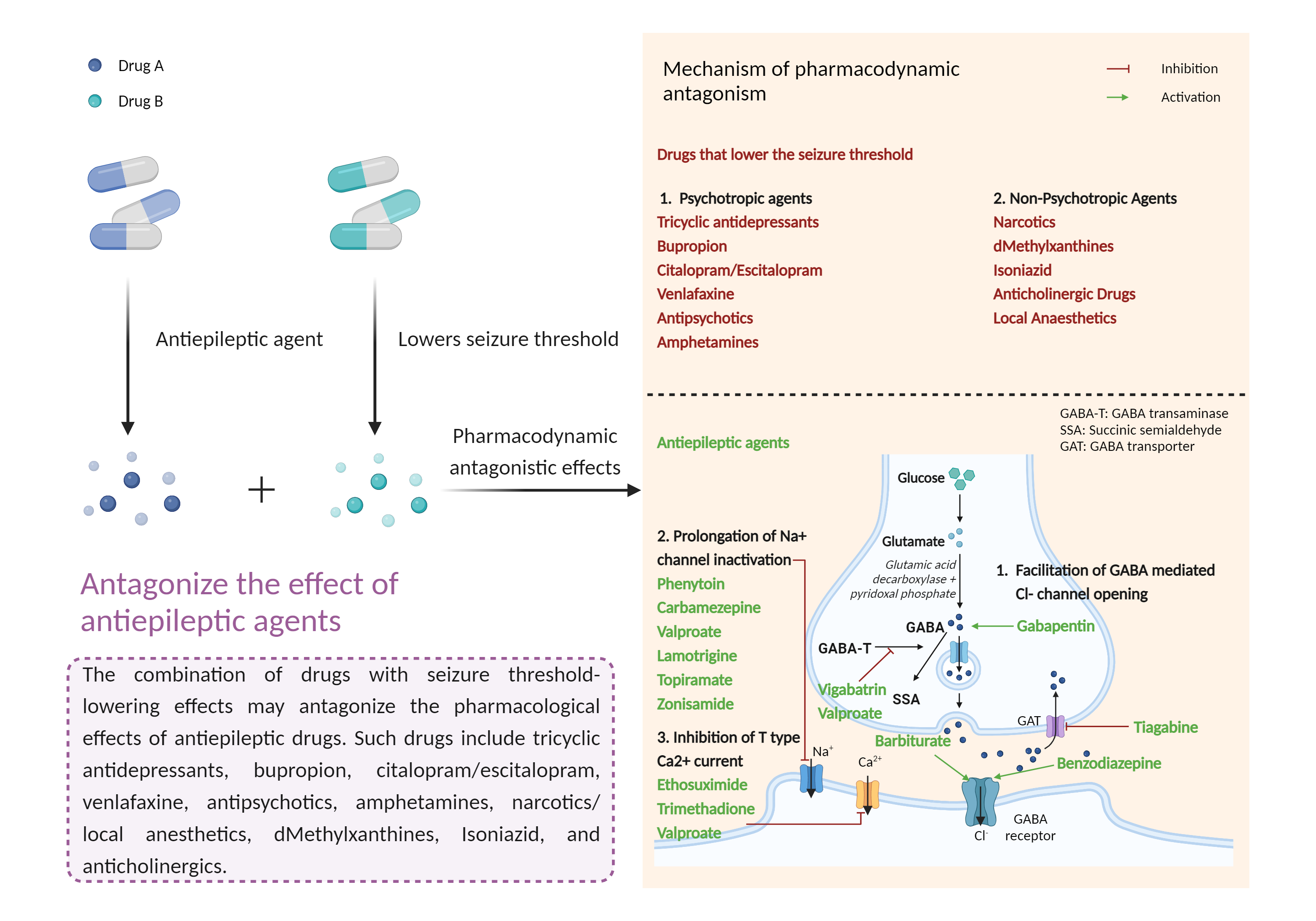
     Antagonize the effect of antiepileptic agents Click to Show/Hide Mechanism Graph
Could Not Find 2D Structure
      Drug Name Methylphenobarbital Sertraline
      Mechanism Antiepileptic agent Lower seizure threshold
      Key Mechanism Factor 1
Factor Name Antiepileptic agents
Factor Description The beneficial effects of antiepileptic drugs may be reduced, leading to an increase in seizure frequency or duration.
      Mechanism Description
  • Antagonize the effect of Methylphenobarbital when combined with Sertraline 

Recommended Action
      Management SSRIs and SNRIs should be avoided in patients with unstable epilepsy, and used cautiously in patients with epilepsy controlled with anticonvulsant medications. Treatment with SSRIs and SNRIs should be discontinued if seizures develop or seizure frequency increases. Patients receiving SSRIs or SNRIs with anticonvulsants, particularly carbamazepine, eslicarbazepine, oxcarbazepine and/or valproic acid, should also have serum sodium levels measured regularly and monitored for development of hyponatremia, particularly when higher dosages of these medications are used. Signs and symptoms of hyponatremia include nausea, vomiting, headache, difficulty concentrating, memory impairment, confusion, malaise, lethargy, muscle weakness or spasms, and unsteadiness. In more severe and/or acute cases, hallucination, syncope, seizure, coma, respiratory arrest, and death may occur.

References
1 Belcastro V, Costa C, Striano P "Levetiracetam-associated hyponatremia." Seizure 17 (2008): 389-90. [PMID: 18584781]
2 Product Information. Savella (milnacipran). Forest Pharmaceuticals, St. Louis, MO.
3 Gandhi S, McArthur E, Mamdani MM, et.al "Antiepileptic drugs and hyponatremia in older adults: Two population-based cohort studies." Epilepsia 57 (2016): 2067-79. [PMID: 27896804]