Drug General Information (ID: DDIR6UG3ZD)
  Drug Name Trimethoprim Drug Info Fosphenytoin Drug Info
  Drug Type Small molecule Small molecule
  Therapeutic Class Antiinfective Agents Anticonvulsants
  Structure

 Mechanism of Trimethoprim-Fosphenytoin Interaction (Severity Level: Moderate)
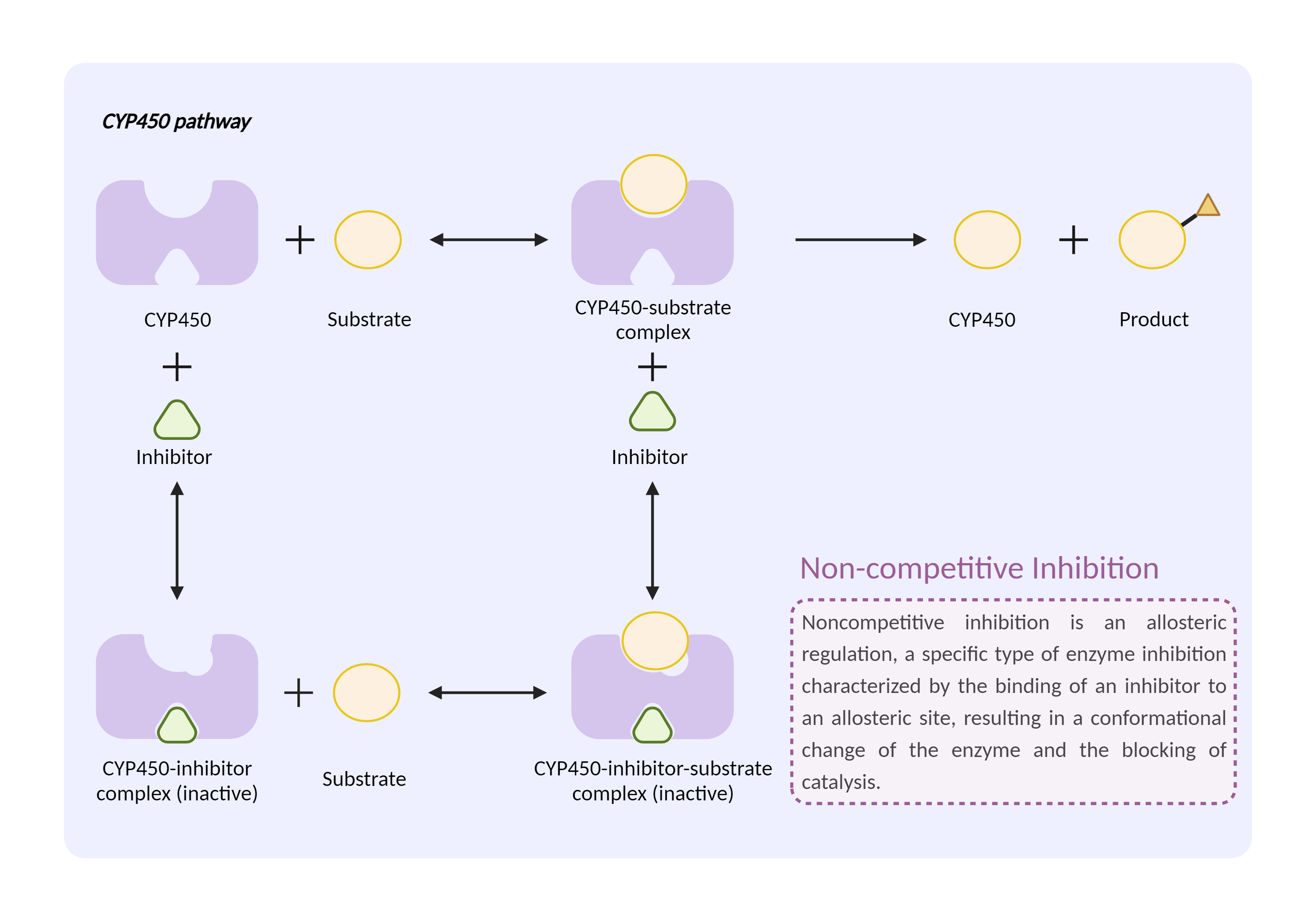
     CYP450 enzyme inhibition Click to Show/Hide Mechanism Graph
Could Not Find 2D Structure
      Drug Name Trimethoprim Fosphenytoin
      Mechanism CYP450 inhibitor CYP450 substrate
      Key Mechanism Factor 1
Factor Name Cytochrome P450 Structure Sequence
Protein Family Cytochrome P450 family
Protein Function
A cytochrome P450 monooxygenase involved in the metabolism of sterols, steroid hormones, retinoids and fatty acids (PubMed:10681376, PubMed:11093772, PubMed:11555828, PubMed:14559847, PubMed:12865317, PubMed:15373842, PubMed:15764715, PubMed:20702771, PubMed:19965576, PubMed:21490593, PubMed:21576599). Mechanistically, uses molecular oxygen inserting one oxygen atom into a substrate, and reducing the second into a water molecule, with two electrons provided by NADPH via cytochrome P450 reductase (NADPH--hemoprotein reductase). Catalyzes the hydroxylation of carbon-hydrogen bonds (PubMed:2732228, PubMed:14559847, PubMed:12865317, PubMed:15373842, PubMed:15764715, PubMed:21576599, PubMed:21490593). Exhibits high catalytic activity for the formation of hydroxyestrogens from estrone (E1) and 17beta-estradiol (E2), namely 2-hydroxy E1 and E2, as well as D-ring hydroxylated E1 and E2 at the C-16 position (PubMed:11555828, PubMed:14559847, PubMed:12865317). Plays a role in the metabolism of androgens, particularly in oxidative deactivation of testosterone (PubMed:2732228, PubMed:15373842, PubMed:15764715, PubMed:22773874). Metabolizes testosterone to less biologically active 2beta- and 6beta-hydroxytestosterones (PubMed:2732228, PubMed:15373842, PubMed:15764715). Contributes to the formation of hydroxycholesterols (oxysterols), particularly A-ring hydroxylated cholesterol at the C-4beta position, and side chain hydroxylated cholesterol at the C-25 position, likely contributing to cholesterol degradation and bile acid biosynthesis (PubMed:21576599). Catalyzes bisallylic hydroxylation of polyunsaturated fatty acids (PUFA) (PubMed:9435160). Catalyzes the epoxidation of double bonds of PUFA with a preference for the last double bond (PubMed:19965576). Metabolizes endocannabinoid arachidonoylethanolamide (anandamide) to 8,9-, 11,12-, and 14,15-epoxyeicosatrienoic acid ethanolamides (EpETrE-EAs), potentially modulating endocannabinoid system signaling (PubMed:20702771). Plays a role in the metabolism of retinoids. Displays high catalytic activity for oxidation of all-trans-retinol to all-trans-retinal, a rate-limiting step for the biosynthesis of all-trans-retinoic acid (atRA) (PubMed:10681376). Further metabolizes atRA toward 4-hydroxyretinoate and may play a role in hepatic atRA clearance (PubMed:11093772). Responsible for oxidative metabolism of xenobiotics. Acts as a 2-exo-monooxygenase for plant lipid 1,8-cineole (eucalyptol) (PubMed:11159812). Metabolizes the majority of the administered drugs. Catalyzes sulfoxidation of the anthelmintics albendazole and fenbendazole (PubMed:10759686). Hydroxylates antimalarial drug quinine (PubMed:8968357). Acts as a 1,4-cineole 2-exo-monooxygenase (PubMed:11695850). Also involved in vitamin D catabolism and calcium homeostasis. Catalyzes the inactivation of the active hormone calcitriol (1-alpha,25-dihydroxyvitamin D(3)) (PubMed:29461981).
    Click to Show/Hide
      Mechanism Description
  • Decreased metabolism of Fosphenytoin caused by Trimethoprim mediated inhibition of CYP450 enzyme

Recommended Action
      Management Monitoring for clinical and laboratory evidence of hydantoin toxicity is recommended. Dose adjustments may be necessary. Patients should be advised to notify their physician if they experience symptoms of hydantoin toxicity (e.g., drowsiness, visual disturbances, change in mental status, seizures, nausea, or ataxia).

References
1 Antoniou T, Gomes T, Mamdani MM, Juurlink DN "Trimethoprim/sulfamethoxazole-induced phenytoin toxicity in the elderly: a population-based study." Br J Clin Pharmacol 71 (2011): 544-9. [PMID: 21395647]
2 Cerner Multum, Inc. "Australian Product Information.".
3 Cerner Multum, Inc. "Canadian Product Information.".
4 Cerner Multum, Inc. "UK Summary of Product Characteristics.".
5 Dasgupta A, Dennen DA, Dean R, McLawhon RW "Displacement of phenytoin from serum protein carriers by antibiotics: studies with ceftriaxone, nafcillin, and sulfamethoxazole." Clin Chem 37 (1991): 98-100. [PMID: 1988217]
6 Gillman MA "Phenytoin toxicity and co-trimazole." Ann Intern Med 102 (1985): 559. [PMID: 3872091]
7 Hansen JM, Kampmann JP, Siersback-Nielsen K, et al. "The effect of different sulfonamides on phenytoin metabolism in man." Acta Med Scand Suppl 624 (1979): 106-10. [PMID: 284708]
8 Hines LE, Murphy JE "Potentially harmful drug-drug interactions in the elderly: a review." Am J Geriatr Pharmacother 9 (2011): 364-77. [PMID: 22078863]
9 Ilario MJ, Ruiz JE, Axiotis CA "Acute fulminant hepatic failure in a woman treated with phenytoin and trimethoprim-sulfamethoxazole." Arch Pathol Lab Med 124 (2000): 1800-3. [PMID: 11100060]
10 Komatsu T, Yamazaki H, Asahi S, Gillam EMJ, Guengerich FP, Nakajima M, Yokoi T "Formation of a dihydroxy metabolite of phenytoin in human liver microsomes/cytosol: Roles of cytochromes P4502C9, 2C19, and 3A4." Drug Metab Disposition 28 (2000): 1361-8. [PMID: 11038165]
11 Product Information. Bactrim (trimethoprim-sulfamethoxazole). Roche Laboratories, Nutley, NJ.
12 Product Information. Dilantin (phenytoin). Parke-Davis, Morris Plains, NJ.
13 Product Information. Trimethoprim (trimethoprim). Teva Pharmaceuticals USA, North Wales, PA.
14 Wen X, Wang JS, Backman JT, Laitila J, Neuvonen PJ "Trimethoprim and sulfamethoxazole are selective inhibitors of CYP2C8 and CYP2C9, respectively." Drug Metab Dispos 30 (2002): 631-635. [PMID: 12019187]
15 Wilcox JB "Phenytoin intoxication and cotrimoxazole." N Z Med J 94 (1981): 235-6. [PMID: 6975449]