Drug General Information (ID: DDIQYNGKZ9)
  Drug Name Methazolamide Drug Info Choline salicylate Drug Info
  Drug Type Small molecule Small molecule
  Therapeutic Class Carbonic Anhydrase Inhibitors Salicylates
  Structure

 Mechanism of Methazolamide-Choline salicylate Interaction (Severity Level: Major)
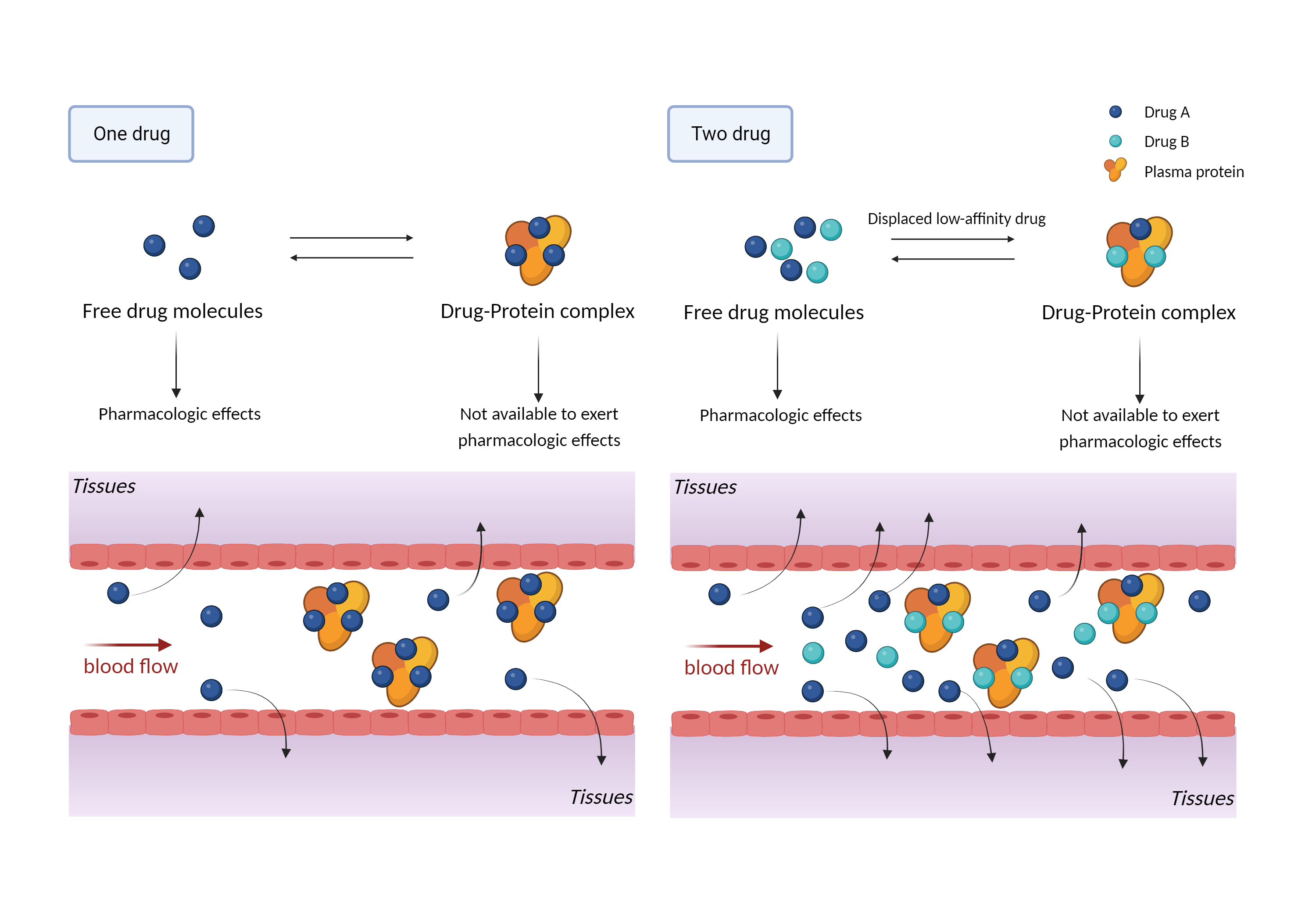
     Competitive binding of plasma proteins Click to Show/Hide Mechanism Graph
Could Not Find 2D Structure
      Drug Name Methazolamide Choline salicylate
      Mechanism 1 Competition for plasma protein binding sites Competition for plasma protein binding sites
      Key Mechanism Factor 1
Factor Name Plasma protein binding
Factor Description Plasma protein binding refers to the degree of binding of a drug to proteins in the blood, and the lower the degree of binding, the more efficiently the drug can cross cell membranes or diffuse. Plasma protein binding alters the distribution and therapeutic characteristics of the drugs.
      Mechanism Description
  • Increased plasma concentration of Choline salicylate and Methazolamide due to competitive binding of plasma proteins
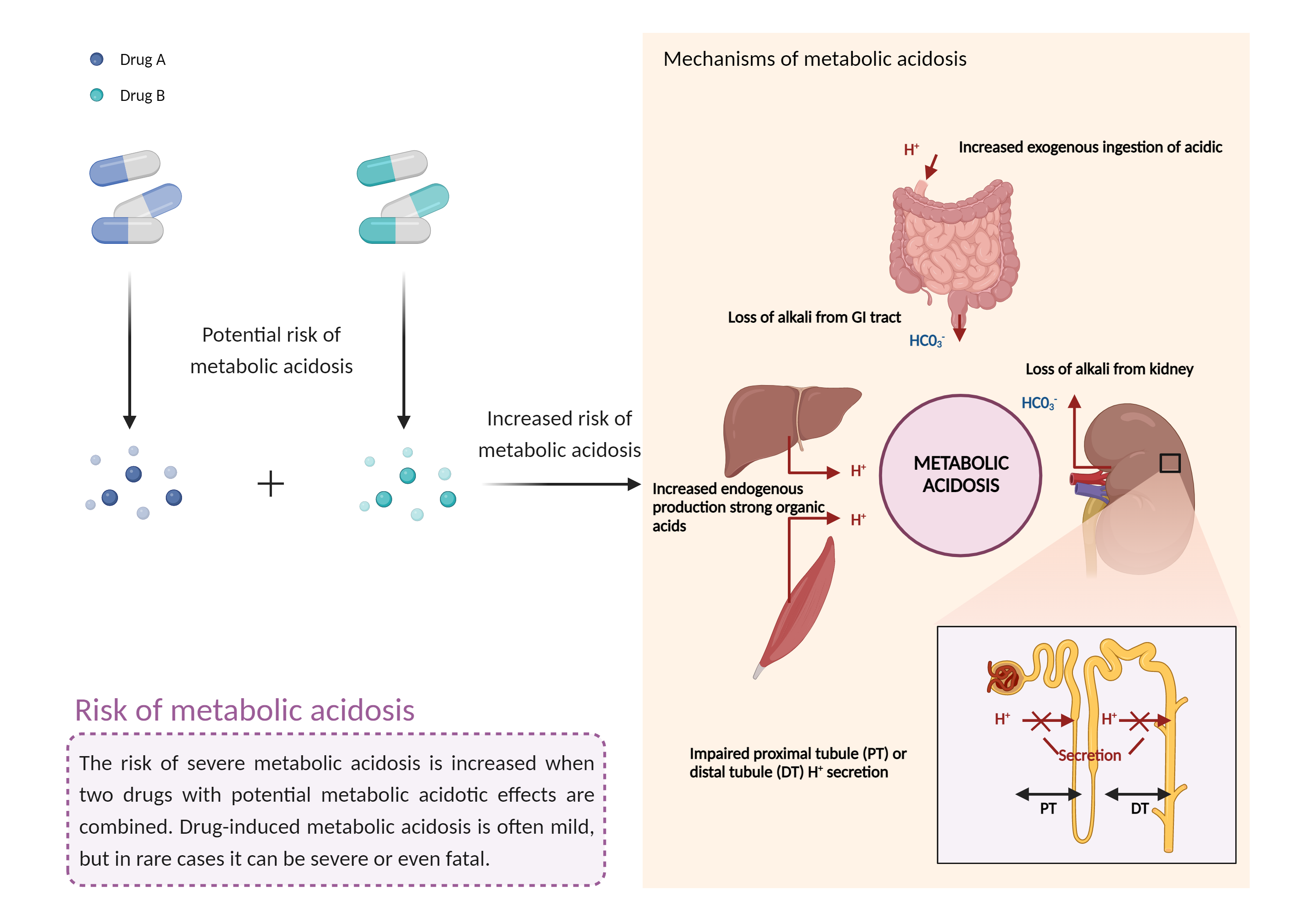
     Increased risk of metabolic acidosis Click to Show/Hide Mechanism Graph
Could Not Find 2D Structure
      Drug Name Methazolamide Choline salicylate
      Mechanism 2 Metabolic acidosis Metabolic acidosis
      Key Mechanism Factor 2
Factor Name Metabolic acidosis
Factor Description Metabolic acidosis is a clinical disorder defined as a pH below 7.35 and low HCO3 levels. Metabolic acidosis occurs when the body produces too much acid or the kidneys are unable to remove enough acid from the body. Symptoms vary depending on the underlying cause, but some common symptoms are as follows: shortness of breath, confusion, fatigue, shock, fruity taste of the patient's breath (diabetic ketoacidosis), rapid heartbeat, headache, weakness, and nausea.
      Mechanism Description
  • Increased risk of metabolic acidosis by the combination of Methazolamide and Choline salicylate 

Recommended Action
      Management In general, concomitant use of antirheumatic doses of salicylates and oral CAIs is not recommended. If coadministration is necessary, careful monitoring of the patient's mental status and acid base balance is strongly recommended. Patients should be advised to promptly notify their physicians if they experience symptoms such as lethargy, tinnitus, confusion, nausea, vomiting, or hyperventilation.

References
1 Anderson CJ, Kaufman PL, Sturm RJ "Toxicity of combined therapy with carbonic anhydrase inhibitors and aspirin." Am J Ophthalmol 86 (1978): 516-9. [PMID: 707596]
2 Canadian Pharmacists Association.
3 Cerner Multum, Inc. "Australian Product Information.".
4 Cerner Multum, Inc. "UK Summary of Product Characteristics.".
5 Cowan RA, Hartnell GG, Lowdell CP, Baird IM, Leak AM "Metabolic acidosis induced by carbonic anhydrase inhibitors and salicylates in patients with normal renal function." Br Med J (Clin Res Ed) 289 (1984): 347-8. [PMID: 6432091]
6 Favre L, Vallotton MB "Relationship of renal prostaglandins to three diuretics." Prostaglandins Leukot Med 14 (1984): 313-9. [PMID: 6589647]
7 Product Information. Azopt (brinzolamide ophthalmic). Alcon Laboratories Inc, Fort Worth, TX.
8 Product Information. Diamox (acetazolamide). Lederle Laboratories, Wayne, NJ.
9 Product Information. Trusopt (dorzolamide ophthalmic). Merck & Co, Inc, West Point, PA.
10 Rousseau P, Fuentevilla-Clifton A "Acetazolamide and salicylate interaction in the elderly: a case report." J Am Geriatr Soc 41 (1993): 868-9. [PMID: 8340566]
11 Sweeney KR, Chapron DJ, Antal EJ, Kramer PA "Differential effects of flurbiprofen and aspirin on acetazolamide disposition in humans." Br J Clin Pharmacol 27 (1989): 866-9. [PMID: 2757898]
12 Sweeney KR, Chapron DJ, Brandt JL, Gomolin IH, Feig PU, Kramer PA "Toxic interaction between acetazolamide and salicylate: case reports and a pharmacokinetic explanation." Clin Pharmacol Ther 40 (1986): 518-24. [PMID: 3769383]
13 Sweeney KR, Chapron DJ, Kramer PA "Effect of salicylate on serum protein binding and red blood cell uptake of acetazolamide in vitro." J Pharm Sci 77 (1988): 751-6. [PMID: 3225768]