
Details of Drug-Drug Interaction
| Drug General Information (ID: DDIQRISK3Z) | |||||||||
|---|---|---|---|---|---|---|---|---|---|
| Drug Name | Deserpidine | Drug Info | Epoprostenol | Drug Info | |||||
| Drug Type | Small molecule | Small molecule | |||||||
| Therapeutic Class | Antihypertensive Agents | Antihypertensive Agents | |||||||
| Structure | |||||||||
| Mechanism of Deserpidine-Epoprostenol Interaction (Severity Level: Moderate) | |||||||||
|---|---|---|---|---|---|---|---|---|---|
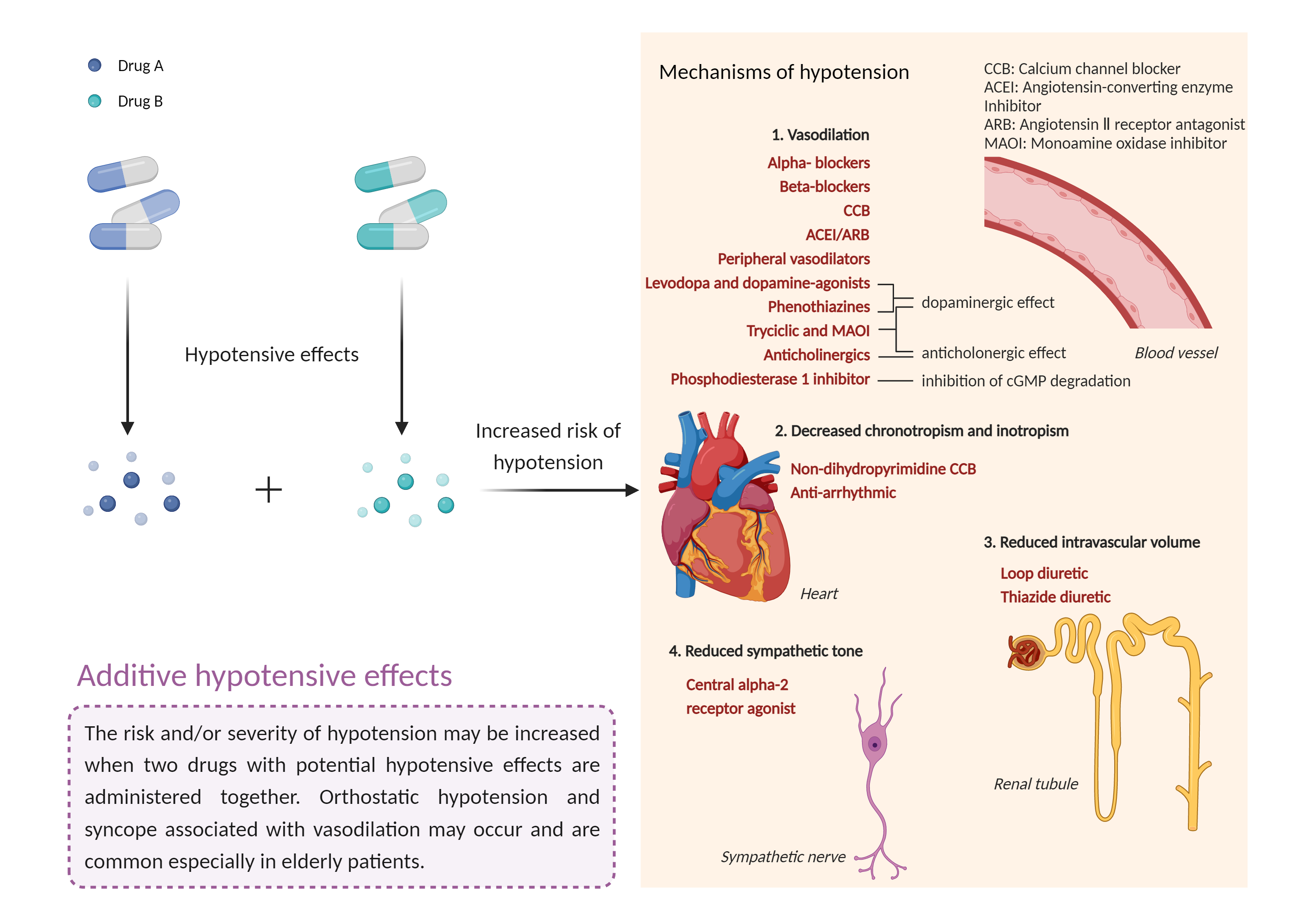
| Additive hypotensive effects Click to Show/Hide Mechanism Graph | |||||||||
 |
|||||||||
| Drug Name | Deserpidine | Epoprostenol | |||||||
| Mechanism |
Hypotensive effects Synaptic vesicular amine transporter Inhibitor |
Antihypertensive agent Prostacyclin receptor Agonist |
|||||||
| Key Mechanism Factor 1 | |||||||||
| Factor Name | Synaptic vesicle amine transporter |
×
Structure
Sequence
MALSELALVRWLQESRRSRKLILFIVFLALLLDNMLLTVVVPIIPSYLYSIKHEKNATEIQTARPVHTASISDSFQSIFSYYDNSTMVTGNATRDLTLHQTATQHMVTNASAVPSDCPSEDKDLLNENVQVGLLFASKATVQLITNPFIGLLTNRIGYPIPIFAGFCIMFVSTIMFAFSSSYAFLLIARSLQGIGSSCSSVAGMGMLASVYTDDEERGNVMGIALGGLAMGVLVGPPFGSVLYEFVGKTAPFLVLAALVLLDGAIQLFVLQPSRVQPESQKGTPLTTLLKDPYILIAAGSICFANMGIAMLEPALPIWMMETMCSRKWQLGVAFLPASISYLIGTNIFGILAHKMGRWLCALLGMIIVGVSILCIPFAKNIYGLIAPNFGVGFAIGMVDSSMMPIMGYLVDLRHVSVYGSVYAIADVAFCMGYAIGPSAGGAIAKAIGFPWLMTIIGIIDILFAPLCFFLRSPPAKEEKMAILMDHNCPIKTKMYTQNNIQSYPIGEDEESESD
|
|||||||
| Gene Name | SLC18A2 | ||||||||
| Uniprot ID | VMAT2_HUMAN | ||||||||
| KEGG Pathway | hsa:6571 | ||||||||
| Protein Family | Major facilitator superfamily | ||||||||
| Protein Function |
Involved in the ATP-dependent vesicular transport of biogenic amine neurotransmitters. Pumps cytosolic monoamines including dopamine, norepinephrine, serotonin, and histamine into synaptic vesicles (PubMed:23363473). Requisite for vesicular amine storage prior to secretion via exocytosis.
Click to Show/Hide
|
||||||||
| Key Mechanism Factor 2 | |||||||||
| Factor Name | Prostacyclin receptor |
×
Structure
Sequence
MADSCRNLTYVRGSVGPATSTLMFVAGVVGNGLALGILSARRPARPSAFAVLVTGLAATDLLGTSFLSPAVFVAYARNSSLLGLARGGPALCDAFAFAMTFFGLASMLILFAMAVERCLALSHPYLYAQLDGPRCARLALPAIYAFCVLFCALPLLGLGQHQQYCPGSWCFLRMRWAQPGGAAFSLAYAGLVALLVAAIFLCNGSVTLSLCRMYRQQKRHQGSLGPRPRTGEDEVDHLILLALMTVVMAVCSLPLTIRCFTQAVAPDSSSEMGDLLAFRFYAFNPILDPWVFILFRKAVFQRLKLWVCCLCLGPAHGDSQTPLSQLASGRRDPRAPSAPVGKEGSCVPLSAWGEGQVEPLPPTQQSSGSAVGTSSKAEASVACSLC
|
|||||||
| Gene Name | PTGIR | ||||||||
| Uniprot ID | PI2R_HUMAN | ||||||||
| KEGG Pathway | hsa:5739 | ||||||||
| Protein Family | G-protein coupled receptor 1 family | ||||||||
| Protein Function |
Receptor for prostacyclin (prostaglandin I2 or PGI2). The activity of this receptor is mediated by G(s) proteins which activate adenylate cyclase.
Click to Show/Hide
|
||||||||
| Mechanism Description |
|
||||||||
| Recommended Action | |||||||||
|---|---|---|---|---|---|---|---|---|---|
| Management | While therapies that target the prostacyclin pathway have been used in combination with diuretics, antihypertensives, or other vasodilators in the management of pulmonary arterial hypertension, caution is recommended if they must be administered concurrently. If these drugs are used together, it is generally recommended that blood pressure be measured more frequently until a stable blood pressure pattern is observed. Patients should be advised to avoid rising abruptly from a sitting or recumbent position and to notify their doctor if they experience dizziness, lightheadedness, syncope, orthostatic hypotension, or tachycardia. | ||||||||