
Details of Drug-Drug Interaction
| Drug General Information (ID: DDIPUOCI34) | |||||||||
|---|---|---|---|---|---|---|---|---|---|
| Drug Name | Ipratropium | Drug Info | Aripiprazole | Drug Info | |||||
| Drug Type | Small molecule | Small molecule | |||||||
| Therapeutic Class | Bronchodilators | Antipsychotic Agents | |||||||
| Structure | |||||||||
| Mechanism of Ipratropium-Aripiprazole Interaction (Severity Level: Moderate) | |||||||||
|---|---|---|---|---|---|---|---|---|---|
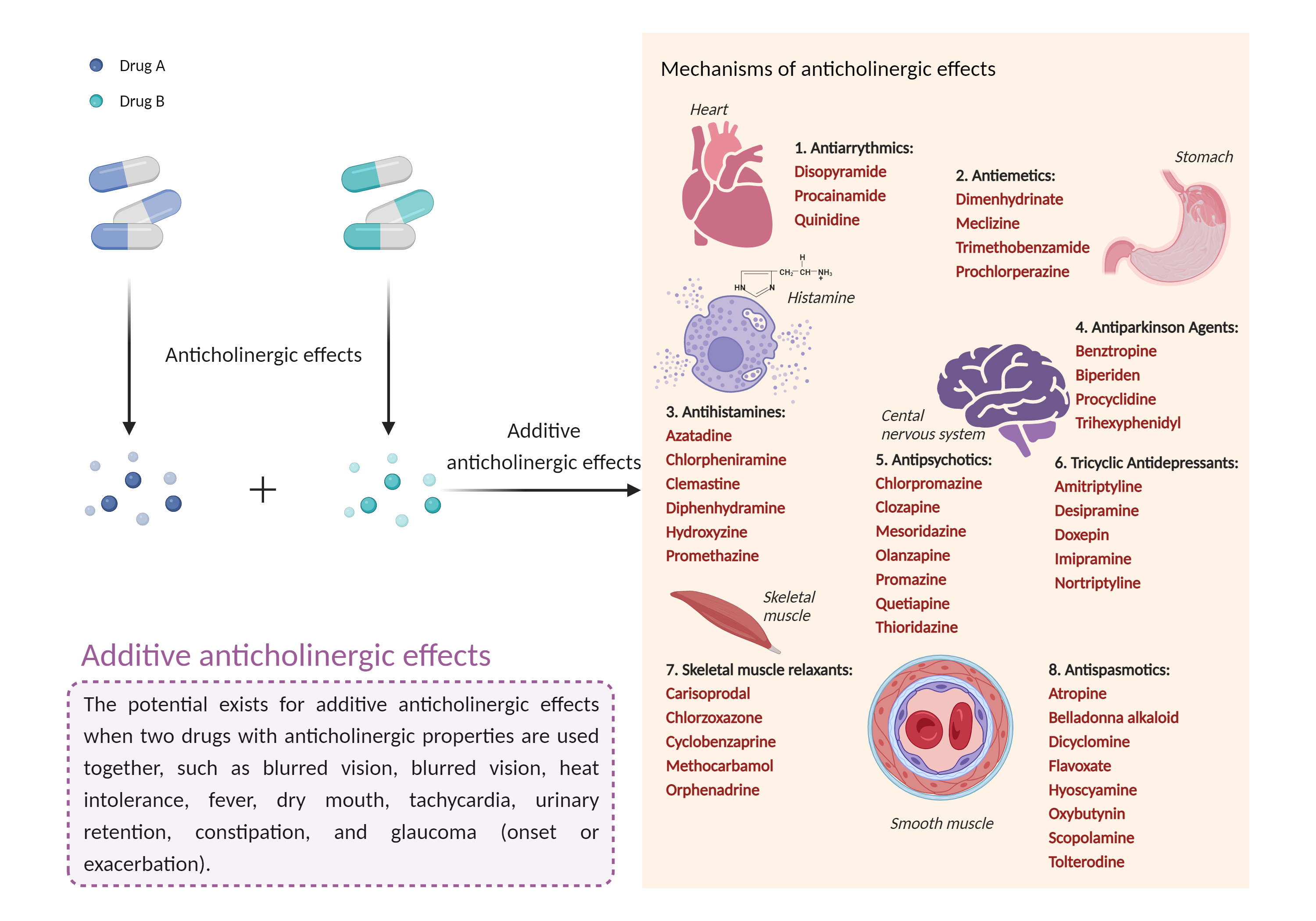
| Additive anticholinergic effects Click to Show/Hide Mechanism Graph | |||||||||
 |
|||||||||
| Drug Name | Ipratropium | Aripiprazole | |||||||
| Mechanism |
Anticholinergic effects Muscarinic acetylcholine receptor Antagonist |
Anticholinergic effects Muscarinic acetylcholine receptor Antagonist |
|||||||
| Key Mechanism Factor 1 | |||||||||
| Factor Name | Muscarinic acetylcholine receptor M | Structure Sequence | |||||||
| Protein Family | G-protein coupled receptor 1 family | ||||||||
| Protein Function |
The muscarinic acetylcholine receptor mediates various cellular responses, including inhibition of adenylate cyclase, breakdown of phosphoinositides and modulation of potassium channels through the action of G proteins. Primary transducing effect is Pi turnover.
Click to Show/Hide
|
||||||||
| Mechanism Description |
|
||||||||
| Recommended Action | |||||||||
|---|---|---|---|---|---|---|---|---|---|
| Management | Topical and inhaled anticholinergic preparations should preferably not be used in combination with other anticholinergic agents or agents with significant anticholinergic effects such as antihistamines, antispasmodics, neuroleptics, phenothiazines, skeletal muscle relaxants, tricyclic antidepressants, and class IA antiarrhythmics (especially disopyramide). Caution is advised if concomitant use cannot be avoided, particularly in the elderly and those with significantly impaired renal and/or hepatic function. | ||||||||