
Details of Drug-Drug Interaction
| Drug General Information (ID: DDIPQL9S28) | |||||||||
|---|---|---|---|---|---|---|---|---|---|
| Drug Name | Brimonidine (topical) | Drug Info | Safinamide | Drug Info | |||||
| Drug Type | Small molecule | Small molecule | |||||||
| Therapeutic Class | Ophthalmic Glaucoma Agents | Dopaminergic Antiparkinsonism Agents | |||||||
| Structure | |||||||||
| Mechanism of Brimonidine (topical)-Safinamide Interaction (Severity Level: Moderate) | |||||||||
|---|---|---|---|---|---|---|---|---|---|
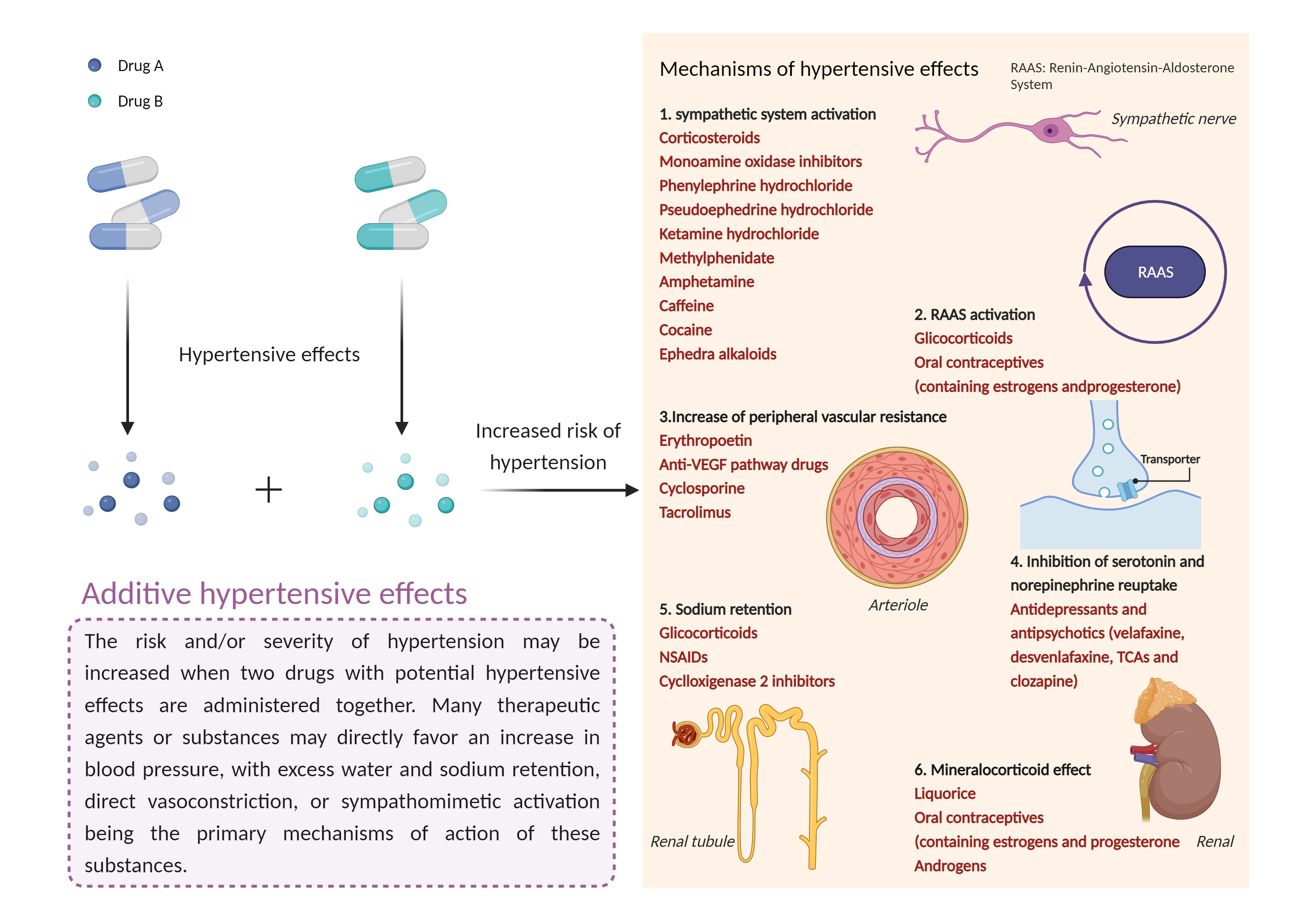
| Additive hypertensive effects Click to Show/Hide Mechanism Graph | |||||||||
 |
|||||||||
| Drug Name | Brimonidine (topical) | Safinamide | |||||||
| Mechanism |
Hypertensive effects Alpha-1 adrenergic receptor Agonist |
Hypertensive effects Monoamine oxidase non-selective Inhibitor |
|||||||
| Key Mechanism Factor 1 | |||||||||
| Factor Name | Adrenergic receptor alpha-1 | Structure Sequence | |||||||
| Protein Family | G-protein coupled receptor 1 family | ||||||||
| Protein Function |
This alpha-adrenergic receptor mediates its action by association with G proteins that activate a phosphatidylinositol-calcium second messenger system. Its effect is mediated by G(q) and G(11) proteins. Nuclear ADRA1A-ADRA1B heterooligomers regulate phenylephrine(PE)-stimulated ERK signaling in cardiac myocytes.
Click to Show/Hide
|
||||||||
| Key Mechanism Factor 2 | |||||||||
| Factor Name | Monoamine oxidase | Structure Sequence | |||||||
| Protein Family | Flavin monoamine oxidase family | ||||||||
| Protein Function |
Catalyzes the oxidative deamination of primary and some secondary amine such as neurotransmitters, with concomitant reduction of oxygen to hydrogen peroxide and has important functions in the metabolism of neuroactive and vasoactive amines in the central nervous system and peripheral tissues (PubMed:20493079, PubMed:8316221, PubMed:18391214, PubMed:24169519). Preferentially oxidizes serotonin (PubMed:20493079, PubMed:24169519). Also catalyzes the oxidative deamination of kynuramine to 3-(2-aminophenyl)-3-oxopropanal that can spontaneously condense to 4-hydroxyquinoline (By similarity).
Click to Show/Hide
|
||||||||
| Mechanism Description |
|
||||||||
| Recommended Action | |||||||||
|---|---|---|---|---|---|---|---|---|---|
| Management | Patients receiving brimonidine in combination with MAOIs should be made aware of the potential for increased adverse effects, and counseled to avoid activities requiring mental alertness until they know how these agents affect them. Patients should also avoid rising abruptly from a sitting or recumbent position and notify their physician if they experience orthostasis or tachycardia. Blood pressure should be monitored closely. | ||||||||