| Mechanism of Phenelzine-Isometheptene Interaction
(Severity Level: Major)
|
|
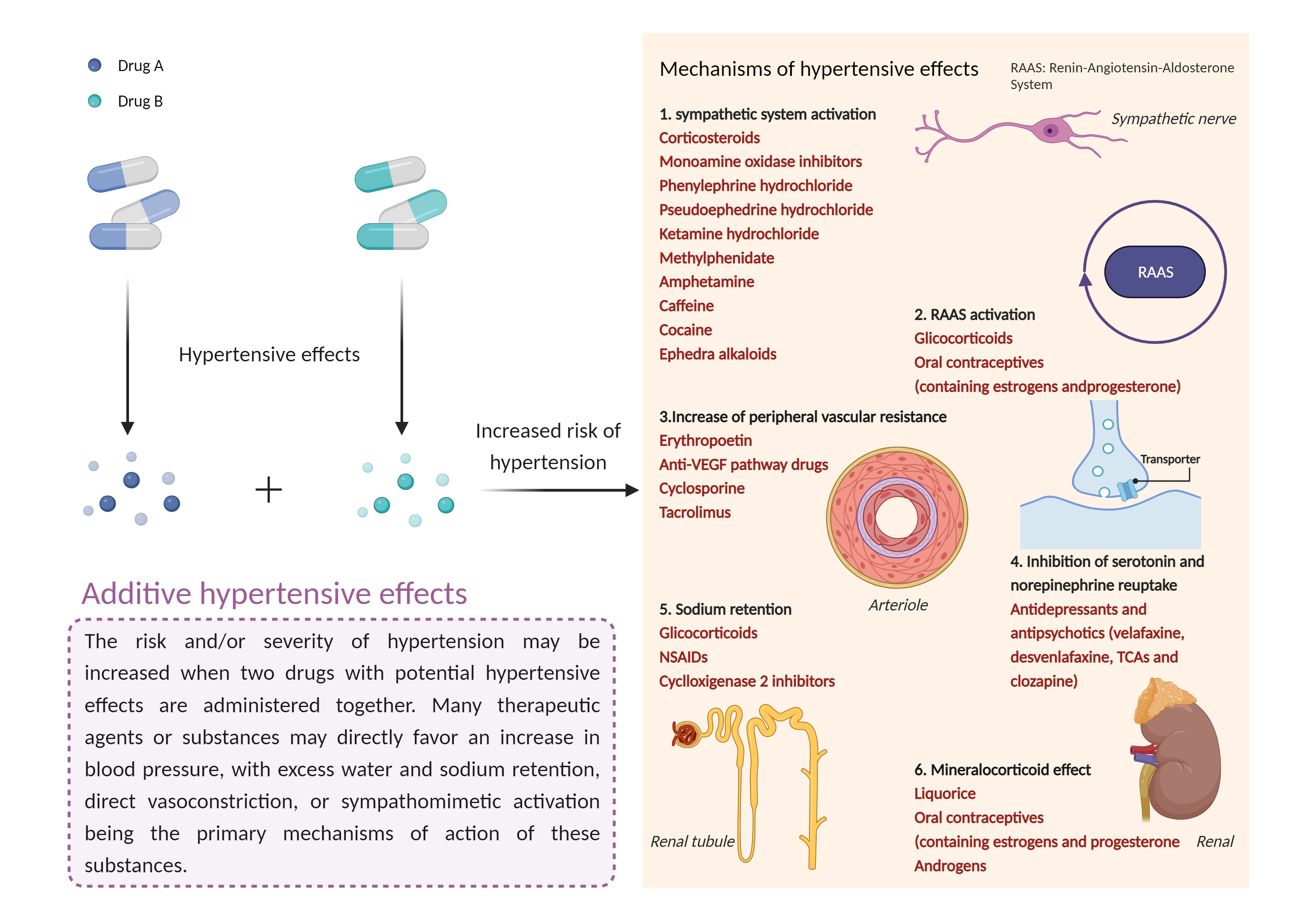
Additive hypertensive effects
Click to Show/Hide Mechanism Graph
|
 |
| Drug Name |
Phenelzine |
Isometheptene |
|
Mechanism 1
|
Hypertensive effects |
Hypertensive effects |
| Key Mechanism Factor 1 |
| Factor Name |
Hypertensive effects |
| Factor Description |
Hypertension is defined as a blood pressure reading above a prescribed limit (130/90 mmHg). Most people with hypertension have no signs or symptoms; others may experience: severe headache, shortness of breath, nosebleeds, severe anxiety, and feeling a tingling sensation in the neck or head. |
| Mechanism Description |
- Additive hypertensive effects by the combination of Phenelzine and Isometheptene
|
|
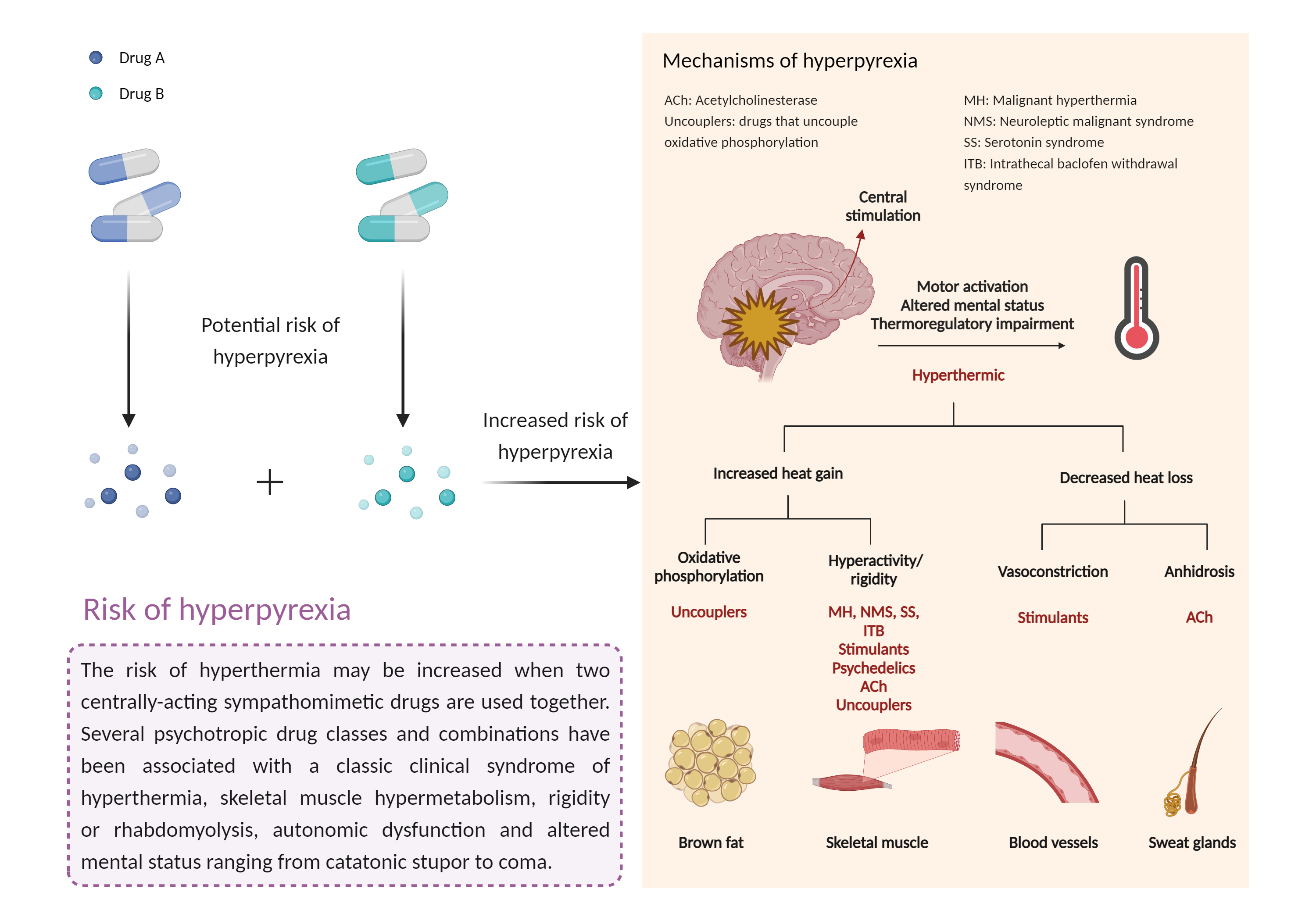
Increased risk of hyperpyrexia
Click to Show/Hide Mechanism Graph
|
 |
| Drug Name |
Phenelzine |
Isometheptene |
|
Mechanism 2
|
Hyperpyrexia |
Hyperpyrexia |
| Key Mechanism Factor 2 |
| Factor Name |
Hyperpyrexia |
| Factor Description |
Hyperthermia is an extreme, life-threatening increase in core body temperature. If hyperthermia persists for a long time or worsens, more serious symptoms may occur, such as confusion, headache, constricted pupils, vomiting, diarrhea, and decreased urine output. |
| Mechanism Description |
- Increased risk of hyperpyrexia by the combination of Phenelzine and Isometheptene
|
