
Details of Drug-Drug Interaction
| Drug General Information (ID: DDIOW1URPS) | |||||||||
|---|---|---|---|---|---|---|---|---|---|
| Drug Name | Thiethylperazine | Drug Info | Fluoxetine | Drug Info | |||||
| Drug Type | Small molecule | Small molecule | |||||||
| Therapeutic Class | Antiemetics | Antidepressants | |||||||
| Structure | |||||||||
| Mechanism of Thiethylperazine-Fluoxetine Interaction (Severity Level: Moderate) | |||||||||
|---|---|---|---|---|---|---|---|---|---|
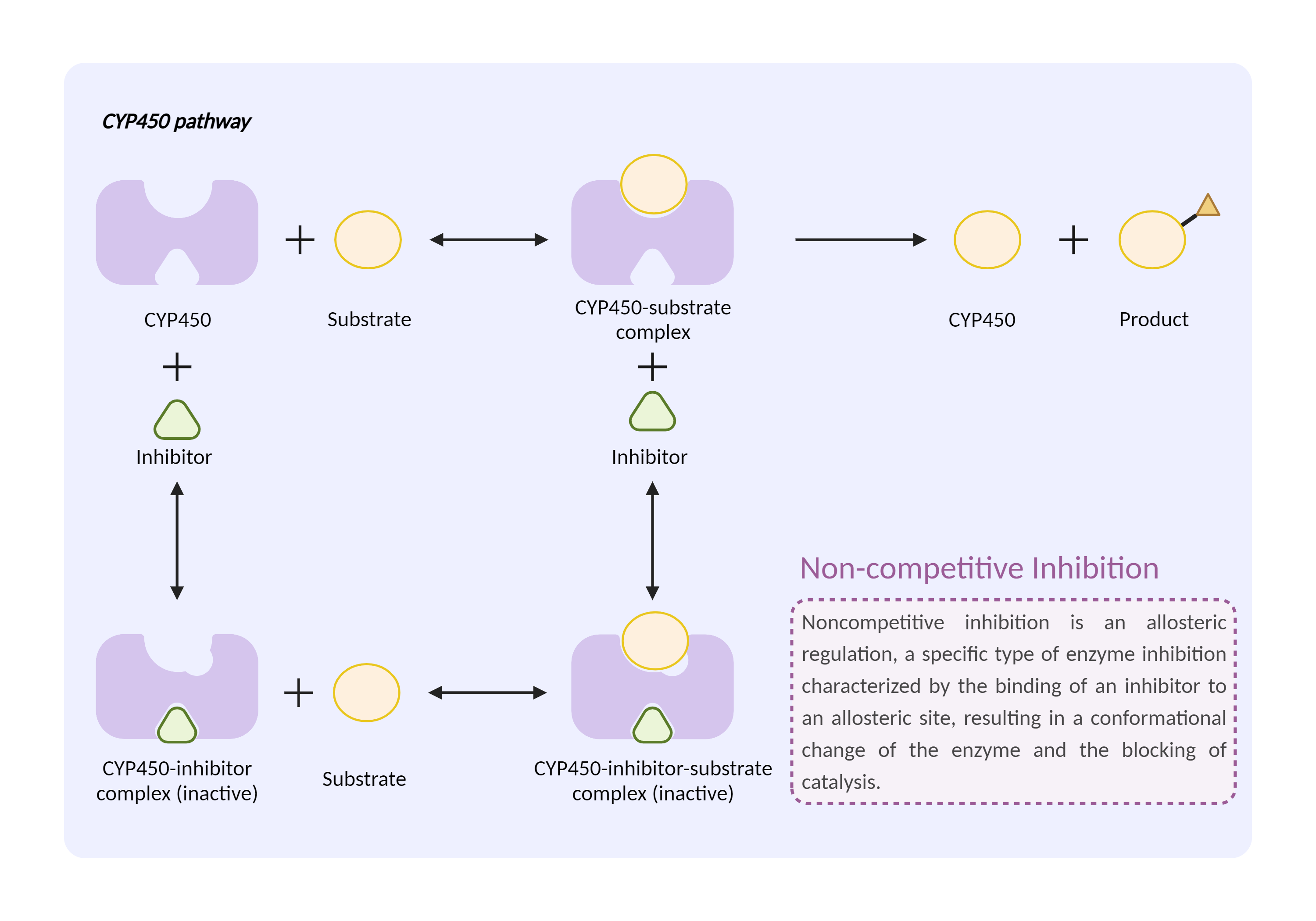
| CYP450 enzyme inhibition Click to Show/Hide Mechanism Graph | |||||||||
 |
|||||||||
| Drug Name | Thiethylperazine | Fluoxetine | |||||||
| Mechanism 1 | CYP450 2D6 substrate | CYP450 2D6 inhibitor | |||||||
| Key Mechanism Factor 1 | |||||||||
| Factor Name | Cytochrome P450 2D6 |
×
Structure
Sequence
MGLEALVPLAVIVAIFLLLVDLMHRRQRWAARYPPGPLPLPGLGNLLHVDFQNTPYCFDQLRRRFGDVFSLQLAWTPVVVLNGLAAVREALVTHGEDTADRPPVPITQILGFGPRSQGVFLARYGPAWREQRRFSVSTLRNLGLGKKSLEQWVTEEAACLCAAFANHSGRPFRPNGLLDKAVSNVIASLTCGRRFEYDDPRFLRLLDLAQEGLKEESGFLREVLNAVPVLLHIPALAGKVLRFQKAFLTQLDELLTEHRMTWDPAQPPRDLTEAFLAEMEKAKGNPESSFNDENLRIVVADLFSAGMVTTSTTLAWGLLLMILHPDVQRRVQQEIDDVIGQVRRPEMGDQAHMPYTTAVIHEVQRFGDIVPLGVTHMTSRDIEVQGFRIPKGTTLITNLSSVLKDEAVWEKPFRFHPEHFLDAQGHFVKPEAFLPFSAGRRACLGEPLARMELFLFFTSLLQHFSFSVPTGQPRPSHHGVFAFLVSPSPYELCAVPR
|
|||||||
| Gene Name | CYP2D6 | ||||||||
| Uniprot ID | CP2D6_HUMAN | ||||||||
| KEGG Pathway | hsa:1565 | ||||||||
| Protein Family | Cytochrome P450 family | ||||||||
| Protein Function |
A cytochrome P450 monooxygenase involved in the metabolism of fatty acids, steroids and retinoids (PubMed:18698000, PubMed:19965576, PubMed:20972997, PubMed:21289075, PubMed:21576599). Mechanistically, uses molecular oxygen inserting one oxygen atom into a substrate, and reducing the second into a water molecule, with two electrons provided by NADPH via cytochrome P450 reductase (NADPH--hemoprotein reductase) (PubMed:18698000, PubMed:19965576, PubMed:20972997, PubMed:21289075, PubMed:21576599). Catalyzes the epoxidation of double bonds of polyunsaturated fatty acids (PUFA) (PubMed:19965576, PubMed:20972997). Metabolizes endocannabinoid arachidonoylethanolamide (anandamide) to 20-hydroxyeicosatetraenoic acid ethanolamide (20-HETE-EA) and 8,9-, 11,12-, and 14,15-epoxyeicosatrienoic acid ethanolamides (EpETrE-EAs), potentially modulating endocannabinoid system signaling (PubMed:18698000, PubMed:21289075). Catalyzes the hydroxylation of carbon-hydrogen bonds. Metabolizes cholesterol toward 25-hydroxycholesterol, a physiological regulator of cellular cholesterol homeostasis (PubMed:21576599). Catalyzes the oxidative transformations of all-trans retinol to all-trans retinal, a precursor for the active form all-trans-retinoic acid (PubMed:10681376). Also involved in the oxidative metabolism of drugs such as antiarrhythmics, adrenoceptor antagonists, and tricyclic antidepressants.
Click to Show/Hide
|
||||||||
| Mechanism Description |
|
||||||||
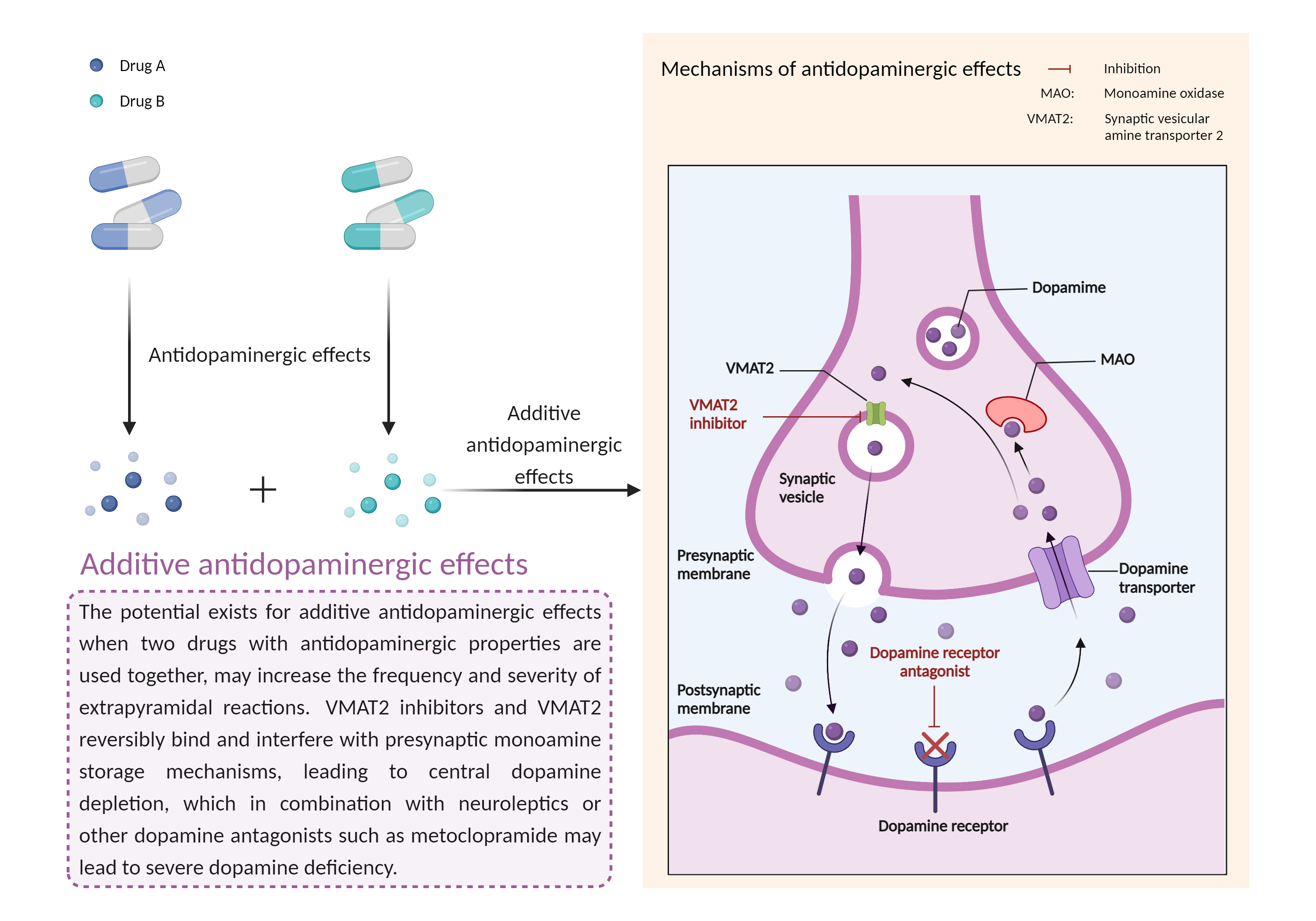
| Additive antidopaminergic effects Click to Show/Hide Mechanism Graph | |||||||||
 |
|||||||||
| Drug Name | Thiethylperazine | Fluoxetine | |||||||
| Mechanism 2 | Extrapyramidal effects | Extrapyramidal effects | |||||||
| Key Mechanism Factor 2 | |||||||||
| Factor Name | Antidopaminergic effects | ||||||||
| Factor Description | Antidopamines are medications that inhibit or block the neurotransmitter activity of dopamine or related substances. Dopamine deficiency is associated with Parkinson's disease, restless legs syndrome and depression, and low dopamine levels can make you feel tired, moody, unmotivated and many other symptoms. | ||||||||
| Mechanism Description |
|
||||||||
| Recommended Action | |||||||||
|---|---|---|---|---|---|---|---|---|---|
| Management | Caution is recommended if fluoxetine is prescribed with phenothiazines or other neuroleptic agents that are thought to be metabolized by CYP450 2D6. Plasma neuroleptic levels and pharmacologic effects should be closely monitored and the dosage(s) adjusted accordingly, particularly following initiation or discontinuation of fluoxetine in patients who are stabilized on their neuroleptic regimen. Patients should be advised to contact their physician if they develop extrapyramidal symptoms such as tremor, shuffling gait, drooling, a mask-like face, tongue stiffness, muscle spasms or rigidity, and involuntary movements. Due to the long half-life of fluoxetine and norfluoxetine, the risk of an interaction may exist for an extended period (up to several weeks) after discontinuation of fluoxetine. | ||||||||