
Details of Drug-Drug Interaction
| Drug General Information (ID: DDIOUI5J2K) | |||||||||
|---|---|---|---|---|---|---|---|---|---|
| Drug Name | Triamterene | Drug Info | Avanafil | Drug Info | |||||
| Drug Type | Small molecule | Small molecule | |||||||
| Therapeutic Class | Diuretics | Impotence Agents | |||||||
| Structure | |||||||||
| Mechanism of Triamterene-Avanafil Interaction (Severity Level: Moderate) | |||||||||
|---|---|---|---|---|---|---|---|---|---|
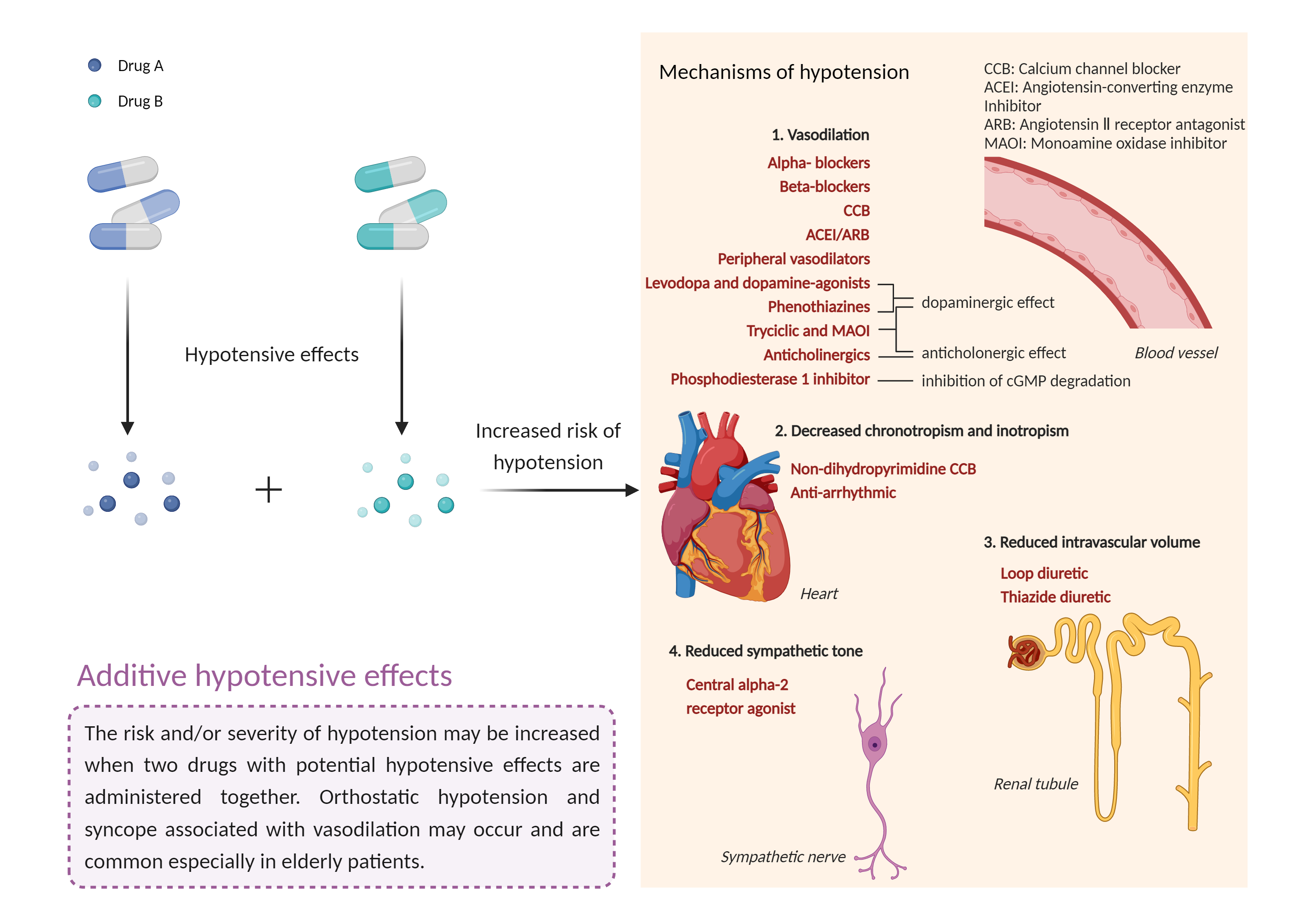
| Additive hypotensive effects Click to Show/Hide Mechanism Graph | |||||||||
 |
|||||||||
| Drug Name | Triamterene | Avanafil | |||||||
| Mechanism |
Antihypertensive agent Amiloride-sensitive sodium channel Blocker |
Hypotensive effects Phosphodiesterase 5A Inhibitor |
|||||||
| Key Mechanism Factor 1 | |||||||||
| Factor Name | Amiloride-sensitive sodium channel | Structure Sequence | |||||||
| Protein Family | Amiloride-sensitive sodium channel (TC 1.A.6) family | ||||||||
| Protein Function |
Sodium permeable non-voltage-sensitive ion channel inhibited by the diuretic amiloride. Mediates the electrodiffusion of the luminal sodium (and water, which follows osmotically) through the apical membrane of epithelial cells. Plays an essential role in electrolyte and blood pressure homeostasis, but also in airway surface liquid homeostasis, which is important for proper clearance of mucus. Controls the reabsorption of sodium in kidney, colon, lung and eccrine sweat glands. Also plays a role in taste perception.
Click to Show/Hide
|
||||||||
| Key Mechanism Factor 2 | |||||||||
| Factor Name | Phosphodiesterase 5A |
×
Structure
Sequence
MERAGPSFGQQRQQQQPQQQKQQQRDQDSVEAWLDDHWDFTFSYFVRKATREMVNAWFAERVHTIPVCKEGIRGHTESCSCPLQQSPRADNSAPGTPTRKISASEFDRPLRPIVVKDSEGTVSFLSDSEKKEQMPLTPPRFDHDEGDQCSRLLELVKDISSHLDVTALCHKIFLHIHGLISADRYSLFLVCEDSSNDKFLISRLFDVAEGSTLEEVSNNCIRLEWNKGIVGHVAALGEPLNIKDAYEDPRFNAEVDQITGYKTQSILCMPIKNHREEVVGVAQAINKKSGNGGTFTEKDEKDFAAYLAFCGIVLHNAQLYETSLLENKRNQVLLDLASLIFEEQQSLEVILKKIAATIISFMQVQKCTIFIVDEDCSDSFSSVFHMECEELEKSSDTLTREHDANKINYMYAQYVKNTMEPLNIPDVSKDKRFPWTTENTGNVNQQCIRSLLCTPIKNGKKNKVIGVCQLVNKMEENTGKVKPFNRNDEQFLEAFVIFCGLGIQNTQMYEAVERAMAKQMVTLEVLSYHASAAEEETRELQSLAAAVVPSAQTLKITDFSFSDFELSDLETALCTIRMFTDLNLVQNFQMKHEVLCRWILSVKKNYRKNVAYHNWRHAFNTAQCMFAALKAGKIQNKLTDLEILALLIAALSHDLDHRGVNNSYIQRSEHPLAQLYCHSIMEHHHFDQCLMILNSPGNQILSGLSIEEYKTTLKIIKQAILATDLALYIKRRGEFFELIRKNQFNLEDPHQKELFLAMLMTACDLSAITKPWPIQQRIAELVATEFFDQGDRERKELNIEPTDLMNREKKNKIPSMQVGFIDAICLQLYEALTHVSEDCFPLLDGCRKNRQKWQALAEQQEKMLINGESGQAKRN
|
|||||||
| Gene Name | PDE5A | ||||||||
| Uniprot ID | PDE5A_HUMAN | ||||||||
| KEGG Pathway | hsa:8654 | ||||||||
| Protein Family | Cyclic nucleotide phosphodiesterase family | ||||||||
| Protein Function |
Plays a role in signal transduction by regulating the intracellular concentration of cyclic nucleotides. This phosphodiesterase catalyzes the specific hydrolysis of cGMP to 5'-GMP (PubMed:9714779, PubMed:15489334). Specifically regulates nitric-oxide-generated cGMP (PubMed:15489334).
Click to Show/Hide
|
||||||||
| Mechanism Description |
|
||||||||
| Recommended Action | |||||||||
|---|---|---|---|---|---|---|---|---|---|
| Management | Caution is advised if PDE5 inhibitors are prescribed in combination with antihypertensive agents. Patients receiving the combination should be advised to avoid rising abruptly from a sitting or recumbent position, especially following treatment initiation or a dosage increase, and to contact their doctor if they experience symptoms of hypotension such as dizziness, lightheadedness, fainting, or tachycardia. | ||||||||