
Details of Drug-Drug Interaction
| Drug General Information (ID: DDIOH53NC2) | |||||||||
|---|---|---|---|---|---|---|---|---|---|
| Drug Name | Pamidronic acid | Drug Info | Amikacin (liposome) | Drug Info | |||||
| Drug Type | Small molecule | Small molecule | |||||||
| Therapeutic Class | Antiinflammatory Agents | Antibiotics | |||||||
| Structure | |||||||||
| Mechanism of Pamidronic acid-Amikacin (liposome) Interaction (Severity Level: Moderate) | |||||||||
|---|---|---|---|---|---|---|---|---|---|
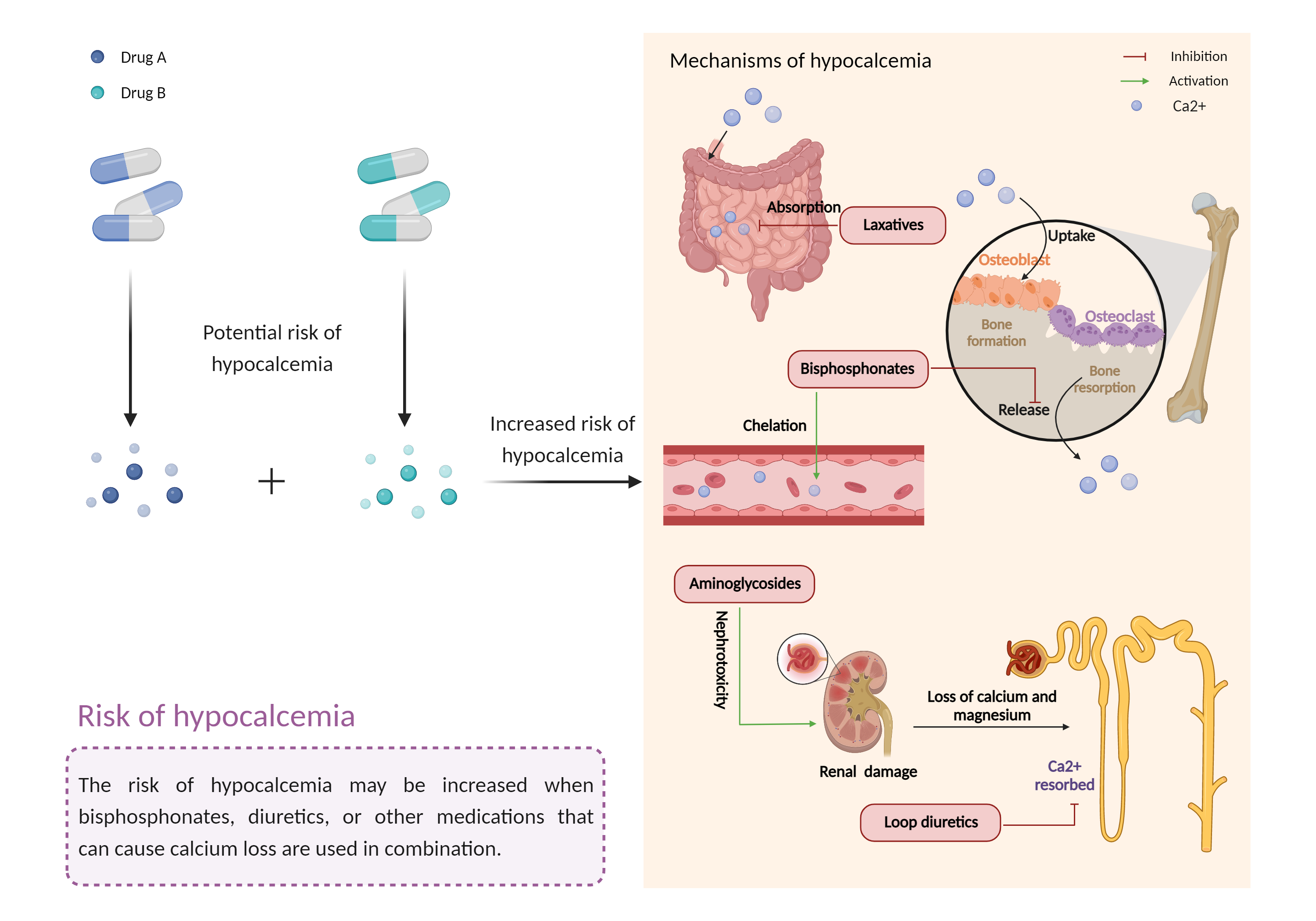
| Increased risk of hypocalcemia Click to Show/Hide Mechanism Graph | |||||||||
 |
|||||||||
| Drug Name | Pamidronic acid | Amikacin (liposome) | |||||||
| Mechanism | Hypocalcemia | Hypocalcemia | |||||||
| Key Mechanism Factor 1 | |||||||||
| Factor Name | Hypocalcemia | ||||||||
| Factor Description | Hypocalcemia is a low level of calcium found in a blood test. It can cause symptoms such as tingling, muscle cramps and heart rhythm problems that can range from mild to life-threatening. | ||||||||
| Mechanism Description |
|
||||||||
| Recommended Action | |||||||||
|---|---|---|---|---|---|---|---|---|---|
| Management | Caution is advised if bisphosphonates are used in patients who have recently received or are receiving treatment with aminoglycosides. Renal function as well as serum calcium and magnesium levels should be monitored during and after treatment, since renal loss of calcium and magnesium can continue for many weeks after cessation of aminoglycosides, as can the effect of bisphosphonates. Patients and clinicians should be alert to signs and symptoms of clinical hypocalcemia such as muscle spasms, carpopedal spasm, laryngeal spasm, tetany, convulsions, mental changes (irritability, depression, psychosis), increased intracranial pressure, papilledema, QT interval prolongation, and cardiac arrhythmias. | ||||||||