Drug General Information (ID: DDINKGFJR2)
  Drug Name Quinapril Drug Info Aliskiren Drug Info
  Drug Type Small molecule Small molecule
  Therapeutic Class Antihypertensive Agents Antihypertensive Agents
  Structure

 Mechanism of Quinapril-Aliskiren Interaction (Severity Level: Major)
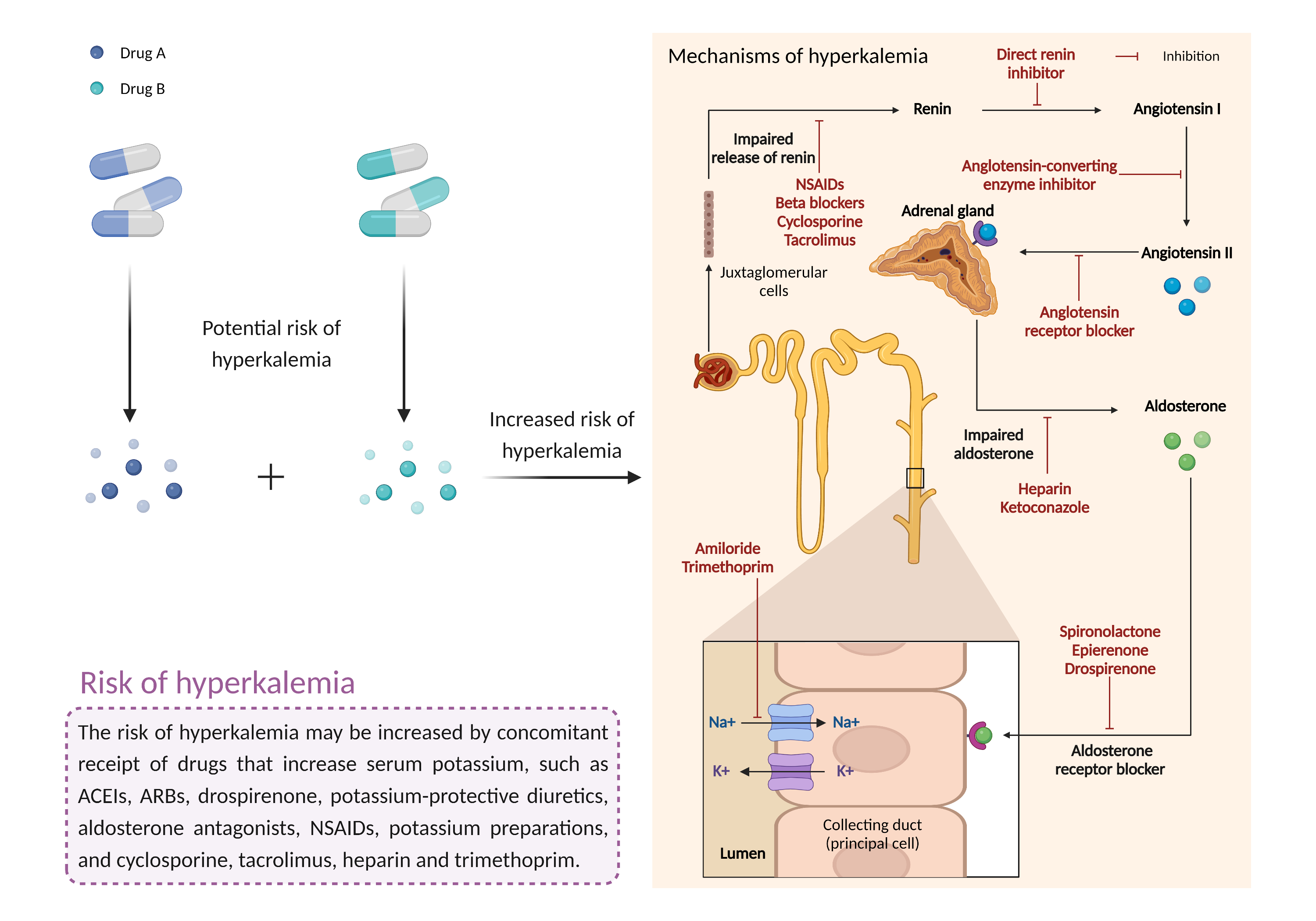
     Increased risk of hyperkalemia Click to Show/Hide Mechanism Graph
Could Not Find 2D Structure
      Drug Name Quinapril Aliskiren
      Mechanism Hyperkalemia Hyperkalemia
      Key Mechanism Factor 1
Factor Name Hyperkalemia
Factor Description Hyperkalemia is a condition in which the level of potassium in the blood is higher than normal. While mild cases may not produce symptoms, severe hyperkalemia can lead to fatal arrhythmias if left untreated.
      Mechanism Description
  • Increased risk of hyperkalemia by the combination of Quinapril and Aliskiren 

Recommended Action
      Management The use of aliskiren with ACE inhibitors or ARBs is considered contraindicated in patients with diabetes and should be avoided in general, particularly in patients with moderate to severe renal impairment (i.e., creatinine clearance (CrCl) < 60 mL/min). Prescribers should not initiate aliskiren in diabetic patients who are taking an ACE inhibitor or an ARB, and should stop any aliskiren-containing treatment if these patients are already receiving the combination. alternative antihypertensive treatment should be considered as necessary. Most patients do not obtain any additional benefit from combination therapy relative to monotherapy therefore, the potential risks should be thoroughly assessed when aliskiren is prescribed with ACE inhibitors or ARBs for the treatment of essential hypertension in patients without diabetes. Volume or salt depletion should be corrected prior to initiation of treatment. Routine monitoring of blood pressure, electrolytes, and renal function are recommended, particularly in the elderly or patients with worsening heart failure or a risk for dehydration. Potassium supplementation should generally be avoided unless it is closely monitored, and patients should be advised to seek medical attention if they experience signs and symptoms of hyperkalemia such as weakness, listlessness, confusion, tingling of the extremities, and irregular heartbeat.

References
1 Health Canada "Potential risks of cardiovascular and renal adverse events in patients with type 2 diabetes treated with aliskiren (RASILEZ) or aliskiren/hydrochlorothiazide (RASILEZ HCT)." .
2 Product Information. Tekturna (aliskiren). Novartis Pharmaceuticals, East Hanover, NJ.
3 EMA. European Medicines Agency "PRAC recommends against combined use of medicines affecting the renin-angiotensin (RAS) system: recommendation will now be considered by CHMP for final opinion." .
4 MHRA. Medicines and Healthcare Regulatory Agency "Combination use of medicines from different classes of renin-angiotensin system blocking agents: risk of hyperkalaemia, hypotension, and impaired renal function--new warnings.".
5 National Kidney Foundation "KDOQI Clinical Practice Guideline for Diabetes and CKD: 2012 update." Am J Kidney Dis 60 (2012): 850-86. [PMID: 23067652]
6 Novartis International AG "Novartis announces termination of ALTITUDE study with Rasilez Tekturna in high-risk patients with diabetes and renal impairment.".