| Management |
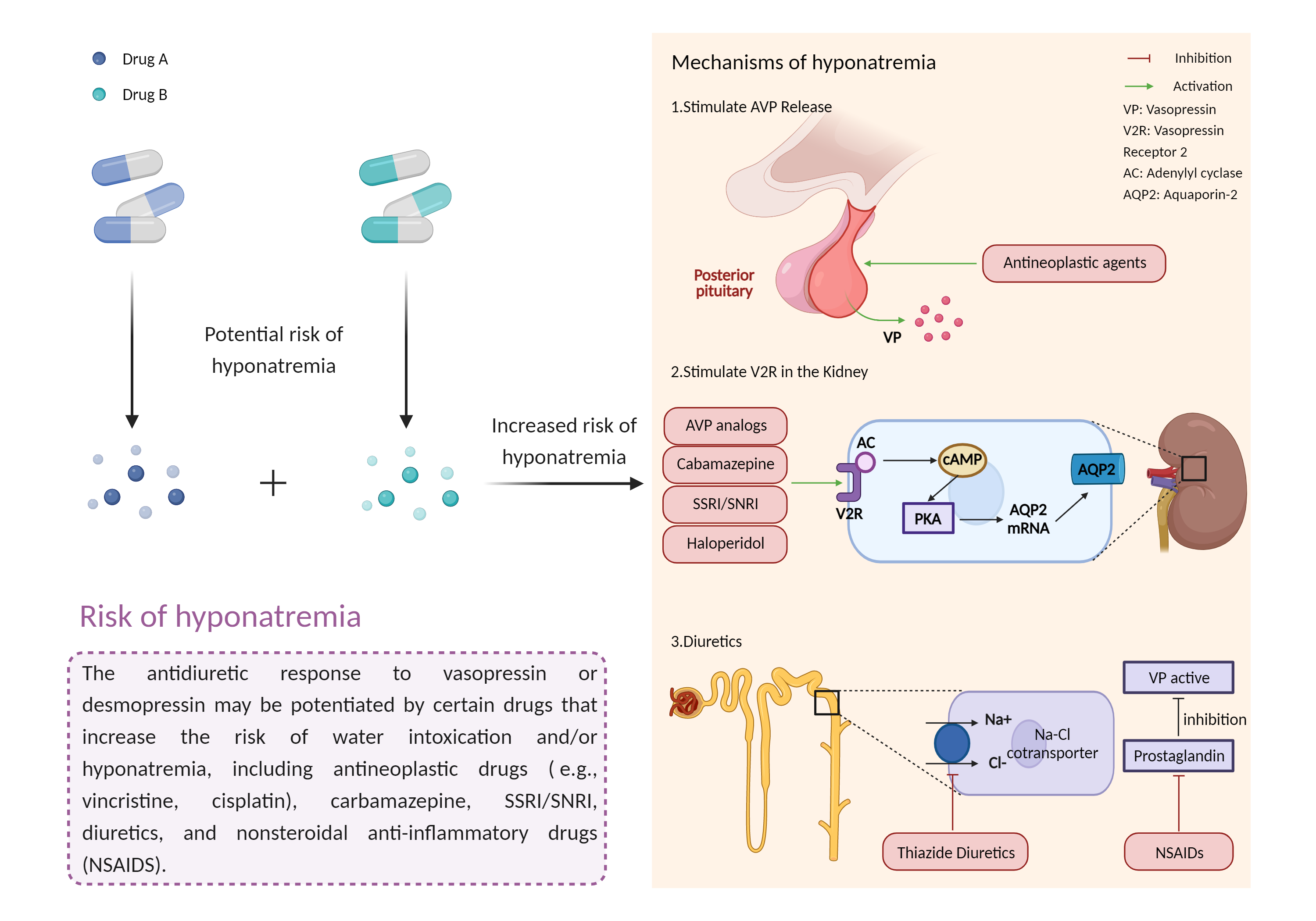
Caution is recommended if SSRIs or SNRIs are prescribed in combination with diuretics, particularly in the elderly. Patients should be advised to seek medical attention if they experience potential signs and symptoms of hyponatremia such as nausea, vomiting, headache, malaise, lethargy, irritability, difficulty concentrating, memory impairment, confusion, weakness, muscle spasm, and unsteadiness (which may lead to falls). More severe and/or acute cases may include hallucination, syncope, seizure, coma, respiratory arrest, and death. Discontinuation of SSRI/SNRI therapy should be considered in patients who develop symptomatic hyponatremia, and appropriate medical intervention instituted as necessary. Patients should also have their blood pressure and pulse monitored before and during SSRI/SNRI therapy, especially during the first few weeks and following a dosage increase. Patients should be advised to avoid rising abruptly from a sitting or recumbent position and to notify their doctor if they experience dizziness, lightheadedness, syncope, orthostasis, or tachycardia. |