| Mechanism of Meperidine-Isoniazid Interaction
(Severity Level: Moderate)
|
|
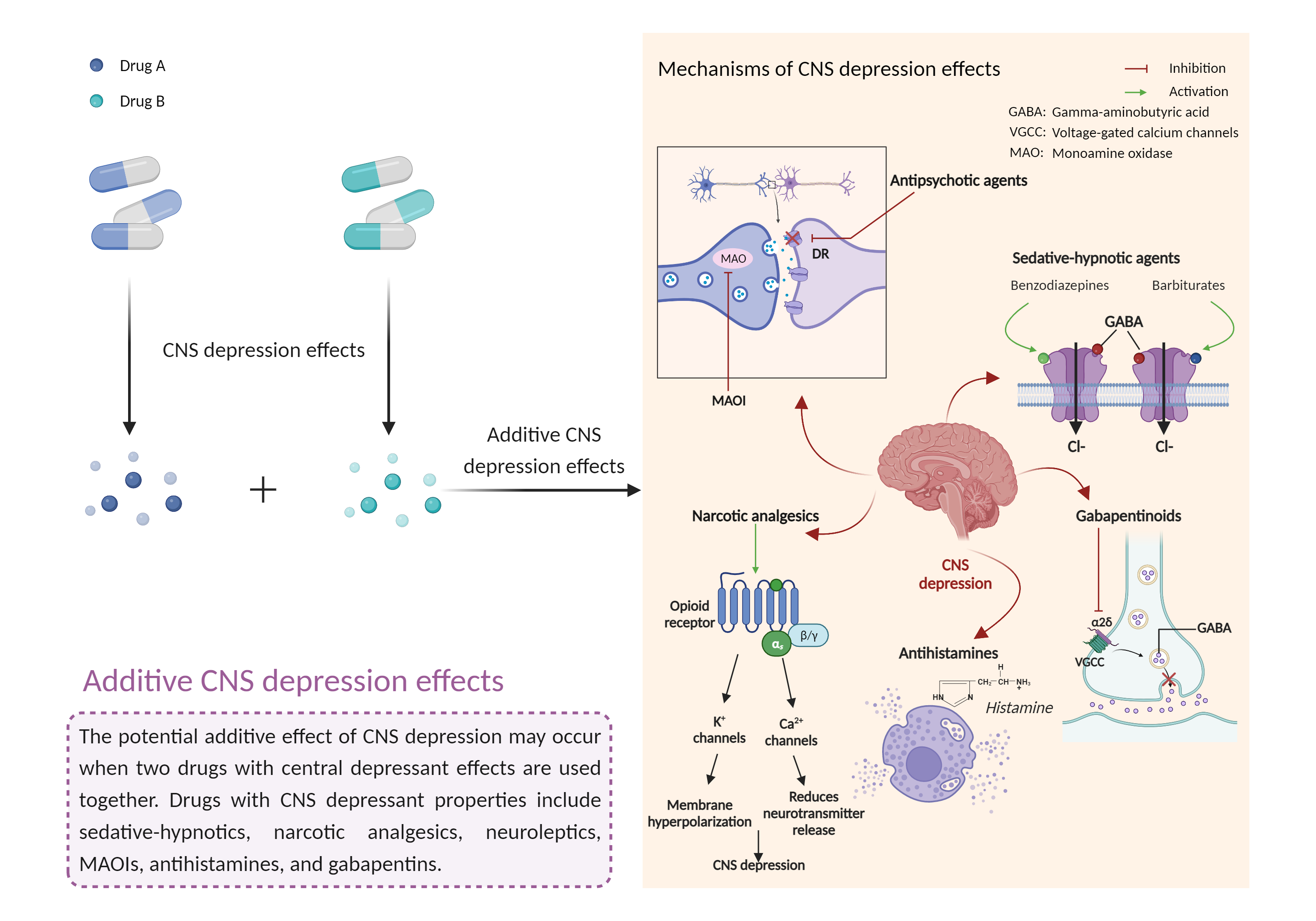
Additive CNS depression effects
Click to Show/Hide Mechanism Graph
|
 |
| Drug Name |
Meperidine |
Isoniazid |
|
Mechanism 1
|
CNS depression effects |
CNS depression effects |
| Key Mechanism Factor 1 |
| Factor Name |
CNS depression effects |
| Factor Description |
CNS depressants are drugs that inhibit or suppress brain activity and can reduce mental and physical processes. Excessive CNS depression can lead to decreased heart rate, slow breathing (less than 10 breaths per minute), extreme confusion or loss of memory, nausea and vomiting, poor judgment, blue lips or fingertips, irritability and aggression, and clammy or cold skin. |
| Mechanism Description |
- Additive CNS depression effects by the combination of Meperidine and Isoniazid
|
|
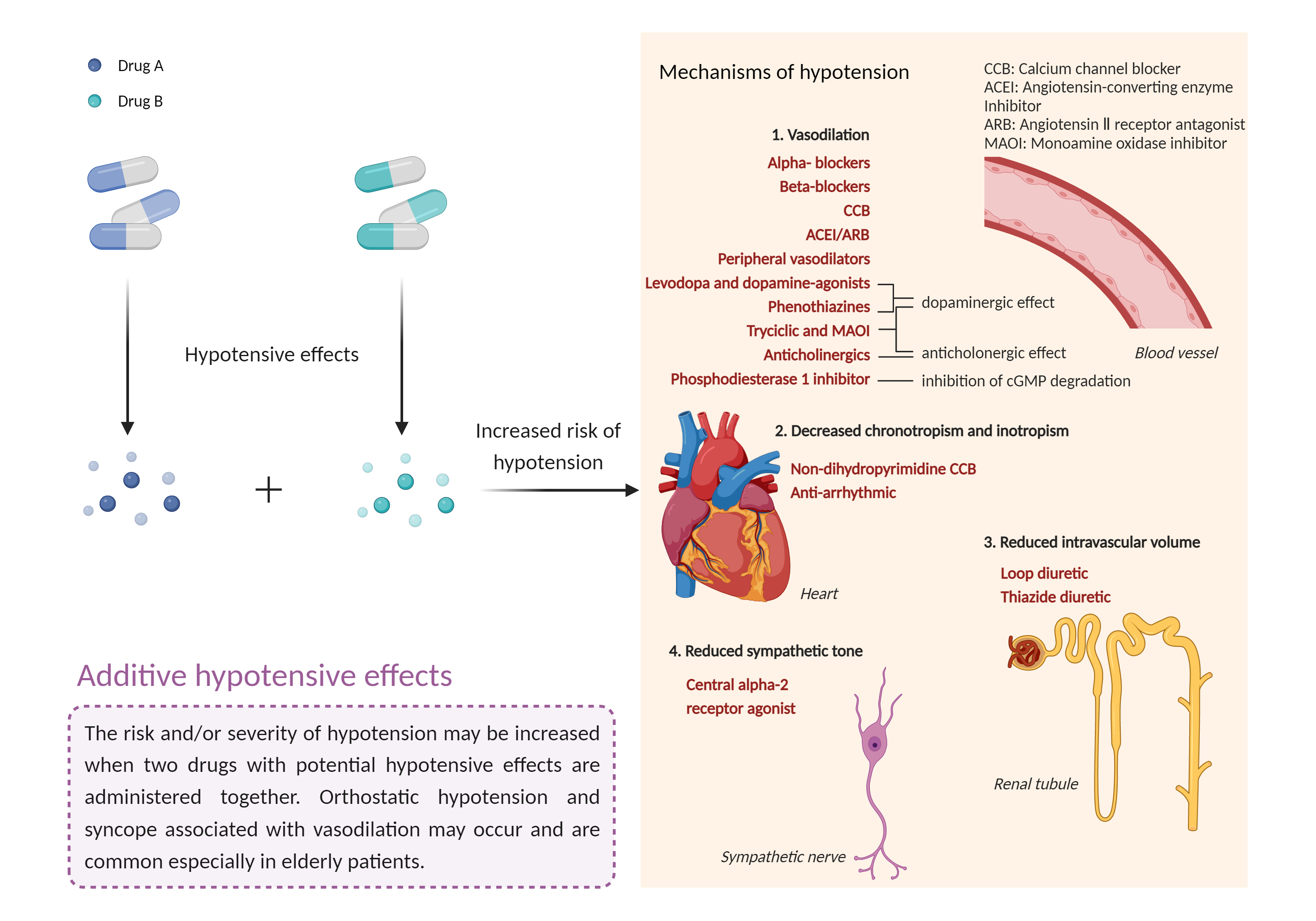
Additive hypotensive effects
Click to Show/Hide Mechanism Graph
|
 |
| Drug Name |
Meperidine |
Isoniazid |
|
Mechanism 2
|
Hypotensive effects
Alpha-2 adrenergic receptor
Agonist
|
Hypotensive effects |
| Key Mechanism Factor 2 |
| Factor Name |
Adrenergic receptor alpha-2 |
Structure
Sequence
|
| Protein Family |
G-protein coupled receptor 1 family |
| Protein Function |
Alpha-2 adrenergic receptors mediate the catecholamine-induced inhibition of adenylate cyclase through the action of G proteins. The rank order of potency for agonists of this receptor is oxymetazoline > clonidine > epinephrine > norepinephrine > phenylephrine > dopamine > p-synephrine > p-tyramine > serotonin = p-octopamine. For antagonists, the rank order is yohimbine > phentolamine = mianserine > chlorpromazine = spiperone = prazosin > propanolol > alprenolol = pindolol.
Click to Show/Hide
|
| Mechanism Description |
- Additive hypotensive effects by the combination of Meperidine and Isoniazid
|
