
Details of Drug-Drug Interaction
| Drug General Information (ID: DDIMFZ8V93) | |||||||||
|---|---|---|---|---|---|---|---|---|---|
| Drug Name | Thiethylperazine | Drug Info | Metolazone | Drug Info | |||||
| Drug Type | Small molecule | Small molecule | |||||||
| Therapeutic Class | Antiemetics | Antihypertensive Agents | |||||||
| Structure | |||||||||
| Mechanism of Thiethylperazine-Metolazone Interaction (Severity Level: Moderate) | |||||||||
|---|---|---|---|---|---|---|---|---|---|
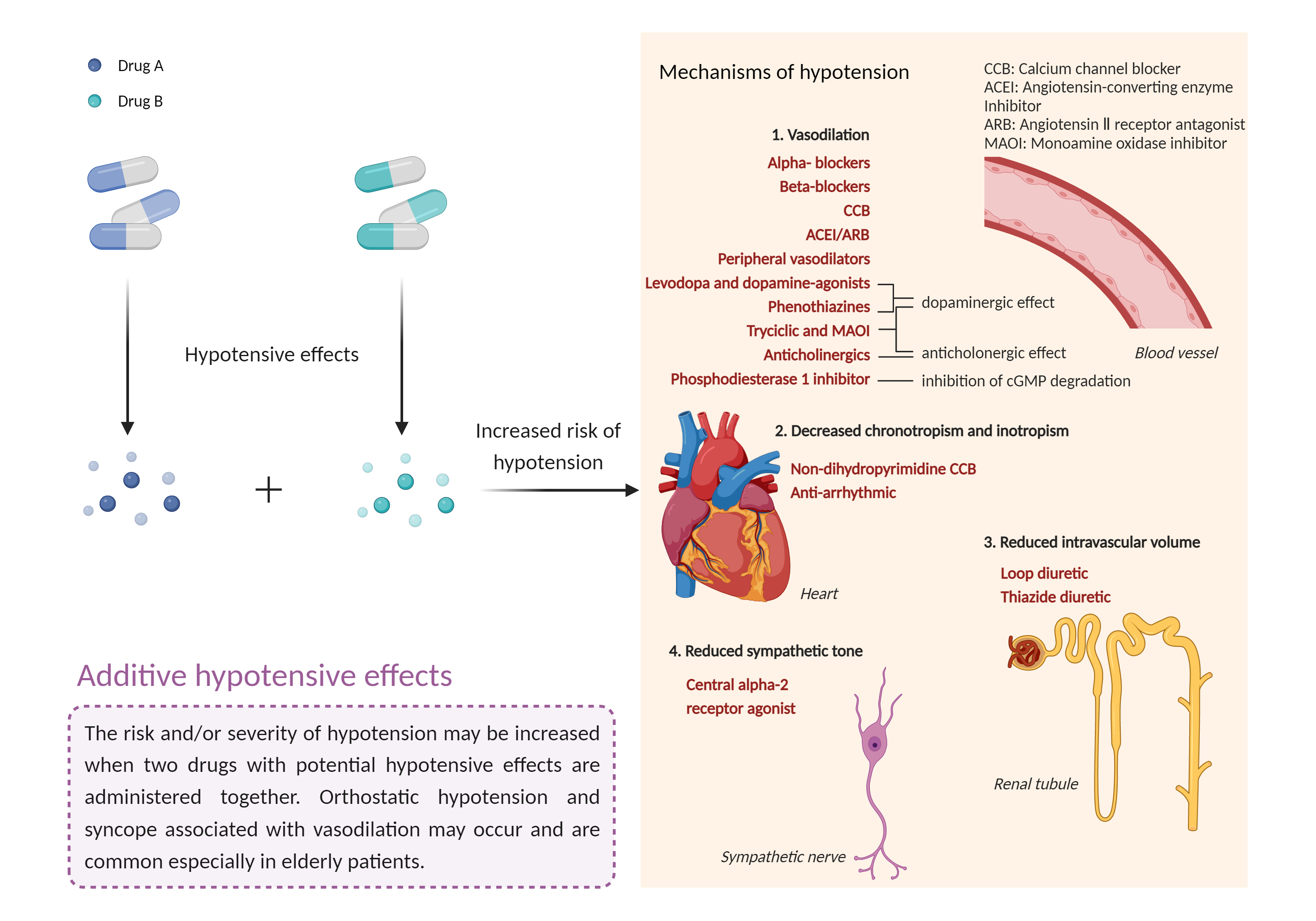
| Additive hypotensive effects Click to Show/Hide Mechanism Graph | |||||||||
 |
|||||||||
| Drug Name | Thiethylperazine | Metolazone | |||||||
| Mechanism |
Hypotensive effects Alpha-1 adrenergic receptor Antagonist |
Hypotensive effects Solute carrier family 12 member 3 Blocker |
|||||||
| Key Mechanism Factor 1 | |||||||||
| Factor Name | Adrenergic receptor alpha-1 | Structure Sequence | |||||||
| Protein Family | G-protein coupled receptor 1 family | ||||||||
| Protein Function |
This alpha-adrenergic receptor mediates its action by association with G proteins that activate a phosphatidylinositol-calcium second messenger system. Its effect is mediated by G(q) and G(11) proteins. Nuclear ADRA1A-ADRA1B heterooligomers regulate phenylephrine(PE)-stimulated ERK signaling in cardiac myocytes.
Click to Show/Hide
|
||||||||
| Key Mechanism Factor 2 | |||||||||
| Factor Name | Solute carrier family 12 member 3 |
×
Structure
Sequence
MAELPTTETPGDATLCSGRFTISTLLSSDEPSPPAAYDSSHPSHLTHSSTFCMRTFGYNTIDVVPTYEHYANSTQPGEPRKVRPTLADLHSFLKQEGRHLHALAFDSRPSHEMTDGLVEGEAGTSSEKNPEEPVRFGWVKGVMIRCMLNIWGVILYLRLPWITAQAGIVLTWIIILLSVTVTSITGLSISAISTNGKVKSGGTYFLISRSLGPELGGSIGLIFAFANAVGVAMHTVGFAETVRDLLQEYGAPIVDPINDIRIIAVVSVTVLLAISLAGMEWESKAQVLFFLVIMVSFANYLVGTLIPPSEDKASKGFFSYRADIFVQNLVPDWRGPDGTFFGMFSIFFPSATGILAGANISGDLKDPAIAIPKGTLMAIFWTTISYLAISATIGSCVVRDASGVLNDTVTPGWGACEGLACSYGWNFTECTQQHSCHYGLINYYQTMSMVSGFAPLITAGIFGATLSSALACLVSAAKVFQCLCEDQLYPLIGFFGKGYGKNKEPVRGYLLAYAIAVAFIIIAELNTIAPIISNFFLCSYALINFSCFHASITNSPGWRPSFQYYNKWAALFGAIISVVIMFLLTWWAALIAIGVVLFLLLYVIYKKPEVNWGSSVQAGSYNLALSYSVGLNEVEDHIKNYRPQCLVLTGPPNFRPALVDFVGTFTRNLSLMICGHVLIGPHKQRMPELQLIANGHTKWLNKRKIKAFYSDVIAEDLRRGVQILMQAAGLGRMKPNILVVGFKKNWQSAHPATVEDYIGILHDAFDFNYGVCVMRMREGLNVSKMMQAHINPVFDPAEDGKEASARVDPKALVKEEQATTIFQSEQGKKTIDIYWLFDDGGLTLLIPYLLGRKRRWSKCKIRVFVGGQINRMDQERKAIISLLSKFRLGFHEVHILPDINQNPRAEHTKRFEDMIAPFRLNDGFKDEATVNEMRRDCPWKISDEEITKNRVKSLRQVRLNEIVLDYSRDAALIVITLPIGRKGKCPSSLYMAWLETLSQDLRPPVILIRGNQENVLTFYCQ
|
|||||||
| Gene Name | SLC12A3 | ||||||||
| Uniprot ID | S12A3_HUMAN | ||||||||
| KEGG Pathway | hsa:6559 | ||||||||
| Protein Family | SLC12A transporter family | ||||||||
| Protein Function |
Electroneutral sodium and chloride ion cotransporter. In kidney distal convoluted tubules, key mediator of sodium and chloride reabsorption (PubMed:21613606, PubMed:22009145). Receptor for the pro-inflammatory cytokine IL18. Contributes to IL18-induced cytokine production, including IFNG, IL6, IL18 and CCL2. May act either independently of IL18R1, or in a complex with IL18R1 (By similarity).
Click to Show/Hide
|
||||||||
| Mechanism Description |
|
||||||||
| Recommended Action | |||||||||
|---|---|---|---|---|---|---|---|---|---|
| Management | Close clinical monitoring for development of hypotension is recommended if phenothiazines or neuroleptic agents are used in patients receiving antihypertensive medications or vasodilators. A lower starting dosage and slower titration of the phenothiazine or neuroleptic may be appropriate, especially in the elderly. Patients should be advised to avoid rising abruptly from a sitting or recumbent position and to notify their physician if they experience dizziness, lightheadedness, syncope, orthostasis, or tachycardia. Patients should also avoid driving or operating hazardous machinery. | ||||||||