
Details of Drug-Drug Interaction
| Drug General Information (ID: DDIM3G8WIQ) | |||||||||
|---|---|---|---|---|---|---|---|---|---|
| Drug Name | Phenylephrine (ophthalmic) | Drug Info | Mepenzolate | Drug Info | |||||
| Drug Type | Small molecule | Small molecule | |||||||
| Therapeutic Class | Mydriatics/Decongestants | Parasympatholytics | |||||||
| Structure | |||||||||
| Mechanism of Phenylephrine (ophthalmic)-Mepenzolate Interaction (Severity Level: Moderate) | |||||||||
|---|---|---|---|---|---|---|---|---|---|
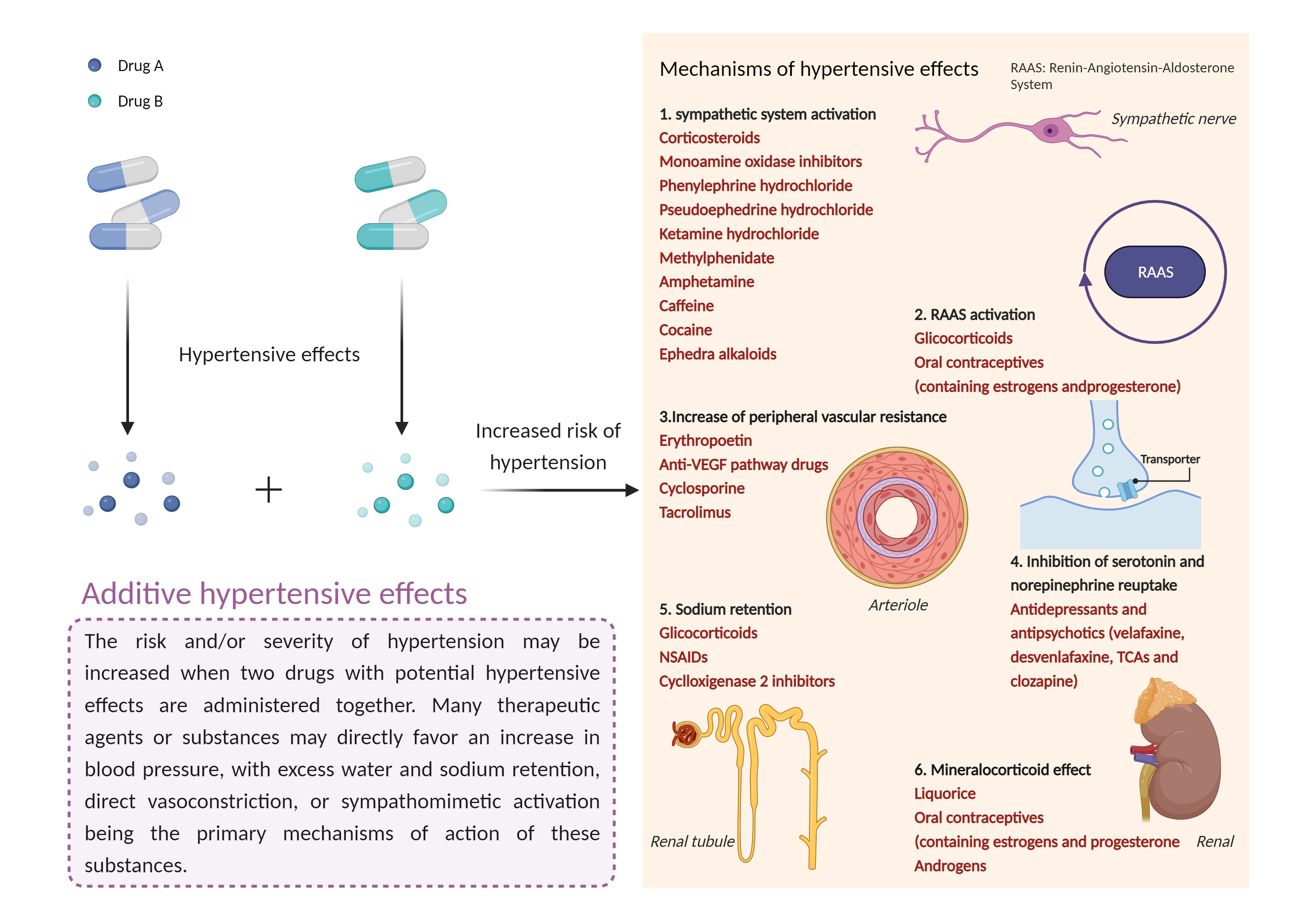
| Additive hypertensive effects Click to Show/Hide Mechanism Graph | |||||||||
 |
|||||||||
| Drug Name | Phenylephrine (ophthalmic) | Mepenzolate | |||||||
| Mechanism | Phenylephrine | Enhance the pressor response to phenylephrine | |||||||
| Key Mechanism Factor 1 | |||||||||
| Factor Name | Hypertensive effects | ||||||||
| Factor Description | Hypertension is defined as a blood pressure reading above a prescribed limit (130/90 mmHg). Most people with hypertension have no signs or symptoms; others may experience: severe headache, shortness of breath, nosebleeds, severe anxiety, and feeling a tingling sensation in the neck or head. | ||||||||
| Mechanism Description |
|
||||||||
| Recommended Action | |||||||||
|---|---|---|---|---|---|---|---|---|---|
| Management | Caution is advised if phenylephrine (systemic or ophthalmic) is used in combination with atropine or other antimuscarinic agents. Cardiovascular status, including blood pressure and heart rate, should be closely monitored. When using ophthalmic formulations, measures to minimize systemic absorption should be employed, such as digital compression of the lacrimal sac or lid closure after instillation. A milder strength (< 10%) is preferable if phenylephrine ophthalmic solution is given. | ||||||||