
Details of Drug-Drug Interaction
| Drug General Information (ID: DDIL8SAMZF) | |||||||||
|---|---|---|---|---|---|---|---|---|---|
| Drug Name | Phenobarbital | Drug Info | Glycerol phenylbutyrate | Drug Info | |||||
| Drug Type | Small molecule | Small molecule | |||||||
| Therapeutic Class | Anticonvulsants | Urea Cycle Disorder Agents | |||||||
| Structure | |||||||||
| Mechanism of Phenobarbital-Glycerol phenylbutyrate Interaction (Severity Level: Moderate) | |||||||||
|---|---|---|---|---|---|---|---|---|---|
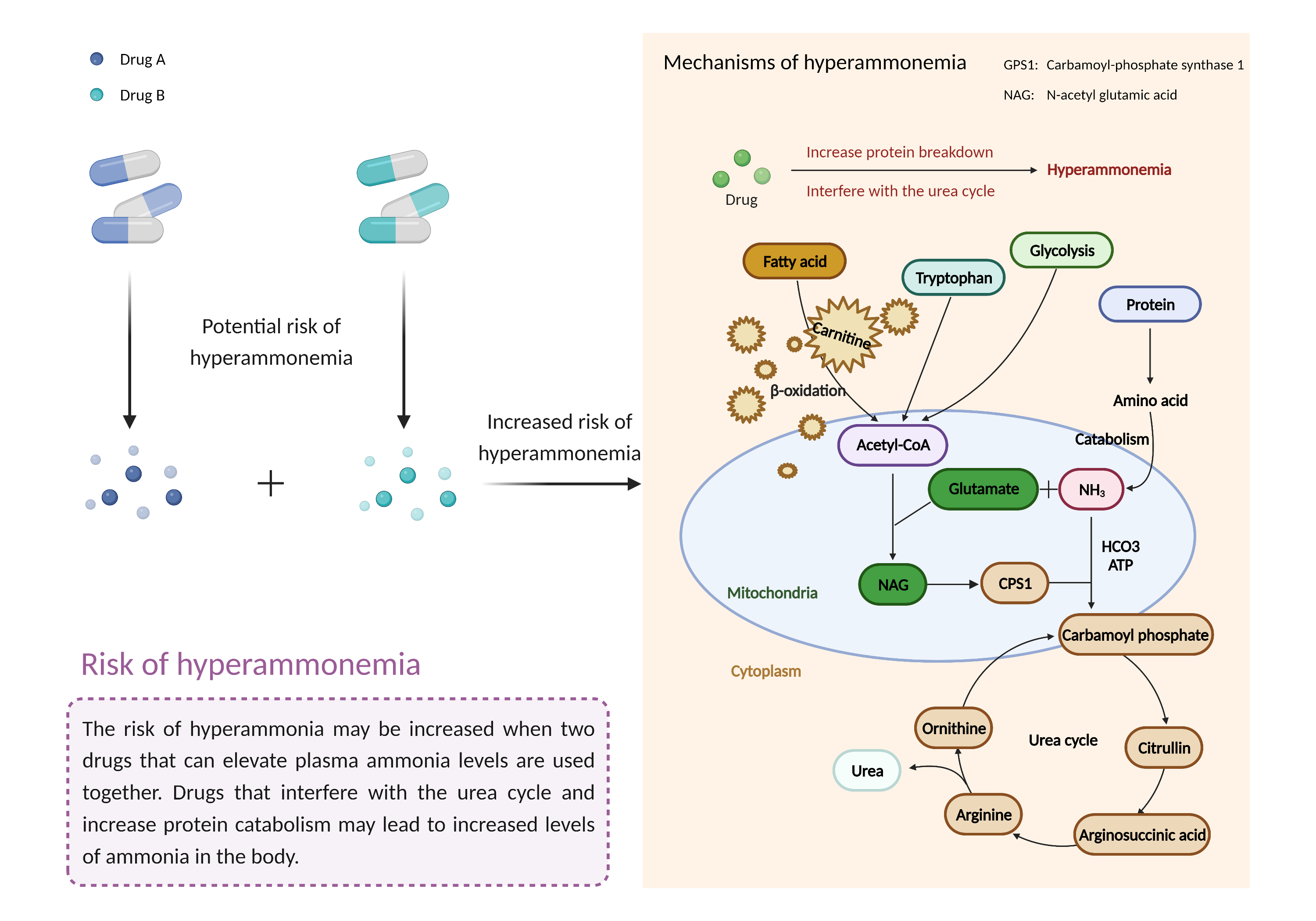
| Increased risk of hyperammonemia Click to Show/Hide Mechanism Graph | |||||||||
 |
|||||||||
| Drug Name | Phenobarbital | Glycerol phenylbutyrate | |||||||
| Mechanism | Hyperammonemia | Hyperammonemia | |||||||
| Key Mechanism Factor 1 | |||||||||
| Factor Name | Hyperammonemia | ||||||||
| Factor Description | Hyperammonemia is a metabolic disorder characterized by elevated levels of ammonia. The most common manifestations of hyperammonemia are neurological signs and symptoms that may be acute or chronic, depending on the underlying abnormality, and severe life-threatening complications such as cerebral edema and brain herniation can occur. | ||||||||
| Mechanism Description |
|
||||||||
| Recommended Action | |||||||||
|---|---|---|---|---|---|---|---|---|---|
| Management | Plasma ammonia levels should be closely monitored when corticosteroids, haloperidol, carbamazepine, topiramate, or phenobarbital are used in patients with urea cycle disorders receiving phenylbutyrate therapy. | ||||||||