| Mechanism of Foscarnet-Amphotericin B (liposomal) Interaction
(Severity Level: Major)
|
|
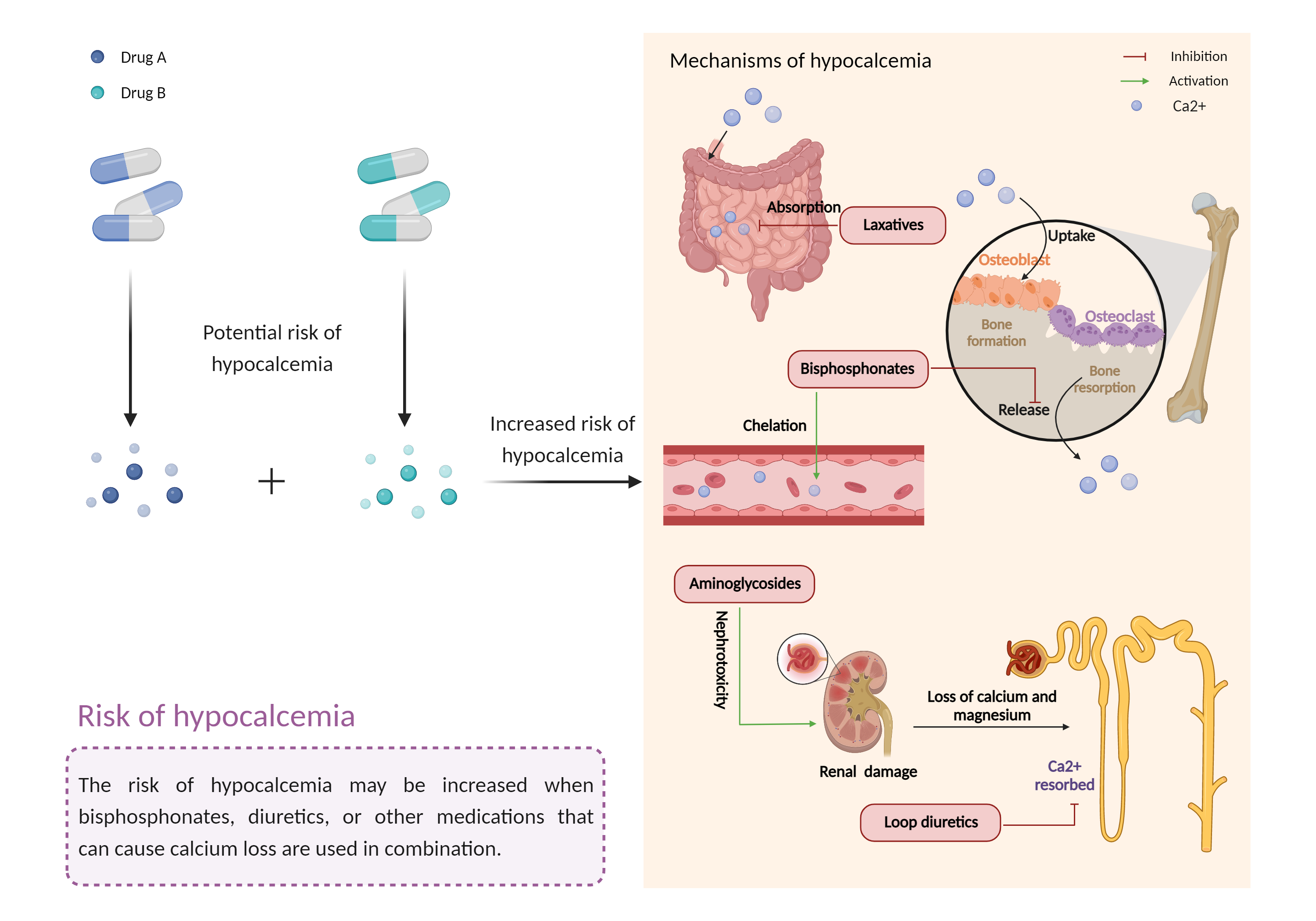
Increased risk of hypocalcemia
Click to Show/Hide Mechanism Graph
|
 |
| Drug Name |
Foscarnet |
Amphotericin B (liposomal) |
|
Mechanism 1
|
Hypocalcemia |
Hypocalcemia |
| Key Mechanism Factor 1 |
| Factor Name |
Hypocalcemia |
| Factor Description |
Hypocalcemia is a low level of calcium found in a blood test. It can cause symptoms such as tingling, muscle cramps and heart rhythm problems that can range from mild to life-threatening. |
| Mechanism Description |
- Increased risk of hypocalcemia by the combination of Foscarnet and Amphotericin B (liposomal)
|
|
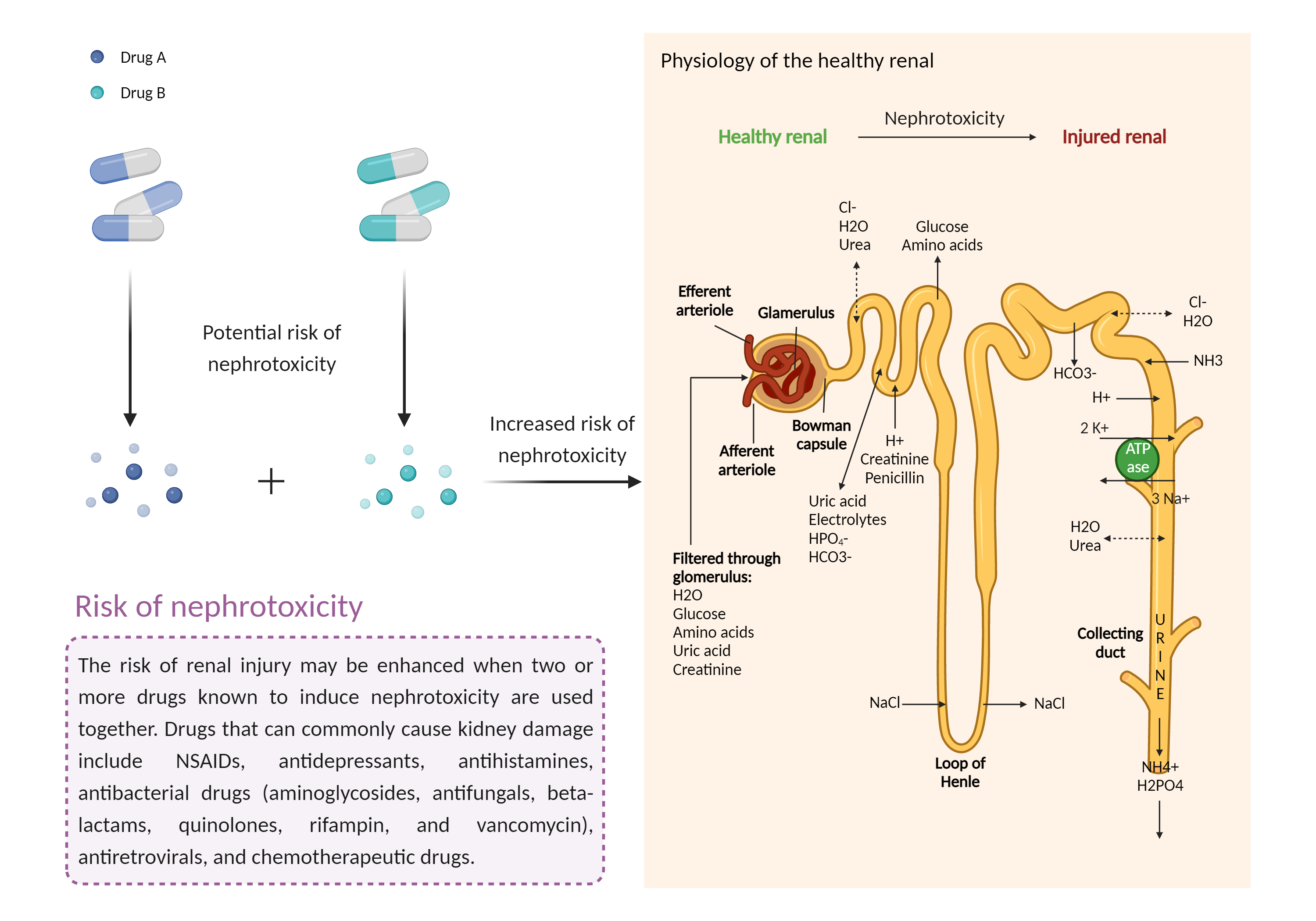
Increased risk of nephrotoxicity
Click to Show/Hide Mechanism Graph
|
 |
| Drug Name |
Foscarnet |
Amphotericin B (liposomal) |
|
Mechanism 2
|
Nephrotoxicity |
Nephrotoxicity |
| Key Mechanism Factor 2 |
| Factor Name |
Nephrotoxicity |
| Factor Description |
The combination of drugs that can induce nephrotoxicity may increase the risk of kidney injury. When kidney injury occurs, the inability to remove excess urine and waste from the body can lead to high levels of urea nitrogen, creatinine, and electrolytes (such as potassium and magnesium) in the blood. |
| Mechanism Description |
- Increased risk of nephrotoxicity by the combination of Foscarnet and Amphotericin B (liposomal)
|
