
Details of Drug-Drug Interaction
| Drug General Information (ID: DDIKCSJV9P) | |||||||||
|---|---|---|---|---|---|---|---|---|---|
| Drug Name | Biperiden | Drug Info | Bethanechol | Drug Info | |||||
| Drug Type | Small molecule | Small molecule | |||||||
| Therapeutic Class | Antiparkinson Agents | Parasympathomimetics | |||||||
| Structure | |||||||||
| Mechanism of Biperiden-Bethanechol Interaction (Severity Level: Moderate) | |||||||||
|---|---|---|---|---|---|---|---|---|---|
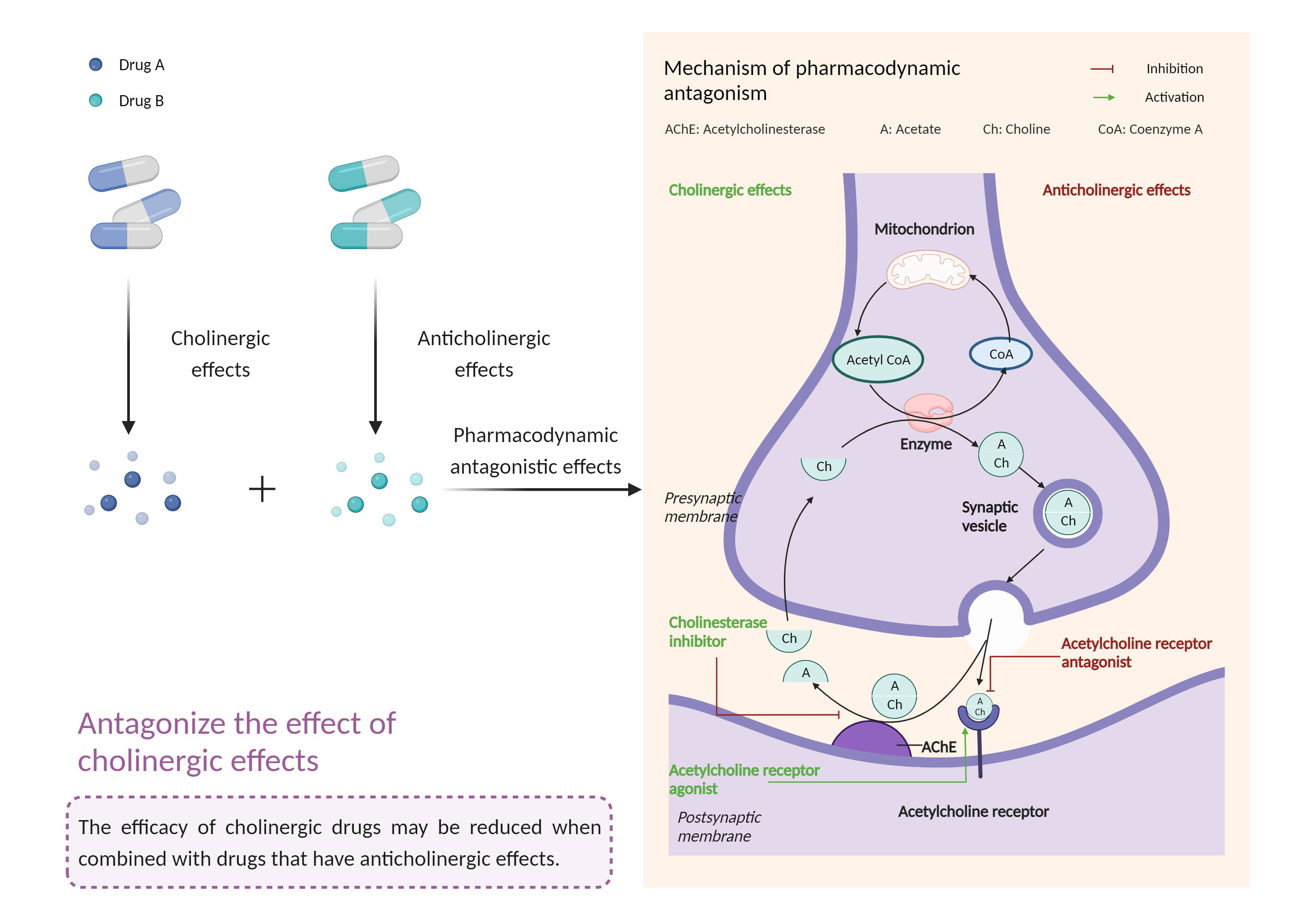
| Antagonize the effect of cholinergic agents Click to Show/Hide Mechanism Graph | |||||||||
 |
|||||||||
| Drug Name | Biperiden | Bethanechol | |||||||
| Mechanism |
Anticholinergic effects Muscarinic acetylcholine receptor Antagonist |
Cholinergic effects Muscarinic acetylcholine receptor Agonist |
|||||||
| Key Mechanism Factor 1 | |||||||||
| Factor Name | Muscarinic acetylcholine receptor M | Structure Sequence | |||||||
| Protein Family | G-protein coupled receptor 1 family | ||||||||
| Protein Function |
The muscarinic acetylcholine receptor mediates various cellular responses, including inhibition of adenylate cyclase, breakdown of phosphoinositides and modulation of potassium channels through the action of G proteins. Primary transducing effect is Pi turnover.
Click to Show/Hide
|
||||||||
| Mechanism Description |
|
||||||||
| Recommended Action | |||||||||
|---|---|---|---|---|---|---|---|---|---|
| Management | It may be appropriate to avoid concomitant use of anticholinergic agents and cholinergic agents, depending on the needs of the patient. If concurrent use is necessary, the patient should be monitored for reduced pharmacologic effects of both drugs. | ||||||||