| Mechanism of Aldesleukin-Interferon alfacon-1 Interaction
(Severity Level: Major)
|
|
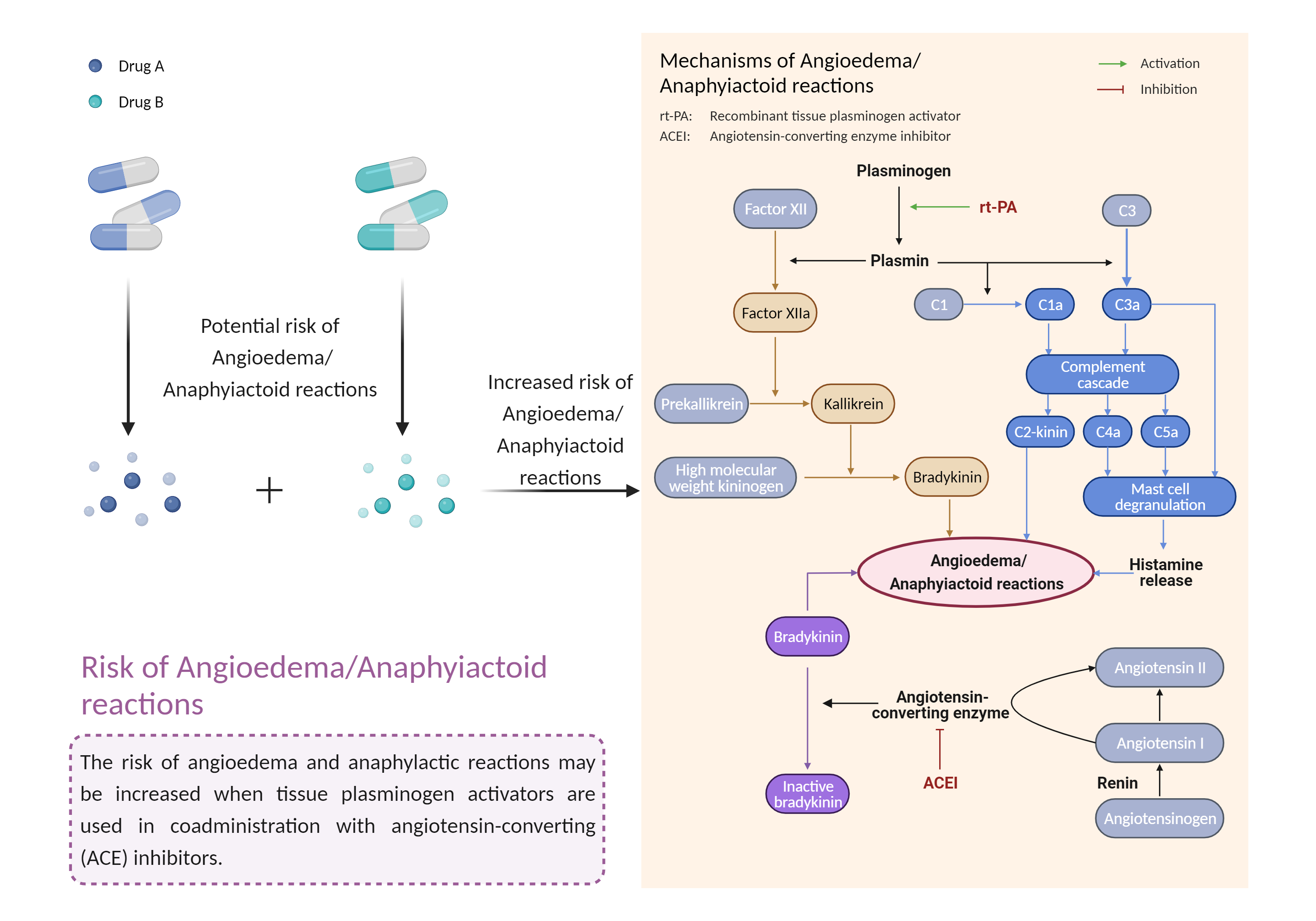
Increased risk of angioedema/anaphylactoid reactions
Click to Show/Hide Mechanism Graph
|
 |
| Drug Name |
Aldesleukin |
Interferon alfacon-1 |
|
Mechanism 1
|
Anaphylactoid reactions |
Anaphylactoid reactions |
| Key Mechanism Factor 1 |
| Factor Name |
Angioedema/anaphylactoid reactions |
| Factor Description |
Anaphylactoid reaction is a condition in which symptoms similar to an allergic reaction occur, but no immune sensitization is detected. Most commonly, the syndrome begins with skin involvement, usually pruritus, flushing, urticaria, or angioedema. Angioedema is a reaction to a trigger that causes swelling of the tissue below the inner layer of the skin, called the dermis or submucosa, and the swelling can occur on the face, throat, or around the genitals. |
| Mechanism Description |
- Increased risk of angioedema by the combination of Aldesleukin and Interferon alfacon-1
|
|
Increased risk of other adverse reactions (Unspecific)
Click to Show/Hide Mechanism Graph
|
| Drug Name |
Aldesleukin |
Interferon alfacon-1 |
|
Mechanism 2
|
Rhabdomyolysis |
Rhabdomyolysis |
| Key Mechanism Factor 2 |
| Factor Name |
Adverse reactions |
| Factor Description |
An adverse reaction is an unexpected negative reaction to a medication or treatment that happens even when it's used correctly. |
| Mechanism Description |
- Increased risk of adverse reactions by the combination of Aldesleukin and Interferon alfacon-1
|
