| Mechanism of Brinzolamide (ophthalmic)-Choline salicylate Interaction
(Severity Level: Major)
|
|
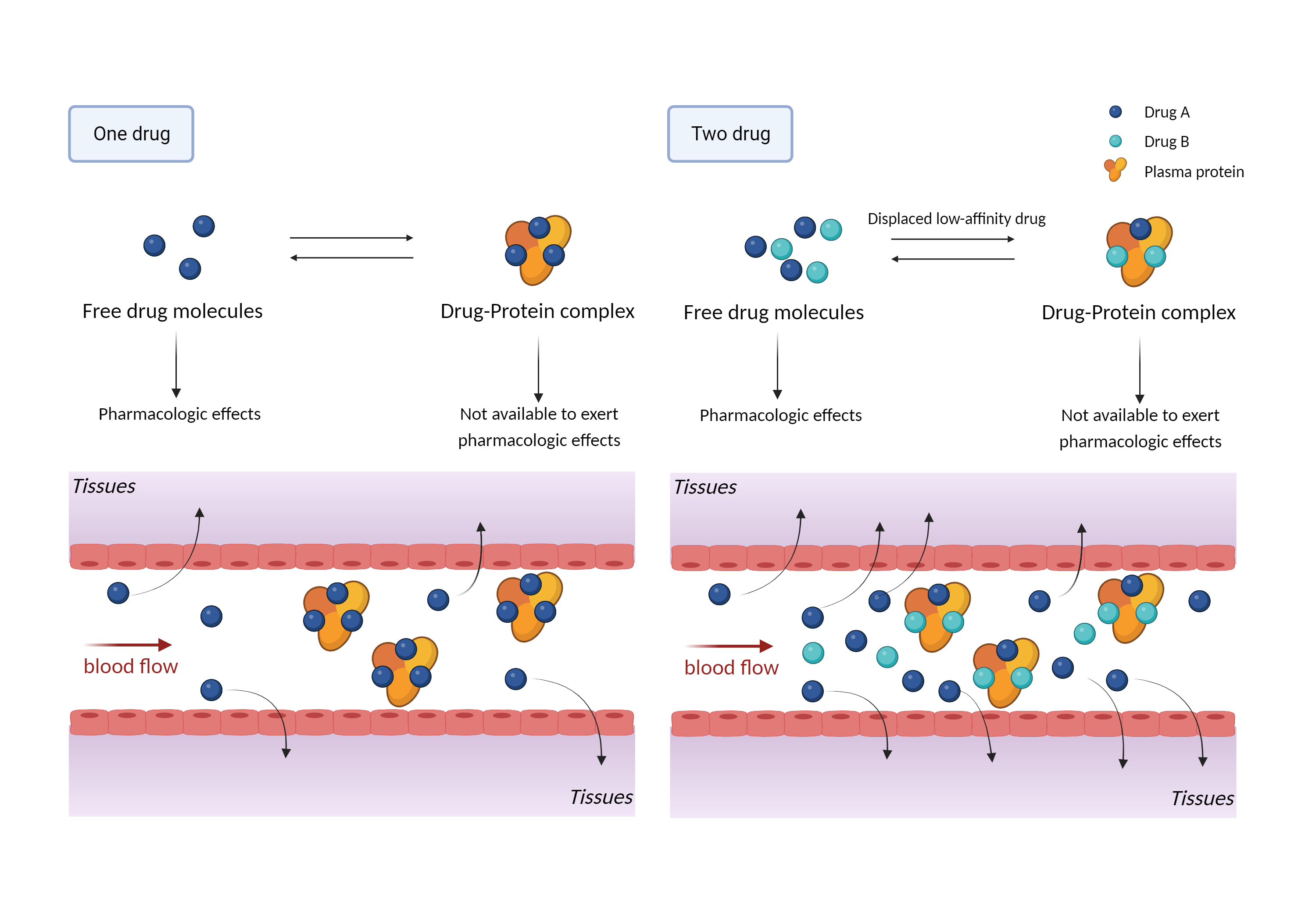
Competitive binding of plasma proteins
Click to Show/Hide Mechanism Graph
|
 |
| Drug Name |
Brinzolamide (ophthalmic) |
Choline salicylate |
|
Mechanism 1
|
Competition for plasma protein binding sites |
Competition for plasma protein binding sites |
| Key Mechanism Factor 1 |
| Factor Name |
Plasma protein binding |
| Factor Description |
Plasma protein binding refers to the degree of binding of a drug to proteins in the blood, and the lower the degree of binding, the more efficiently the drug can cross cell membranes or diffuse. Plasma protein binding alters the distribution and therapeutic characteristics of the drugs. |
| Mechanism Description |
- Increased plasma concentration of Choline salicylate and Brinzolamide (ophthalmic) due to competitive binding of plasma proteins
|
|
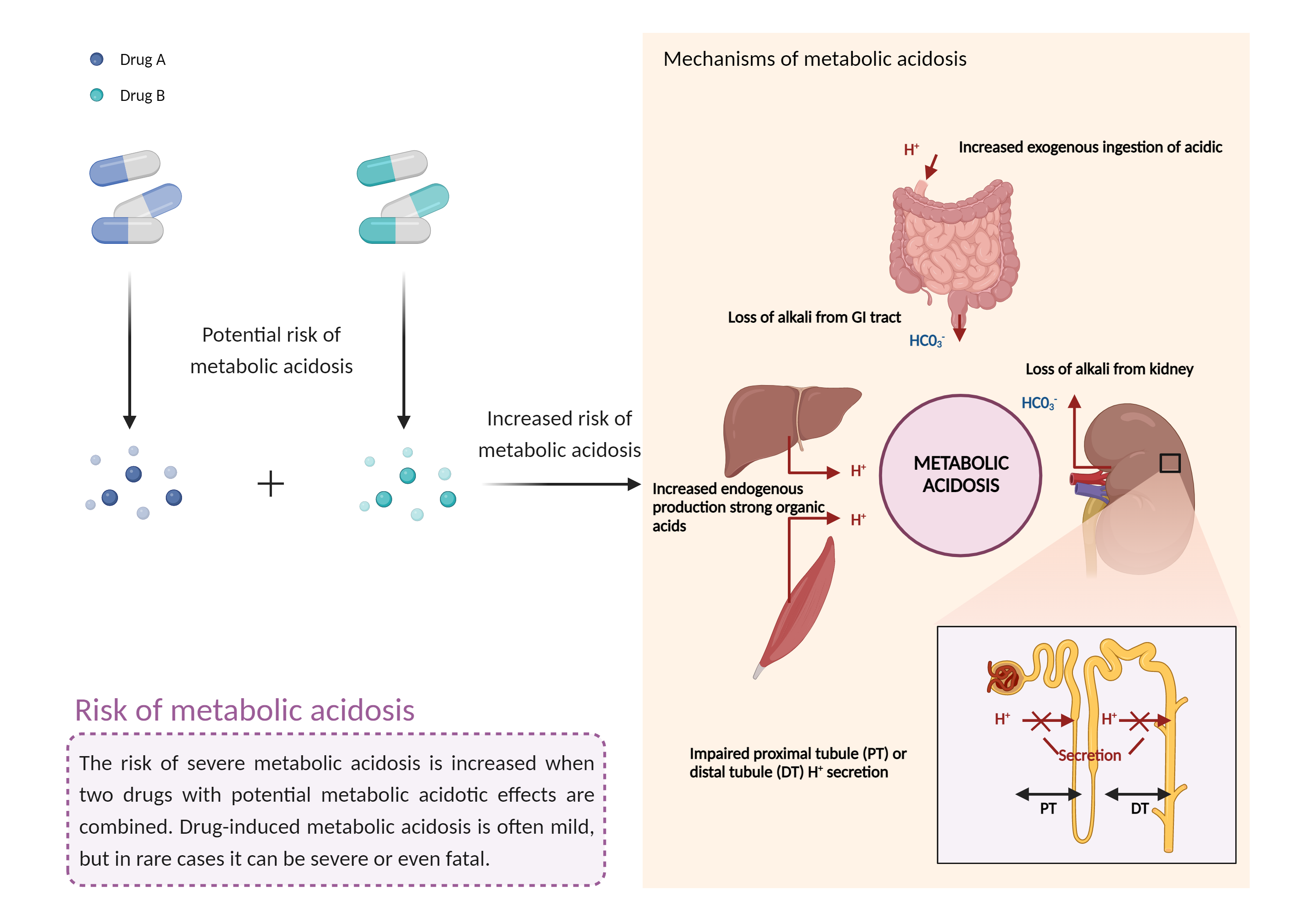
Increased risk of metabolic acidosis
Click to Show/Hide Mechanism Graph
|
 |
| Drug Name |
Brinzolamide (ophthalmic) |
Choline salicylate |
|
Mechanism 2
|
Metabolic acidosis |
Metabolic acidosis |
| Key Mechanism Factor 2 |
| Factor Name |
Metabolic acidosis |
| Factor Description |
Metabolic acidosis is a clinical disorder defined as a pH below 7.35 and low HCO3 levels. Metabolic acidosis occurs when the body produces too much acid or the kidneys are unable to remove enough acid from the body. Symptoms vary depending on the underlying cause, but some common symptoms are as follows: shortness of breath, confusion, fatigue, shock, fruity taste of the patient's breath (diabetic ketoacidosis), rapid heartbeat, headache, weakness, and nausea. |
| Mechanism Description |
- Increased risk of metabolic acidosis by the combination of Brinzolamide (ophthalmic) and Choline salicylate
|
