
Details of Drug-Drug Interaction
| Drug General Information (ID: DDIJ8YT1Q5) | |||||||||
|---|---|---|---|---|---|---|---|---|---|
| Drug Name | Papaverine | Drug Info | Lithium carbonate | Drug Info | |||||
| Drug Type | Small molecule | Small molecule | |||||||
| Therapeutic Class | Vasodilator Agents | Antimanic Agents | |||||||
| Structure | |||||||||
| Mechanism of Papaverine-Lithium carbonate Interaction (Severity Level: Major) | |||||||||
|---|---|---|---|---|---|---|---|---|---|
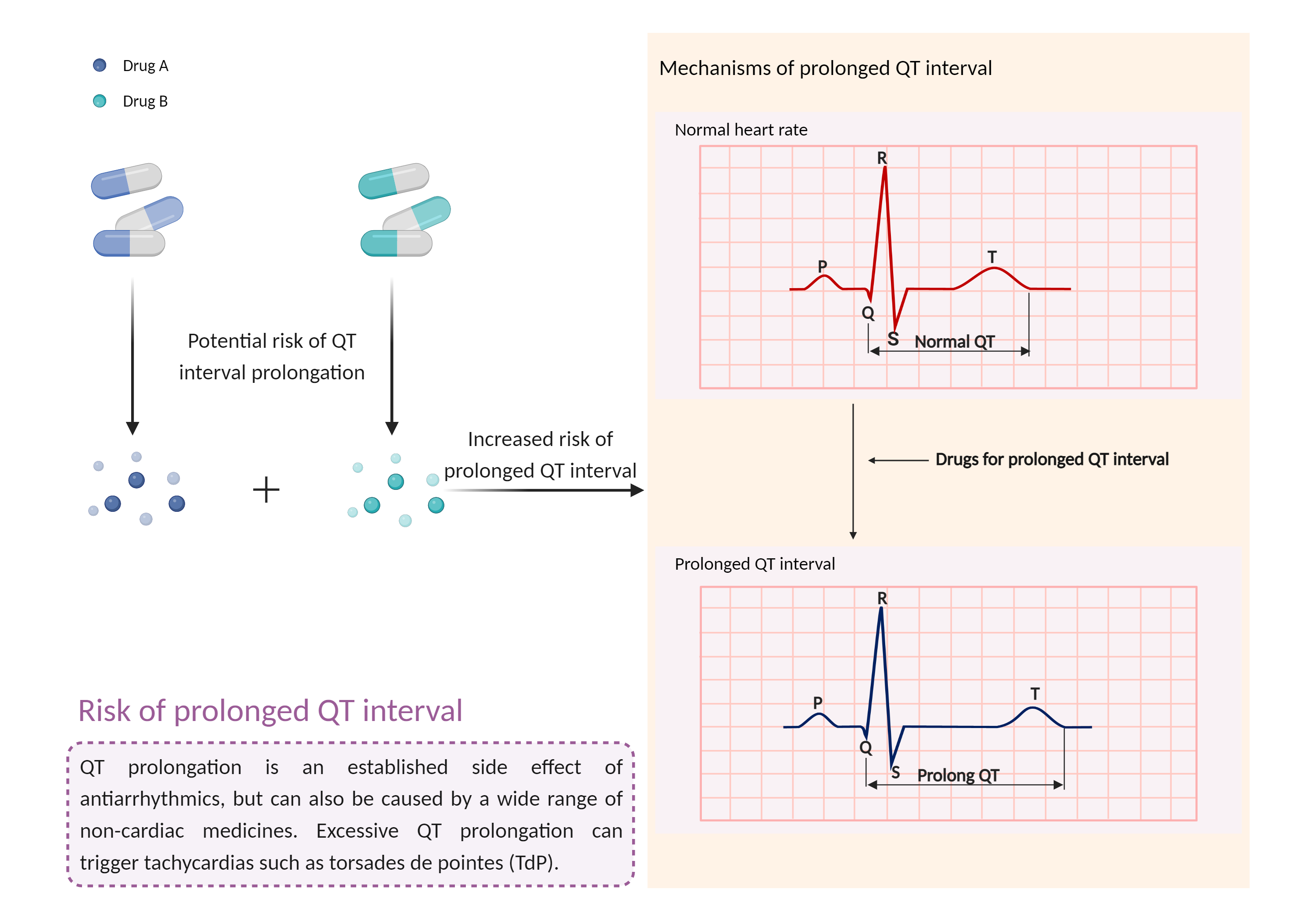
| Increased risk of prolong QT interval Click to Show/Hide Mechanism Graph | |||||||||
 |
|||||||||
| Drug Name | Papaverine | Lithium carbonate | |||||||
| Mechanism | Prolong QT interval | Prolong QT interval | |||||||
| Key Mechanism Factor 1 | |||||||||
| Factor Name | QT interval | ||||||||
| Factor Description | Long QT syndrome is a heart signaling disorder that can cause a fast, chaotic heartbeat (arrhythmia). Many people may not exhibit symptoms, and usually the condition is detected during routine medical tests. In others, the most common symptoms include: sudden fainting, palpitations, dizziness, seizures, sudden death. | ||||||||
| Mechanism Description |
|
||||||||
| Recommended Action | |||||||||
|---|---|---|---|---|---|---|---|---|---|
| Management | Caution and close monitoring are advised during intracoronary administration of papaverine, particularly in patients receiving concomitant drugs that can prolong the QT interval or cause bradycardia and in patients with other risk factors described above. | ||||||||