
Details of Drug-Drug Interaction
| Drug General Information (ID: DDIH6LS8VQ) | |||||||||
|---|---|---|---|---|---|---|---|---|---|
| Drug Name | Tolazoline | Drug Info | Trifluoperazine | Drug Info | |||||
| Drug Type | Small molecule | Small molecule | |||||||
| Therapeutic Class | Vasodilator Agents | Antipsychotic Agents | |||||||
| Structure | |||||||||
| Mechanism of Tolazoline-Trifluoperazine Interaction (Severity Level: Moderate) | |||||||||
|---|---|---|---|---|---|---|---|---|---|
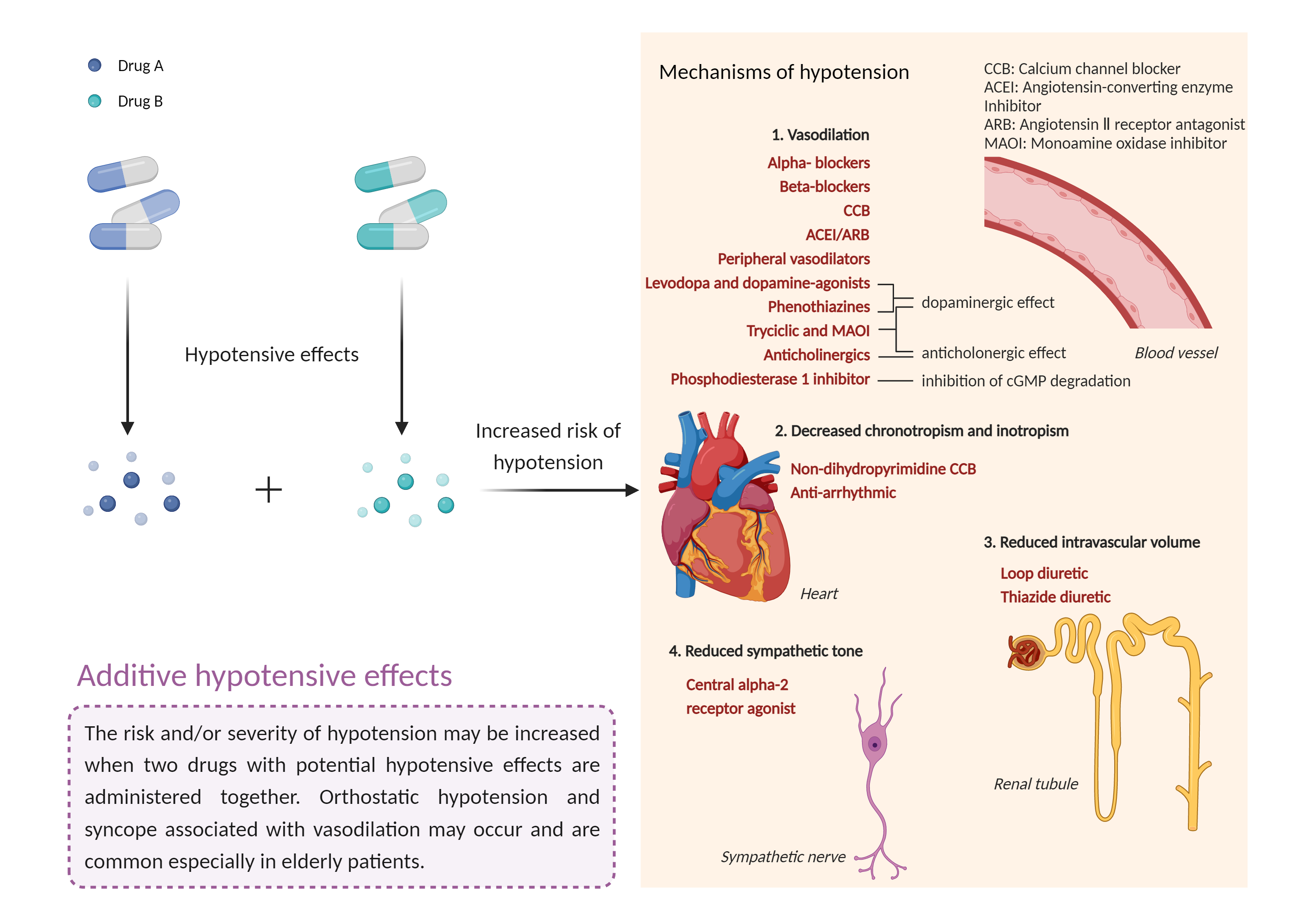
| Additive hypotensive effects Click to Show/Hide Mechanism Graph | |||||||||
 |
|||||||||
| Drug Name | Tolazoline | Trifluoperazine | |||||||
| Mechanism |
Hypotensive effects Alpha-1 adrenergic receptor Antagonist |
Hypotensive effects Calmodulin Inhibitor |
|||||||
| Key Mechanism Factor 1 | |||||||||
| Factor Name | Adrenergic receptor alpha-1 | Structure Sequence | |||||||
| Protein Family | G-protein coupled receptor 1 family | ||||||||
| Protein Function |
This alpha-adrenergic receptor mediates its action by association with G proteins that activate a phosphatidylinositol-calcium second messenger system. Its effect is mediated by G(q) and G(11) proteins. Nuclear ADRA1A-ADRA1B heterooligomers regulate phenylephrine(PE)-stimulated ERK signaling in cardiac myocytes.
Click to Show/Hide
|
||||||||
| Key Mechanism Factor 2 | |||||||||
| Factor Name | Calmodulin-1 |
×
Structure
Sequence
MADQLTEEQIAEFKEAFSLFDKDGDGTITTKELGTVMRSLGQNPTEAELQDMINEVDADGNGTIDFPEFLTMMARKMKDTDSEEEIREAFRVFDKDGNGYISAAELRHVMTNLGEKLTDEEVDEMIREADIDGDGQVNYEEFVQMMTAK
|
|||||||
| Gene Name | CALM1 | ||||||||
| Uniprot ID | CALM1_HUMAN | ||||||||
| KEGG Pathway | hsa:801 | ||||||||
| Protein Family | Calmodulin family | ||||||||
| Protein Function |
Calmodulin mediates the control of a large number of enzymes, ion channels, aquaporins and other proteins through calcium-binding. Among the enzymes to be stimulated by the calmodulin-calcium complex are a number of protein kinases and phosphatases. Together with CCP110 and centrin, is involved in a genetic pathway that regulates the centrosome cycle and progression through cytokinesis (PubMed:16760425). Is a regulator of voltage-dependent L-type calcium channels (PubMed:31454269). Mediates calcium-dependent inactivation of CACNA1C (PubMed:26969752). Positively regulates calcium-activated potassium channel activity of KCNN2 (PubMed:27165696). Forms a potassium channel complex with KCNQ1 and regulates electrophysiological activity of the channel via calcium-binding (PubMed:25441029). Acts as a sensor to modulate the endoplasmic reticulum contacts with other organelles mediated by VMP1:ATP2A2 (PubMed:28890335).
Click to Show/Hide
|
||||||||
| Mechanism Description |
|
||||||||
| Recommended Action | |||||||||
|---|---|---|---|---|---|---|---|---|---|
| Management | Close clinical monitoring for development of hypotension is recommended if phenothiazines or neuroleptic agents are used in patients receiving antihypertensive medications or vasodilators. A lower starting dosage and slower titration of the phenothiazine or neuroleptic may be appropriate, especially in the elderly. Patients should be advised to avoid rising abruptly from a sitting or recumbent position and to notify their physician if they experience dizziness, lightheadedness, syncope, orthostasis, or tachycardia. Patients should also avoid driving or operating hazardous machinery. | ||||||||