
Details of Drug-Drug Interaction
| Drug General Information (ID: DDIH4DOKME) | |||||||||
|---|---|---|---|---|---|---|---|---|---|
| Drug Name | Anagrelide | Drug Info | Inotuzumab ozogamicin | Drug Info | |||||
| Drug Type | Small molecule | Monoclonal antibody | |||||||
| Therapeutic Class | Antithrombotic Agents | Antineoplastics | |||||||
| Mechanism of Anagrelide-Inotuzumab ozogamicin Interaction (Severity Level: Major) | |||||||||
|---|---|---|---|---|---|---|---|---|---|
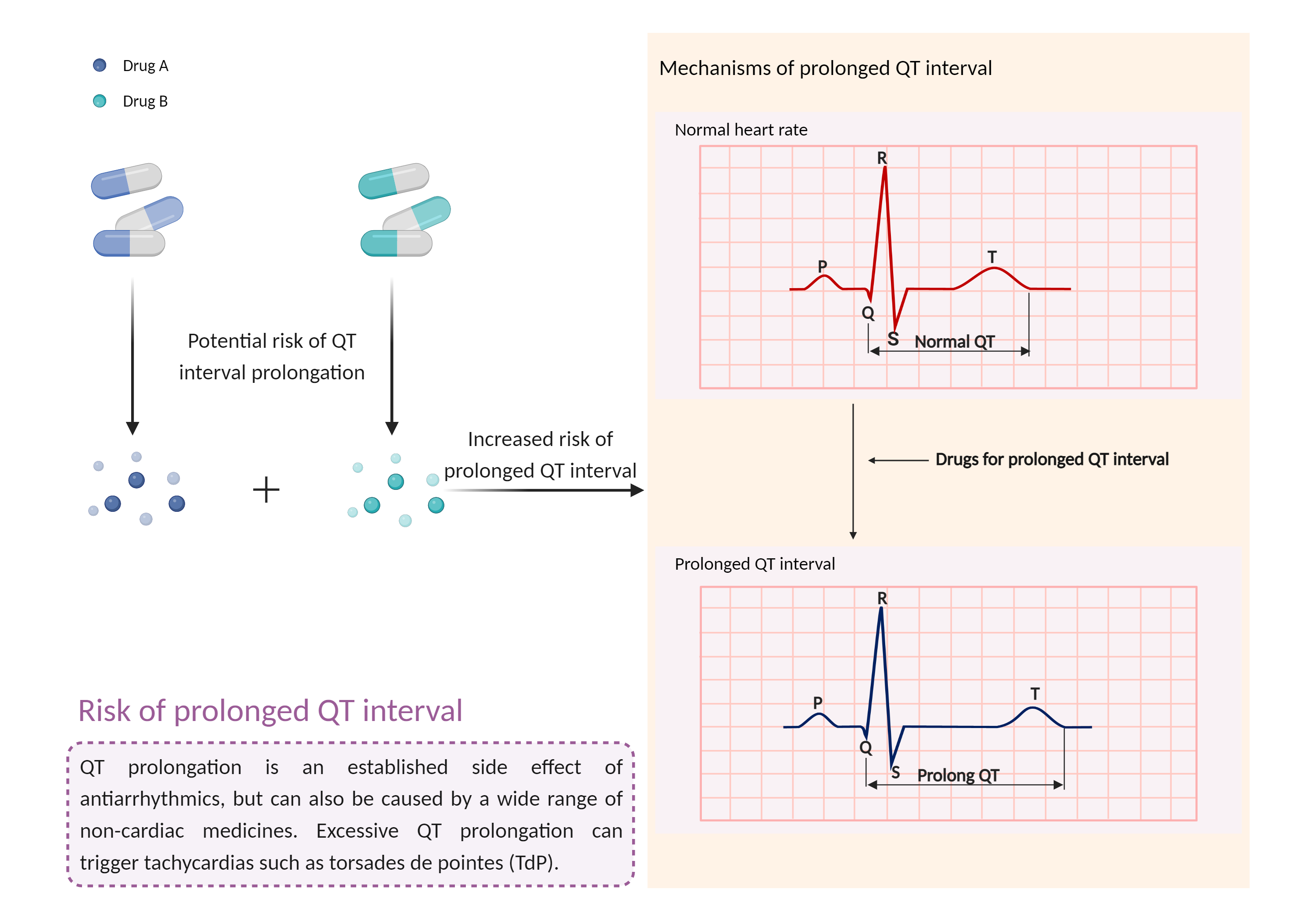
| Increased risk of prolong QT interval Click to Show/Hide Mechanism Graph | |||||||||
 |
|||||||||
| Drug Name | Anagrelide | Inotuzumab ozogamicin | |||||||
| Mechanism | Prolong QT interval | Prolong QT interval | |||||||
| Key Mechanism Factor 1 | |||||||||
| Factor Name | QT interval | ||||||||
| Factor Description | Long QT syndrome is a heart signaling disorder that can cause a fast, chaotic heartbeat (arrhythmia). Many people may not exhibit symptoms, and usually the condition is detected during routine medical tests. In others, the most common symptoms include: sudden fainting, palpitations, dizziness, seizures, sudden death. | ||||||||
| Mechanism Description |
|
||||||||
| Recommended Action | |||||||||
|---|---|---|---|---|---|---|---|---|---|
| Management | Coadministration of anagrelide with other drugs that can prolong the QT interval should generally be avoided. Patients receiving anagrelide should have a cardiovascular examination, including an ECG, prior to initiation of treatment and monitored for cardiovascular effects during treatment. Hypokalemia or hypomagnesemia must be corrected prior to therapy and electrolytes monitored periodically during therapy. | ||||||||