
Details of Drug-Drug Interaction
| Drug General Information (ID: DDIH432IBQ) | |||||||||
|---|---|---|---|---|---|---|---|---|---|
| Drug Name | Triamterene | Drug Info | Amisulpride | Drug Info | |||||
| Drug Type | Small molecule | Small molecule | |||||||
| Therapeutic Class | Diuretics | Antipsychotic Agents | |||||||
| Structure | |||||||||
| Mechanism of Triamterene-Amisulpride Interaction (Severity Level: Moderate) | |||||||||
|---|---|---|---|---|---|---|---|---|---|
| Additive hypotensive effects Click to Show/Hide Mechanism Graph | |||||||||
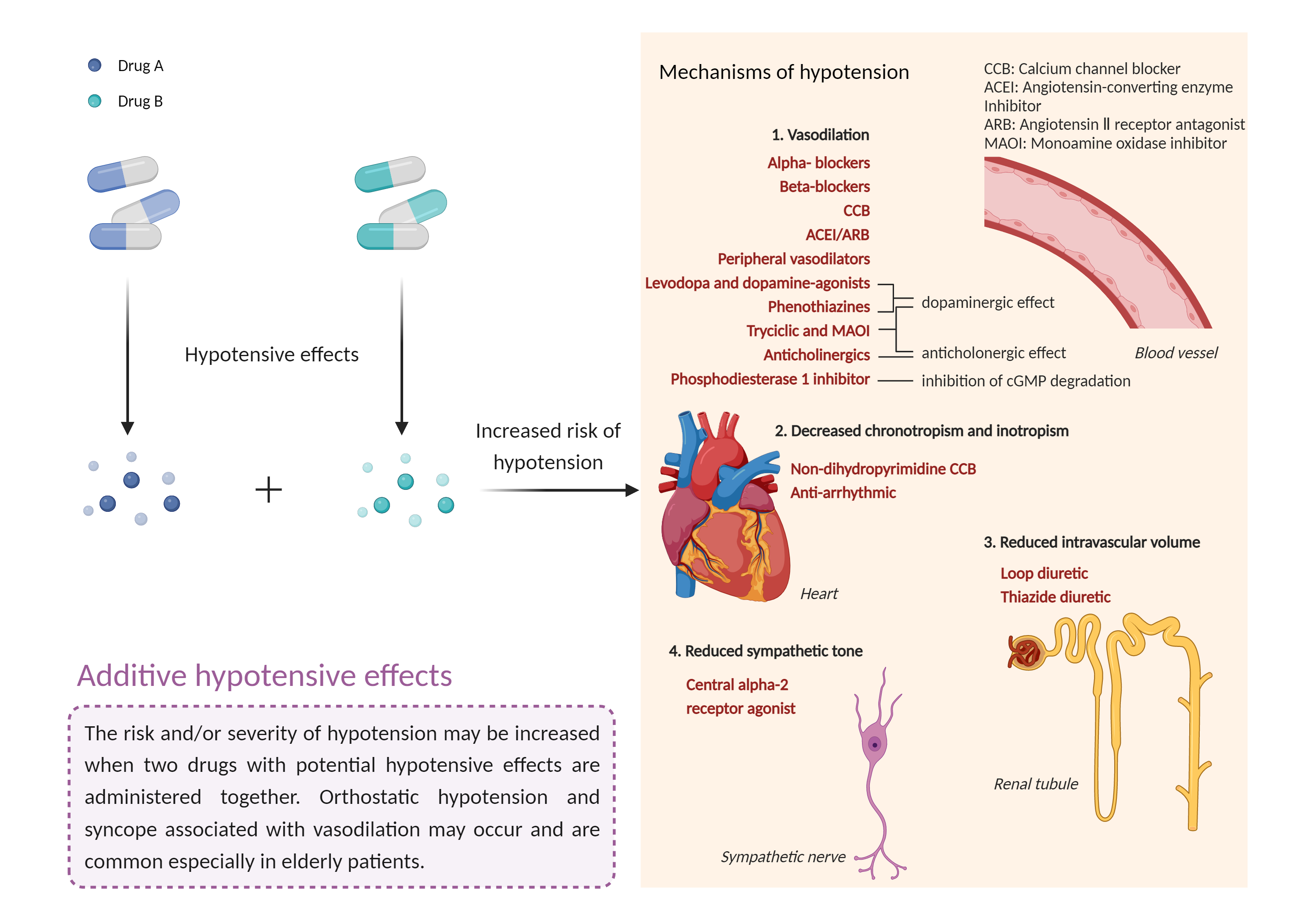 |
|||||||||
| Drug Name | Triamterene | Amisulpride | |||||||
| Mechanism |
Hypotensive effects Amiloride-sensitive sodium channel Inhibitor |
Hypotensive effects Alpha-1 adrenergic receptor Antagonist |
|||||||
| Key Mechanism Factor 1 | |||||||||
| Factor Name | Amiloride-sensitive sodium channel | Structure Sequence | |||||||
| Protein Family | Amiloride-sensitive sodium channel (TC 1.A.6) family | ||||||||
| Protein Function |
Sodium permeable non-voltage-sensitive ion channel inhibited by the diuretic amiloride. Mediates the electrodiffusion of the luminal sodium (and water, which follows osmotically) through the apical membrane of epithelial cells. Plays an essential role in electrolyte and blood pressure homeostasis, but also in airway surface liquid homeostasis, which is important for proper clearance of mucus. Controls the reabsorption of sodium in kidney, colon, lung and eccrine sweat glands. Also plays a role in taste perception.
Click to Show/Hide
|
||||||||
| Key Mechanism Factor 2 | |||||||||
| Factor Name | Adrenergic receptor alpha-1 | Structure Sequence | |||||||
| Protein Family | G-protein coupled receptor 1 family | ||||||||
| Protein Function |
This alpha-adrenergic receptor mediates its action by association with G proteins that activate a phosphatidylinositol-calcium second messenger system. Its effect is mediated by G(q) and G(11) proteins. Nuclear ADRA1A-ADRA1B heterooligomers regulate phenylephrine(PE)-stimulated ERK signaling in cardiac myocytes.
Click to Show/Hide
|
||||||||
| Mechanism Description |
|
||||||||
| Recommended Action | |||||||||
|---|---|---|---|---|---|---|---|---|---|
| Management | Close clinical monitoring for development of hypotension is recommended if phenothiazines or neuroleptic agents are used in patients receiving antihypertensive medications or vasodilators. A lower starting dosage and slower titration of the phenothiazine or neuroleptic may be appropriate, especially in the elderly. Patients should be advised to avoid rising abruptly from a sitting or recumbent position and to notify their physician if they experience dizziness, lightheadedness, syncope, orthostasis, or tachycardia. Patients should also avoid driving or operating hazardous machinery. | ||||||||